

Republicans in the Senate should transcend partisanship and bring back the Senate filibuster rule with regard to presidential nominees and non-Supreme Court judicial appointments.
It was almost exactly three years ago when Senate Democrats decided to exercise the so-called “nuclear option” to stop Republicans from filibustering most of President Obama’s judicial and executive branch appointments. In practical terms, this maneuver allowed most of the President’s nominees to be confirmed with a simple majority vote rather than with a three-fifths, 60-vote supermajority.
With Republicans now in power, Democrats realize they made a fool's bargain.
As widely reported in 2013, the Senate filibuster rule allows for any member of the legislative body — usually a member of the minority —to obstruct the confirmation of a presidential appointee through a long speech until a supermajority voted to end it.
As mentioned, in 2013 then senate majority leader Harry Reid changed the rule so that a supermajority was no longer needed with regard to presidential appointments. The filibuster remains in place for Supreme Court nominations and legislation. While the 2013 change undoubtedly made things more efficient, it eliminated an important minority check that helps guard against “bad” decision-making made by the majority.
Control of the Senate has shifted between both parties in recent years, and, not coincidentally, so has enthusiasm for the filibuster as a legislative tool. Outgoing Senate Minority Leader Harry Reid once praised the filibuster as “the last check we have against the abuse of power in Washington” while his party was in the minority, but in 2013, when he was Majority Leader, he conveniently proposed the rule change that gutted the filibuster for executive branch nominees.
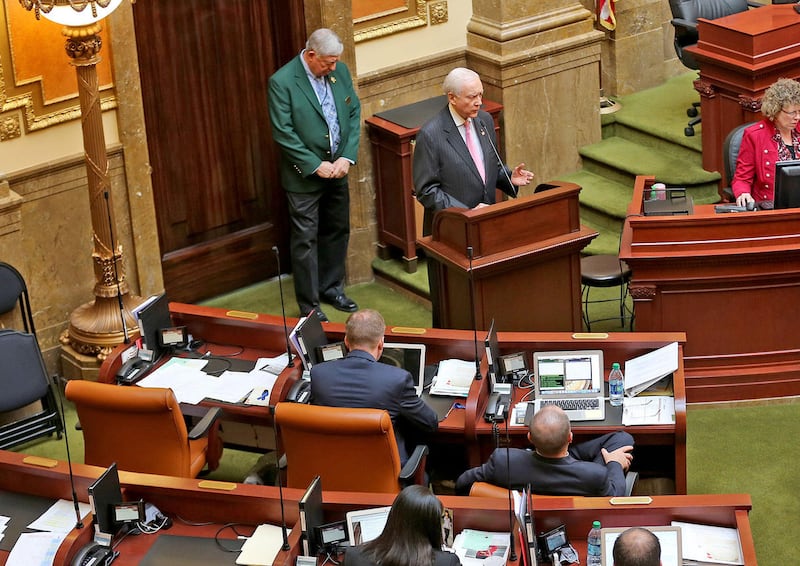
Unfortunately, the Republicans who railed against the rule change three years ago are more interested in payback than restoring the procedure they were trying to protect at the time. Back in 2014, Utah Senator Orrin Hatch said, “We should not return to the old rule. We should teach those blunderheads that they made a big mistake.… Frankly, I intend to win with our candidate for the presidency in 2016, and we will give them a taste of their own medicine.”
Paradoxically, Sen. Hatch’s remarks have proved to be both prophetic and shortsighted. Yes, the Republican candidate won in 2016, and the rule change three years ago will likely allow even the President-elect’s most controversial nominees to be confirmed easily. But Republicans are deluding themselves if they believe their current majority status is a permanent condition. They currently only have a slim 1-vote majority, although they are likely to gain another vote after the Louisiana runoff election. Still, if they ever lose their current political power, expect to see Republicans suddenly discover a newfound respect for the old filibuster rule.
It’s probably too much to hope that the Republicans will give up their temporary advantage in the next two years to restore the old rule, but they should at least resist the temptation to extend the “nuclear option” to include Supreme Court nominees, which is something they are actively considering. If they make this mistake, history suggests they can eventually expect to receive a taste of their own medicine.