


“If thought corrupts language, language can also corrupt thought.” ― George Orwell
When Theodore Roosevelt famously coined the term “bully pulpit,” he did not mean “bully” in the sense of a schoolyard tormentor. To Roosevelt, the word meant “wonderful” or “superb”— a platform of decency and matchless advocacy. He understood that the presidency is not merely an office of executive action and legislative negotiation, but a moral custodian of the national character. The words a president chooses to use, the context in which they are deployed, and the care taken to weigh their impact are among the truest barometers of a civilized nation.
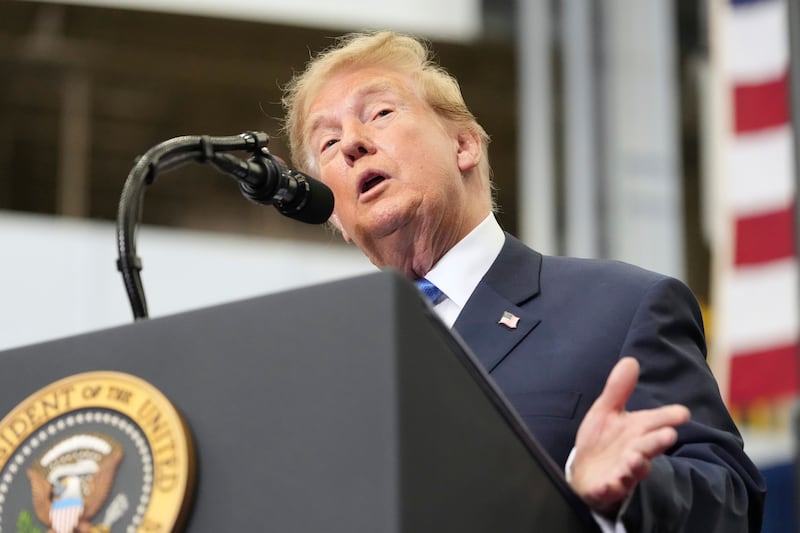
Today, however, the bully pulpit has been literalized. Under President Donald Trump, the presidency has seen its linguistic standard degraded and replaced by a torrent of coarse, derogatory, profane and deeply divisive rhetoric. This shift is not merely a matter of style or a harmless rejection of political correctness. It is an intentional, fundamental degradation of public discourse that has proven to be highly contagious, eroding the fundamental social trust that keeps a democratic society whole.
Having gotten away with saying whatever he wanted to during his first term, Trump now uses language almost as if there were no barriers or standards to what he can say and how he says it.
According to The Washington Post, in the first year and a half of his second term, Trump’s use of coarse, vulgar, and insulting language has more than doubled (from 40% to 93%) and “the number of (his) vulgar or insulting social media posts has roughly tripled.”
To understand the depth of this shift, one need only look at the historical standard. Throughout American history, the most enduring presidential words have been those designed to inspire, unite and heal. Think of Abraham Lincoln appealing to “the better angels of our nature” on the eve of the Civil War, or Ronald Reagan eulogizing the Challenger astronauts by quoting John Gillespie Magee Jr.’s poem about “touch(ing) the face of God.”
It is time to demand that our leaders speak like adults, so that our children can learn to do the same.
These leaders understood that a president’s words matter, that his voice carries weight, and that care and restraint are manifestations of strength.
By contrast, Trump’s rhetorical playbook relies on a steady diet of aggressive degradation. Rather than seeking to elevate the national conversation, his language actively drags it into the dirt — and the gutter. He has weaponized nicknames, routinely labeling political opponents with middle-school taunts: “Crooked” Hillary Clinton, “Sleepy” Joe Biden and “Lyin’” Ted Cruz.
He regularly attacks the integrity of democratic institutions, not with reasoned critique but with raw abuse; for example, referring to federal judges who rule against him as “unhinged,” “lunatics,” or “wacky,” and dismissing the free press as “fake news” and even the “enemy of the people.” He often uses language that violates the decency standards of many newspapers.
Trump’s use of expletives and profanity against political opponents and enemies mirrors the vocabulary of a 15-year-old schoolyard bully, not a statesman. When a president routinely uses words like “dumb,” “stupid,” “loser” and “lunatic” to describe anyone who disagrees with him, it trivializes the serious nature of governance and signals that power is not about persuasion or intellect, but about who can shout the loudest and humiliate the most effectively.
Perhaps the most insidious aspect of the president’s rhetorical style is its contagion. Language does not exist in a vacuum. It trickles down from the halls of power and infects the broader culture. Because the president of the United States is the most visible representative of the country, his words, as well as their tone and style, set the standards as well as the boundaries of what is acceptable precisely because so many people read and hear them.
This is why we now see Trump’s playground and barroom style of communication mirrored throughout our society. Members of Congress routinely shout over one another, trade personal insults on social media and treat their peers not as political opponents, but as mortal enemies.
Expletives and insults that once were rare in the halls of Congress seem to have become commonplace. It is no surprise that school districts across the nation have reported a rise in bullying, often featuring the exact slogans and insults popularized on the national stage.
When we lose our grip on decent language, we lose our grip on decent behavior. Restoring the presidency requires more than just policy debates or political victories; it demands a return to a standard of speech that respects the intelligence of the citizenry and the solemnity of the office. It is time to demand that our leaders speak like adults, so that our children can learn to do the same.
Leaders bear a profound moral responsibility to use language well because their words hold the power to shape reality. As citizens, we should hold ourselves as well as our leaders to a high standard. As Ralph Waldo Emerson said, “Language is a city to the building of which every human brought a stone.”