

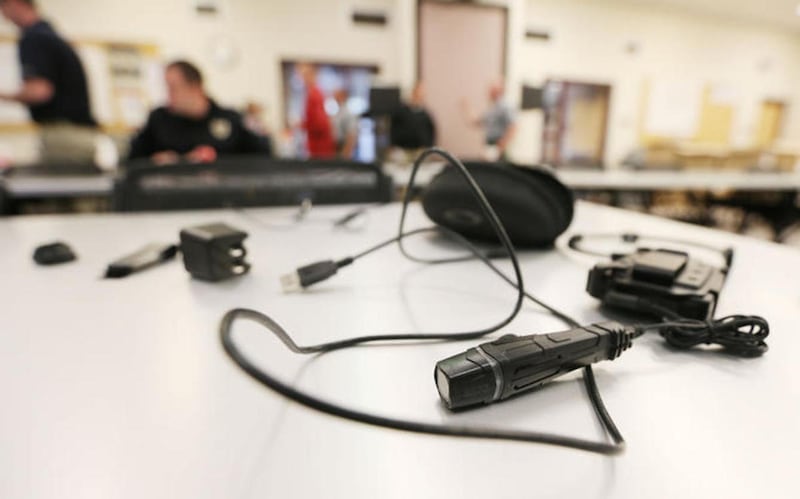
Two measures before the Utah Legislature to set standards for the use of police body cameras would have the effect of reducing openness and transparency in the handling of public records for reasons that are not necessary or justified by concerns over personal privacy. While lawmakers have valid concerns about how cameras are used in certain situations, laws are already in place that can address those concerns and ensure that privacy interests are not ignored.
One measure, SB 94, would set forth standards for the use of body cameras and place governance over policies with the state’s Peace Officers Standards and Training Division. The proposed law would create broad exemptions for the disclosure of video taken by body cameras, for example, prohibiting public release of video taken in a private home that, according to the bill’s sponsor, might be “humiliating or embarrassing to that citizen.” The bill would specifically designate as private any video recordings that contain images of “nudity, death or gruesome events involving an individual or individuals.”
Such restrictions would seriously undermine the very reason body cameras have been put into use in the first place. Police agencies have embraced the use of video as a way to document activity and ensure accountability and transparency. SB 94 would create so many opportunities to restrict public disclosure that the cameras might as well be turned off.
The devices, like all new technology, bring about challenges in conforming to existing legal requirements, but the state’s Government Records Access and Management Act already contains the necessary mechanics to ensure individual privacy is protected. SB 94 and another, similar measure, HB 300, would each make changes to GRAMA in a way that could significantly whittle down the law’s effectiveness in guaranteeing the public’s right to inspect records of government activity. That would be a bad precedent to set.
Of particular concern is how the law would vest authority with agents of the peace officers training division to make the subjective call as to exactly what constitutes a “gruesome” image. Any records that might harm an individual’s privacy are already subject to rigorous guidelines for public release. Adding additional caveats is not called for, nor is it justified by any examples of irresponsible use of video recordings that have so far been made public.
SB 94 is set to go to the Senate floor for additional debate. We hope lawmakers will recognize the imprudence of setting forth broad restrictions in public records laws in an effort that might be well-meaning, but essentially boils down to a search for a solution to a problem that doesn’t exist.