

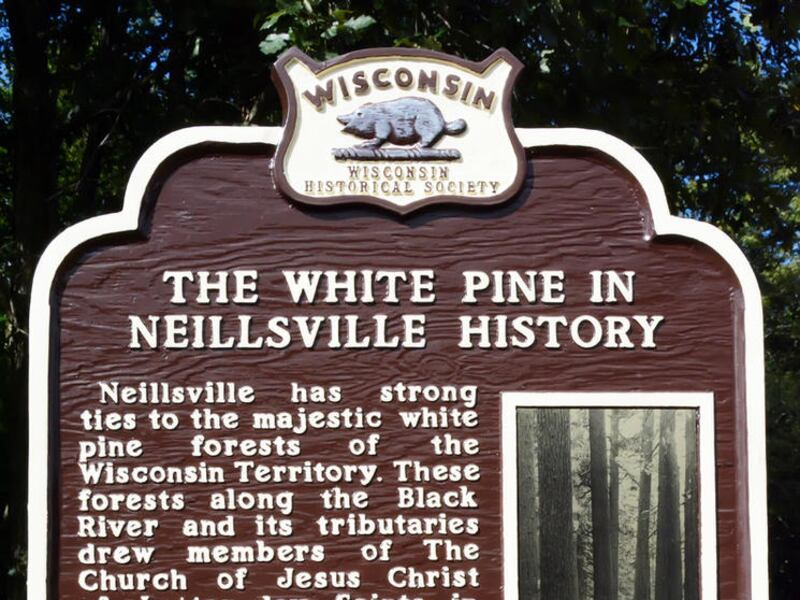
One of the lesser known but inspirational chapters of Latter-day Saint history is that of those who labored in the Wisconsin pineries from 1841 to 1845. Responding to a call from the Prophet Joseph Smith, these faithful members of The Church of Jesus Christ of Latter-day Saints battled the cold and lack of food in a beautiful but challenging wilderness.
Present-day Neillsville, Wisconsin, was the site of three labor camps where the loggers and their families stayed as the trees were harvested, dragged to the Black River and floated to mills at or near Black River Falls. The milled timbers were then fastened together and floated as rafts as large as an acre some 400 miles down the Mississippi River to Nauvoo, Illinois.
After the Saints left Neillsville in 1845, James O'Neill settled at the site and developed a thriving community. The settlement was subsequently named after him.
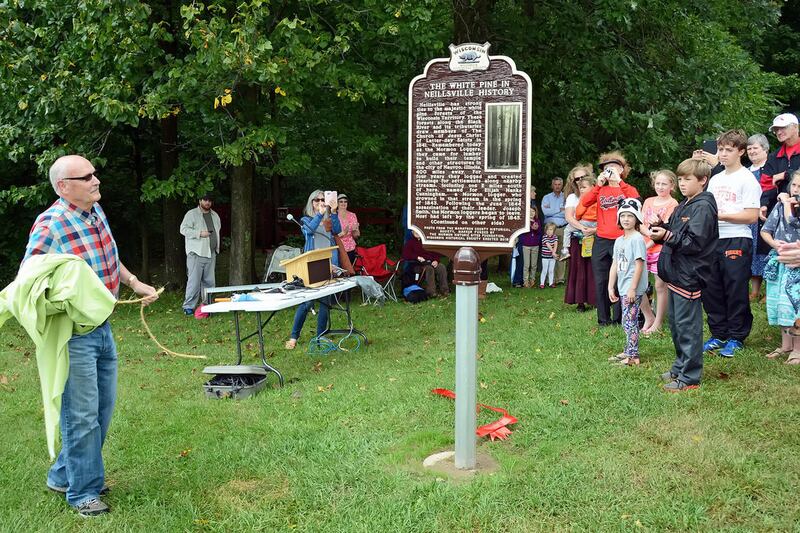
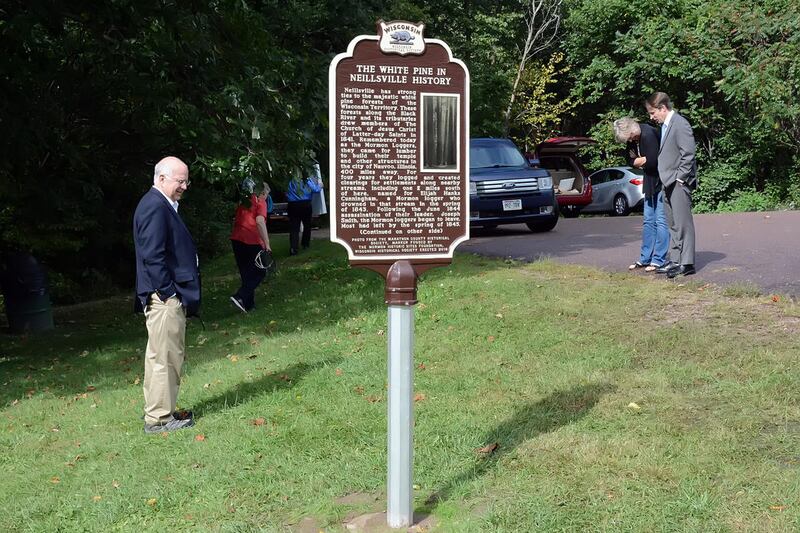
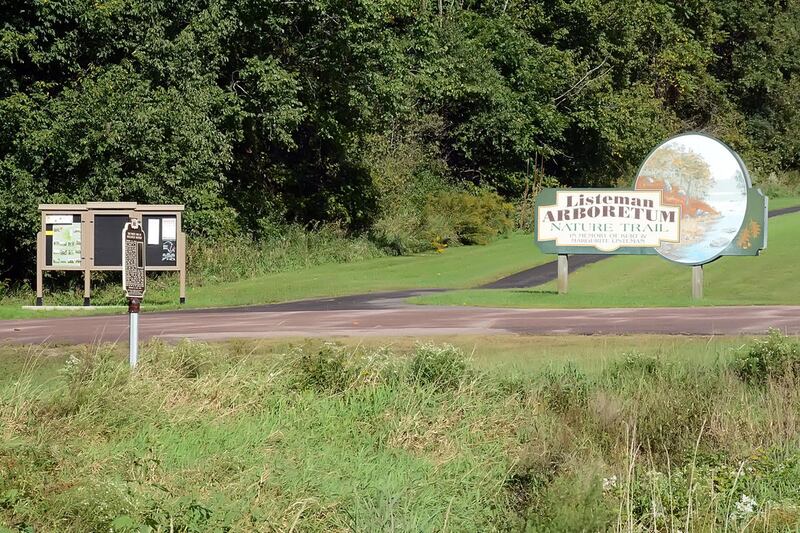
Several years ago, Neillsville resident Mary Jurgaitis called me with my association with the Mormon Historic Sites Foundation suggesting the pineries to be included in the weekly Mormon Times feature Picturing History. A visit to Neillsville led to an eye-opening tour of the area. (The Picturing History feature was published July 8, 2015, and is online at deseretnews.com). She appealed to the Mormon Historic Sites Foundation for assistance to place a historical marker at a prominent site near the Black River.
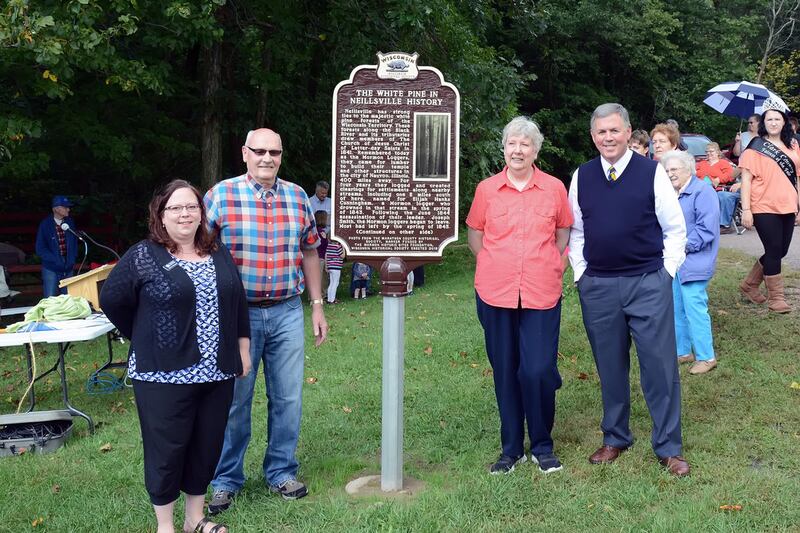
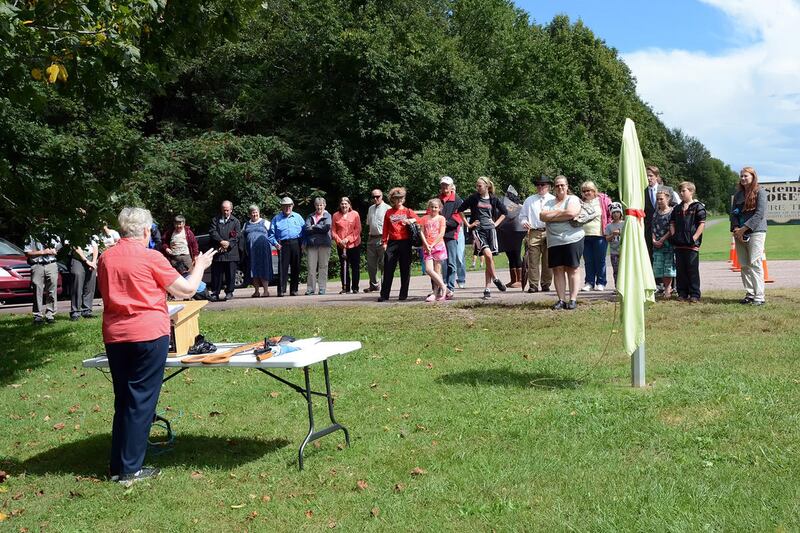
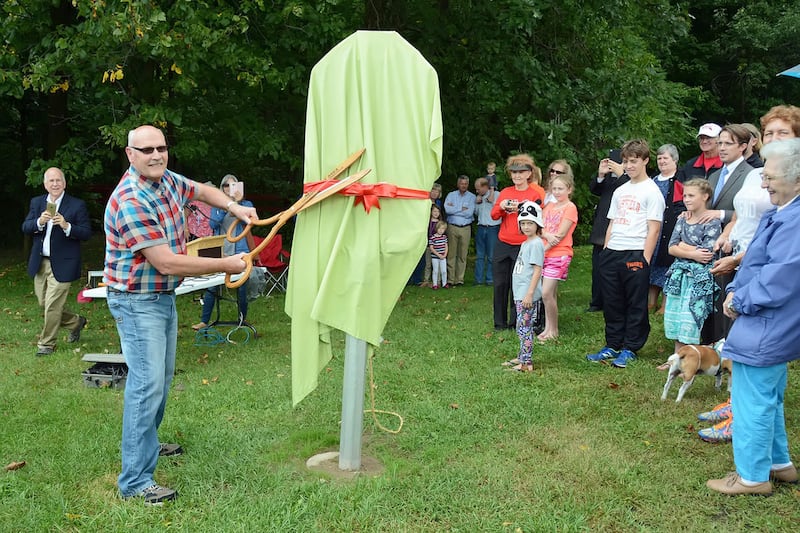
With the approval of Neillsville mayor Steve Mabie and in cooperation with the Wisconsin Historical Society, a marker was planned, funded, produced and set in place. It was dedicated with several addresses Sept. 10, 2016, with a ribbon cutting by Mabie. Janet Seymour of the Wisconsin Historical Society attended, as well as members of the local media. Later on, it was dedicated by Jacob W. Lonsdale, president of the Wausau Wisconsin Stake, which includes Neillsville.
Kenneth R. Mays is a board member of the Mormon Historic Sites Foundation and has also been an instructor in the LDS Church’s Department of Seminaries and Institutes for more than 35 years.