

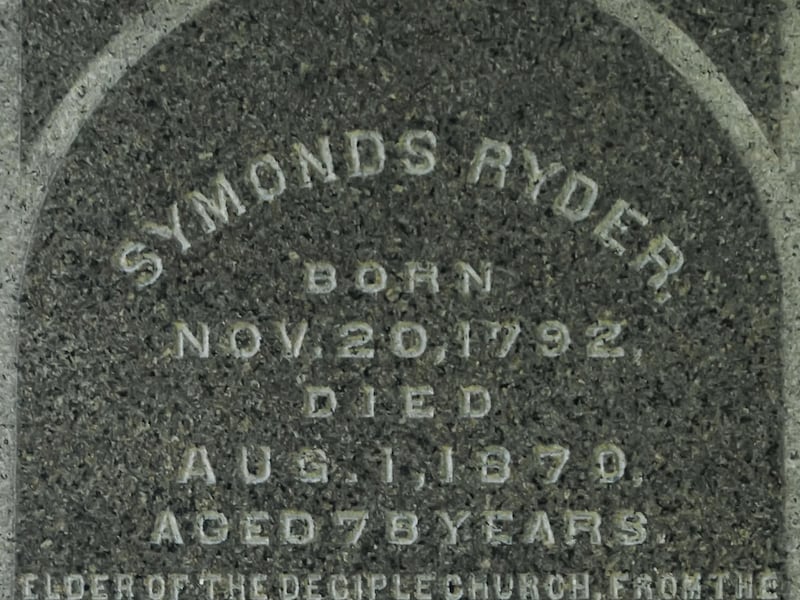


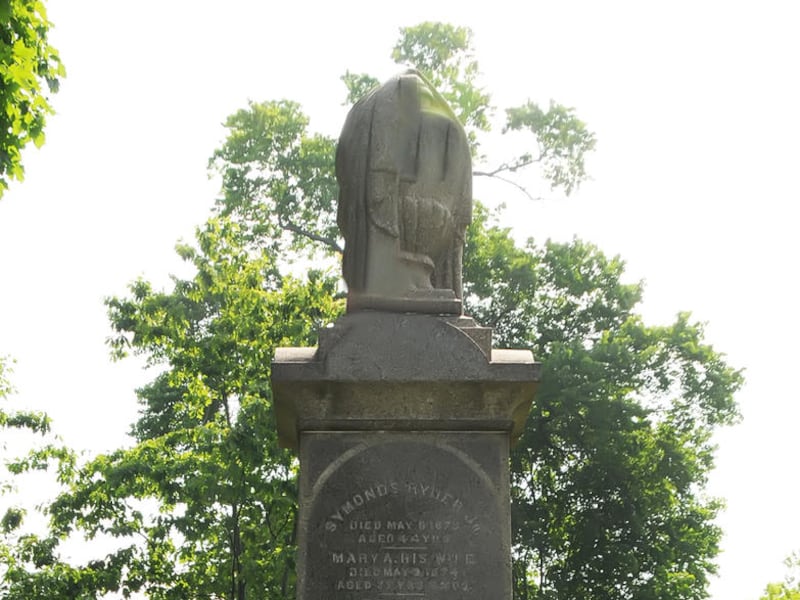


Symonds Ryder and his father’s family settled in Hiram, Ohio, in 1814. Following the arrival of Joseph Smith in Ohio in 1831, Ryder was baptized into The Church of Jesus Christ of Latter-day Saints (then called Church of Christ).
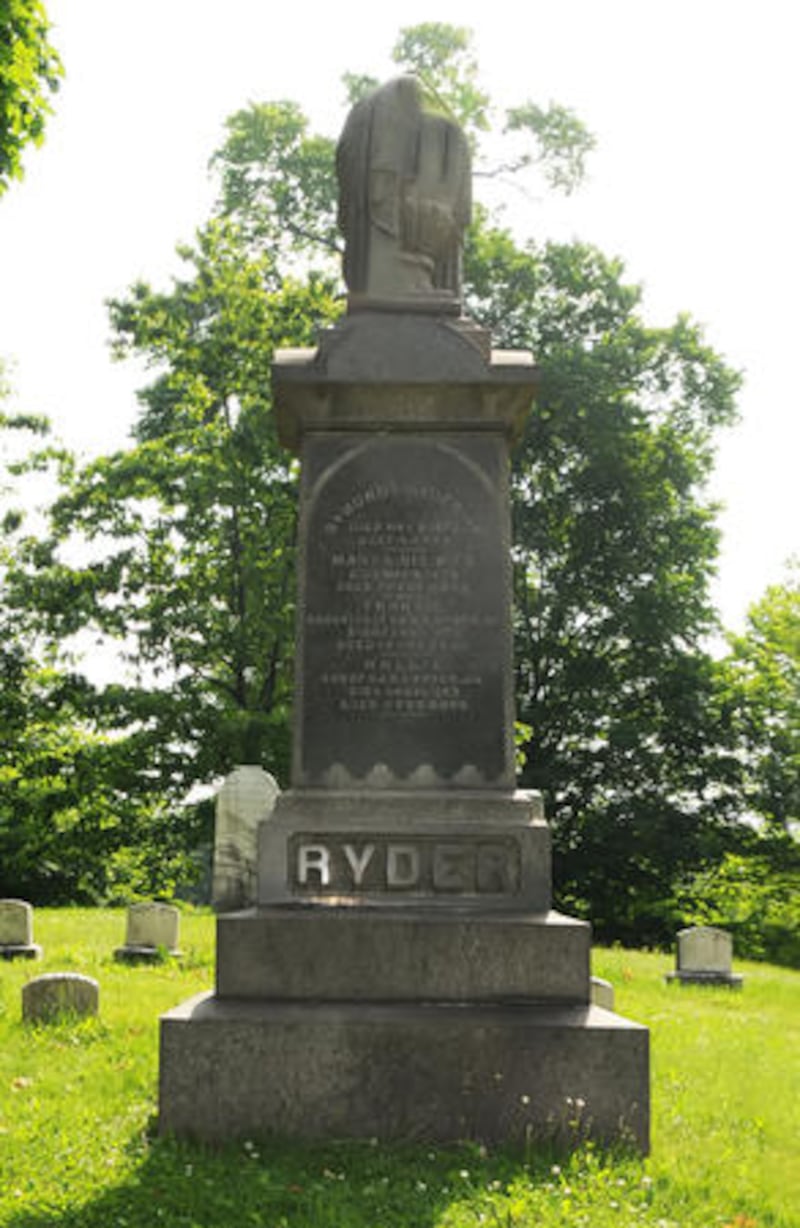
A view of the Ryder family monument in Hiram, Ohio. | Kenneth Mays
Ryder reportedly subsequently apostatized from the church when his official commission to preach had his name misspelled. Susan Easton Black wrote in "Who’s Who in the Doctrine and Covenants": “He thought that if the ‘Spirit’ through which he had been called to preach could err in the matter of spelling his name, it might have erred in calling him to the ministry as well.”
Black and other scholars challenge the notion that Ryder’s apostasy was that simple. Mark Staker notes that during the summer of 1831, Ryder began having more doubts about the principle of consecration than his misspelled name (see "Hearken O Ye People: The Historical Settings of Joseph Smith’s Ohio Revelations").
Ryder published articles proving his open opposition to Mormonism. Some, including Joseph Smith himself, believed that Ryder helped organize and participate in the mob that forcibly took the Prophet from his home and then tarred and feathered him in 1832, according to Staker.

This fence shows the property line between the John Johnson and Symonds Ryder farms. | Kenneth Mays
This unfolded near the property line between the John Johnson and Symonds Ryder farms. The adopted son of Joseph and Emma Smith passed away several days later, likely from an illness exacerbated by cold air streaming into the home after Joseph was dragged away. There is a belief that Joseph's infant son was buried near the site where his father was so horribly abused. If so, the tiny grave would have been visible from Ryder's home. Perhaps it served as a reminder of his role in the events of that night and the sad consequence of the baby's death.
Ryder's great-great-granddaughter donated a document known as "The Articles of the Church of Christ" to the LDS Church. That document, written and signed by Oliver Cowdery, dated 1829, once belonged to Symonds Ryder (see Robert J. Woodford, in "Sperry Symposium Classics," 2004; "Joseph Smith Papers: Documents, Vol. 1).
Kenneth R. Mays is a board member of the Mormon Historic Sites Foundation and has also been an instructor in the LDS Church’s Department of Seminaries and Institutes for more than 35 years.