

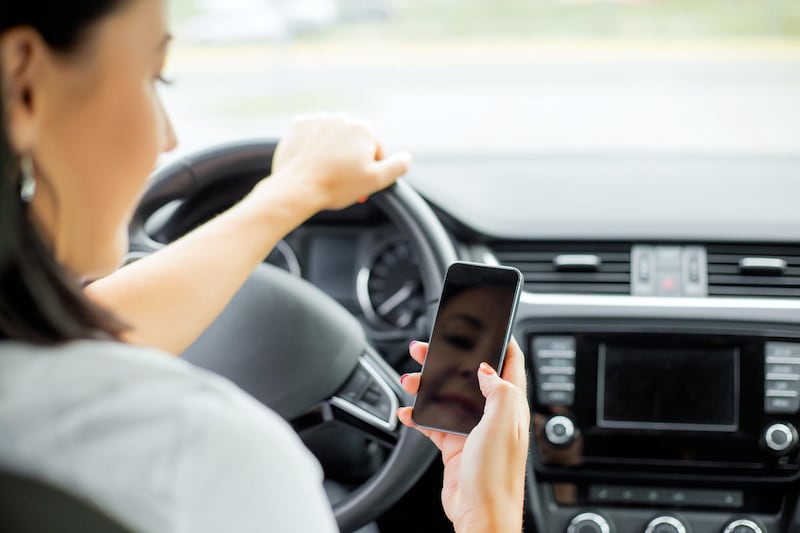
Car crashes increased when texting became popular. Texting and driving is a problem, but how bad of a problem is it? Is texting and driving really as bad as drunk driving? Yes, according to David A. Bressman, attorney and founder of Bressman Law: “The urge to text and drive is very strong in our culture. We stigmatize drunk driving, but texting and driving can be just as impairing as driving under the influence. It's a major cause of crashes, and will continue to be as long as people believe they can do it without consequences."
Texting and driving falls under the umbrella of distracted driving. Anything that takes your eyes off the road can be considered distracted driving. Texting is a common cause, but an argument in the car, unexpected actions from a passenger, or even spending time finding the right song in your playlist are all things that can cause a distraction.
The facts
According to the NHTSA, 3,477 people died in 2015 due to distracted driving. Another 391,000 were injured. The administration estimates that 660,000 people use their cellphones during daylight hours while driving.
Teens and young adults are most likely to drive while distracted because of cellphone use, but it affects drivers of all ages. The Utah Department of Public Safety says that 10 percent of all crashes in Utah in 2015 involved a distracted driver. Drivers under the age of 30 had the majority of these crashes.
The CDC says that when you take your eyes off the road for five seconds at 55 mph, the average car covers a football field. That’s a lot of road distance to lose attention. Someone changing lanes or slowing down during that time can easily cause an accident.
The CDC classifies distracted driving into three kinds: visual, manual (taking your hands off the wheel), and cognitive. Texting while driving is so dangerous because it combines all three distractions. Eyes are off the road and on the cellphone. One or both hands are taken off the wheel to use the device. The brain is focused on reading or replying. It’s a bad combination.
A study by Virginia Tech details the deadly combination. That study showed that reaching for a phone and dialing or texting increased the likelihood of a crash by three times. Just reading a message increased it by two. Also, most drivers spend around 23 seconds to fully complete all the activities needed to interact with their phone: turn attention from the road, find the phone, read the message, put everything back, and turn attention back to the road. That’s a lot of time when you’re moving in a car.
Fines are low
Most states have made texting and driving illegal, but the punishments are nothing like what they are for DUI despite having a similar level of danger, except in Alaska, where the fines are much more severe than a first-time DUI offense.
Drunk driving incidents have declined since harsher penalties were instituted during the 2000s, but smartphone use and distracted driving continue to rise. If the problem gets bad enough, it may overtake DUI as the most dangerous activity you can do on the road, potentially spurring legislators into creating harsher penalties.
Also, one reason why penalties may be so low is that drunk driving is seen as a moral failure of self-control, but replying to a text in a timely fashion is seen as socially polite. Even drinking enough to stay under the limit and getting on the road is seen by most people as a bad idea. It may take a shift in cultural values to truly create a negative stigma around distracted driving to rival that of driving while impaired.
Distracted driving should be considered just as bad as getting behind the wheel after drinking four beers. Just like alcohol, distracted driving slows reaction times and diverts attention away from driving. We should equate the two in our minds and ask legislators to create harsher penalties to discourage people from driving while distracted — particularly texting and driving.