

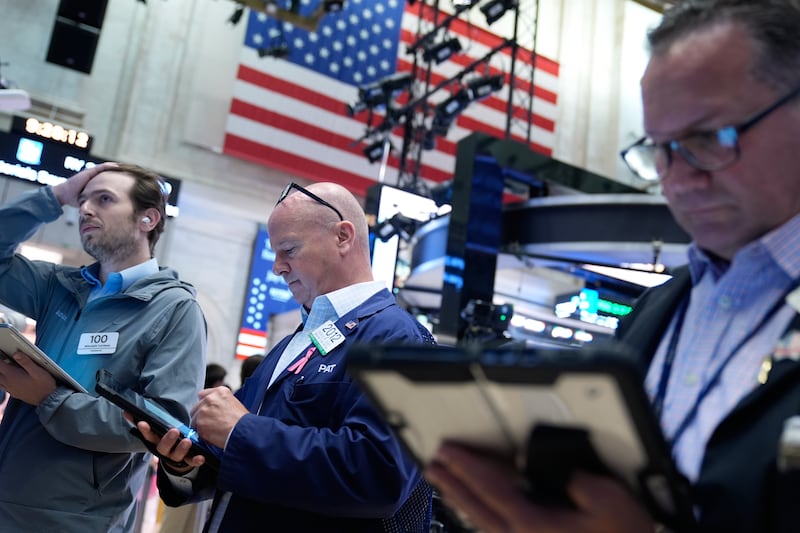

- Petroleum market futures spiked following President Trump's statements Wednesday that Iran ceasefire was 'over'
- Benchmark international crude oil pricing moved up to $78 per barrel
- U.S. stock indexes were registering losses Wednesday morning amid investor worry
Prices on oil futures surged and U.S. investment markets dropped Wednesday morning following President Donald Trump’s declaration that the tenuous ceasefire agreement with Iran was ‘over.’
During a news conference in Ankara, Turkey, amid a meeting of NATO alliance members on Wednesday, Trump said, “I think it’s over” in response to one reporter’s question, per a report from CNBC.
“I don’t want to deal with them anymore … as far as I’m concerned, it’s over,” Trump added.
The price of benchmark Brent crude oil jumped to $78 per barrel on Wednesday and U.S. West Texas Intermediate was trading at $74 per barrel, up from Tuesday’s $70 per barrel pricing.
Major U.S. stock indexes were all in the red Wednesday morning with the Dow Jones Industrial Average down over 1.5%, the tech-heavy Nasdaq losing about 1.1% and the S&P 500 group of companies showing overall loses just over 1%.
“The latest attacks have reminded investors that while a ceasefire remains in place, a lasting agreement between the U.S. and Iran is far from guaranteed,” Daniela Hathorn, senior market analyst at Capital.com, said in a note on Wednesday morning per CNBC. “Markets had become comfortable with the idea that the conflict would gradually fade into the background, but recent developments suggest that assumption may have been premature.”
What’s going on with the cost of basic necessities
Consumer gas prices had been riding a downward trend since the resumption of peace talks but remain well above rates from a year ago.

According to tracking by AAA, the average price of a gallon of regular was $3.80 across the country on Wednesday, up slightly from Tuesday but 5 cents lower than a week ago. The current average price is down 36 cents in the last month but 65 cents more than this time last year.
Utah drivers were paying an average $3.86 per gallon across the state on Thursday per AAA, down almost a nickel over the last week and 55 cents per gallon less than this time last month. Compared to a year ago, the average price of gas in Utah is up 54 cents per gallon.
Higher fuel costs helped drive U.S. inflation to three-year highs with the latest federal inflation reading showing prices of goods and services rising at an annual rate of 4.1%.
May’s Personal Consumption Expenditure Index from the U.S. Commerce Department, released June 25, showed elevated fuel prices were the main contributor behind the highest inflation reading since April 2023 as the rate gained 0.4% on a monthly basis. Core annual inflation, which strips out volatile food and energy prices, rose to 3.4% in May, up 0.3% month to month.
On an annual basis, grocery prices were up 3.1% in May and have risen over 34% since 2019. Higher fuel costs are a factor amid still-escalating food prices, as are impacts from tariffs, supply chain disruptions wrought by global conflict as well as pricing decisions by individual suppliers.
How consumers are feeling
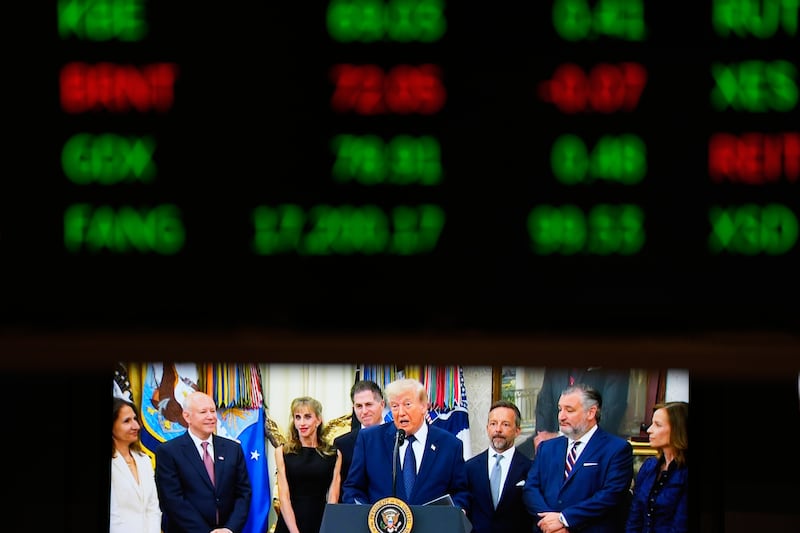
Recent polling by the Deseret News in partnership with the University of Utah’s Hinckley Institute of Politics found concerns about the direction of the U.S. economy are widely shared by Utahns.
When statewide poll participants were asked how concerned they are, if at all, about the overall direction of the economy right now, an overwhelming majority, 84%, registered some level of concern, with 41% saying they are very concerned and 43% somewhat concerned about the direction of the economy.
On the other side of the sentiment question, 12% of respondents said they are not very concerned and 2% said they’re not at all concerned about where the economy is headed.
Feelings about the direction of the economy were similar among men and women as well as different age groups and across the income spectrum. But stark differences appeared when polling responses were filtered by self-reported political affiliation.
While 94% of Democrats who participated in the poll reported some level of concern about the path of the economy, only 75% of Republicans said they were very or somewhat concerned.
Morning Consult conducted the poll of 850 registered Utah voters June 16 – 22. It has a margin of error of plus or minus 3 percentage points.
The new findings mirror state and national data gathered by the Deseret News/Hinckley Institute in May where 80% of Utahns and 79% of Americans reported some level of concern about the economic fallout from the Iran war.