
- The White Mesa Mill in San Juan County, Utah, broke ground on an expansion this week.
- The new facility will allow the uranium processing plant to commercially process "heavy" rare earth minerals.
- Utah is now home to one of just three rare earth processing facilities in the U.S.
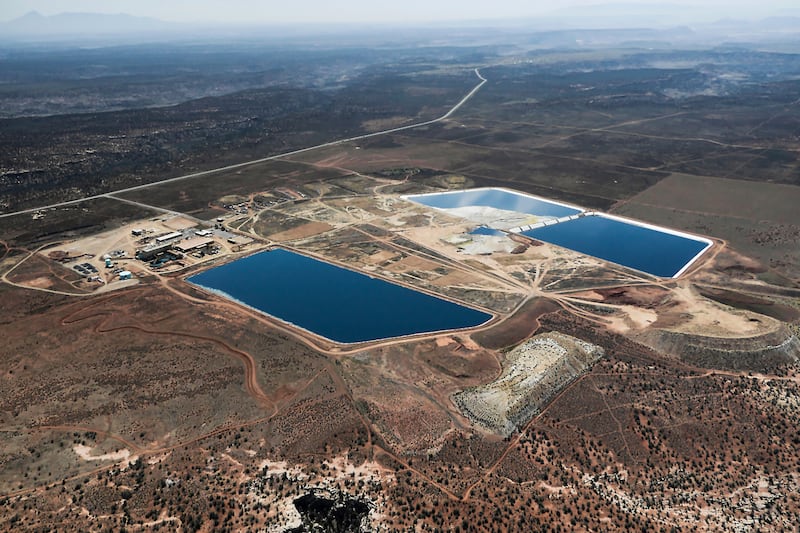
The White Mesa Mill in San Juan County, Utah, broke ground this week on an expansion that will bring its rare earth element processing capabilities to a commercial scale.
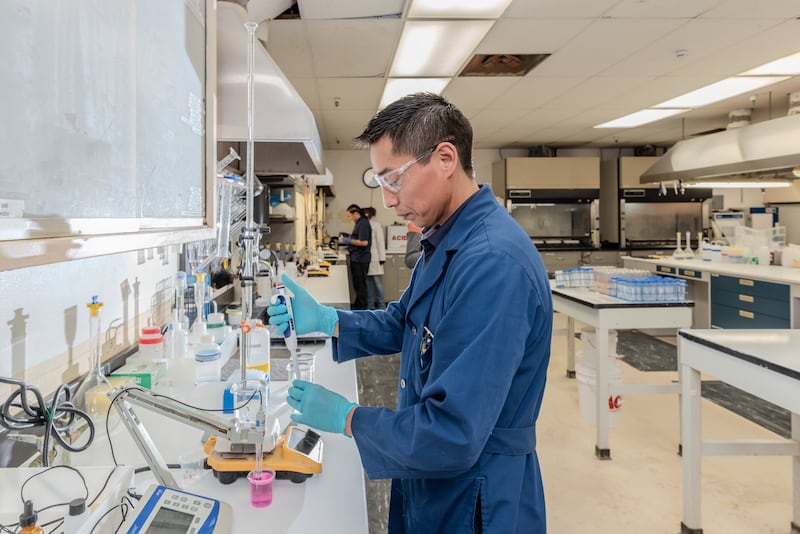
The mill, which is a long-term uranium processing facility in southeast Utah owned by the mineral corporation Energy Fuels, spent the last six years developing the circuits necessary to become one of just three rare earth processing facilities in the United States.
With about 70% of all rare earth stock coming from China, which also owns a further 90% of the world’s entire rare earth element processing capabilities, the U.S. is at a geopolitical disadvantage. The effort at White Mesa Mill and Energy Fuels puts Utah at the vanguard of easing that global bottle neck of materials, many necessary for modern life.
In particular, the new facility will process “heavy” rare earth elements, which, Energy Fuels pointed out in its press release, are “essential... (for) the automotive, robotics, data center, energy and defense industries,” and represent a sector of the rare earth industry that’s mostly missing in the U.S.
“We’ve got a lot of things happening, and all of it’s exciting,” said Ross Bhappu, Energy Fuels CEO. “We’re really in the sweet spot between uranium and rare earth minerals. I feel like we’re just in the sweet spot of what’s so critical to the U.S.”
How rare earth elements are used
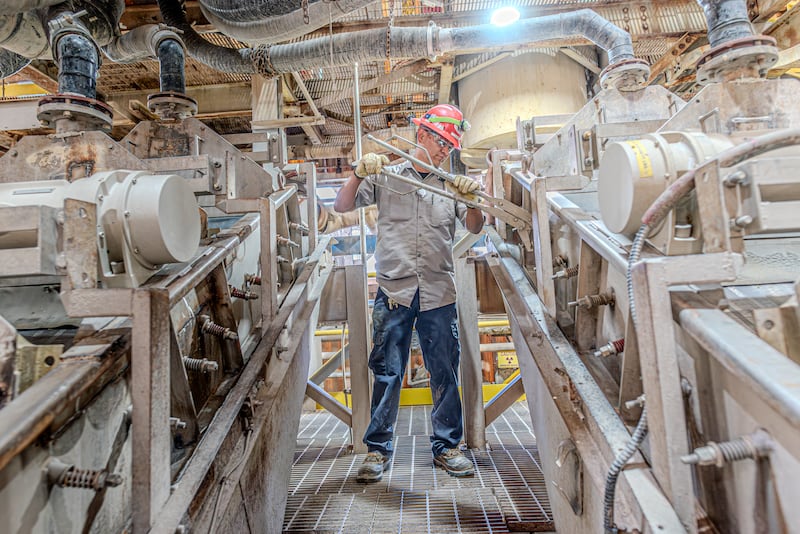
Everything from cell phones, earbuds and electric vehicles through data center cooling units and F-35 jets rely on rare earth elements to work. And the supply chain required to mine raw material, separate that into individual oxides, form those into metallurgic alloys that are then used in the production of unique, technical magnets, is a long and complicated one.
Energy fuels now owns mines, alloying companies and longstanding magnet makers with more than 1,000 customers. But the ability to process the material in the U.S. is what Bhappu called “a game changer.”
It all started, too, because the uranium business is market driven and can be boom or bust. In order to stay afloat during a downturn several years ago, the White Mesa Mill looked for alternate revenue streams. They found the crossover between processing uranium and rare earth elements.
So the company went to the lab, Bhappu explained, and had success. From there, it began a pilot stage where it was able to produce — in the same facility and circuits where it processes uranium — 1,000 tons per year of lighter rare earth elements.
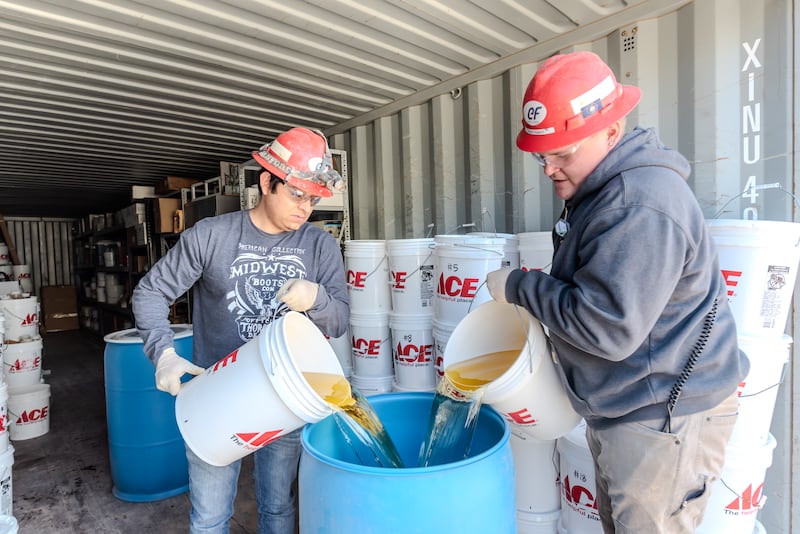
One of the byproducts of that process was something close to what’s called mixed rare earth carbonates, or MREC. That mixture is often found in ionic clays, which are a primary feed stock for Chinese rare earth elements. Energy Fuels realized with that on hand, it could process it for “heavy” rare earth elements.
But capacity was limiting. With a recent national interest in nuclear energy, Bhappu said the mill had to decide whether to process uranium ore or rare earth elements. “We can’t do both together,” he said.
Hence the expansion. And with a conditional $725 million loan from the Department of War that came through earlier this summer, such expansions become possible.
Working for a more energy efficient future
The White Mesa Mill has long been a point of contention due to its placement adjacent to Bears Ears National Monument and the environmental concerns associated with a uranium processing plant.
Bhappu acknowledged the White Mesa Mill would receive criticism for the expansion, but he said its efforts to process uranium and rare earth elements are working towards a more energy efficient future, one with less emitted carbon.
“So, yes, we are going to grow. We’re going to have a bigger footprint at the White Mesa Mill,” he said. “But everything we’re doing is, I think, actually doing a lot of benefit for the planet.”
Bhappu added that the White Mesa Mill “is a great place to do” such “beneficial” work.
The new facility is expected to be up and running by July 2027. The following phase of its planned expansion should be completed by 2029.