

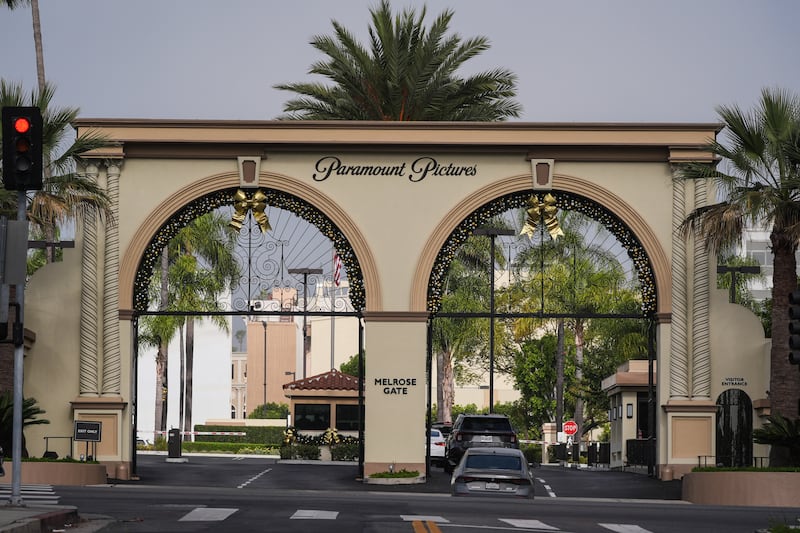

A California-led coalition of 12 states and Hollywood heavyweights challenging Paramount Skydance’s $110 billion takeover of Warner Bros. Discovery reached an agreement Monday, removing a key obstacle to the companies completing the merger.
As part of the settlement, which still awaits judge approval, Paramount agreed to a series of terms, including a five-year commitment to increase film production and a multimillion-dollar fund for workers affected by the merger.
California Attorney General Rob Bonta, who headed the legal challenge, praised the terms of the settlement while making clear he did not support the merger.
“Let me be clear: This settlement is not a vote of support for this merger,” Bonta shared in a statement. “But we believe this settlement, which resolves our antitrust concerns in every market alleged in our case, protects competition and consumer choice, and puts workers’ needs, concerns, and futures first, is the best course of action.”

“There’s no Hollywood without the people who work on and off screen to make the magic happen,” he continued, “and today’s settlement protects workers, jobs, and Hollywood.”
If the merger closes, it would redraw Hollywood, bringing film studios Paramount Pictures and Warner Bros., news networks CBS News and CNN, and streaming platforms Paramount+ and HBO Max under one corporate umbrella.
It would also leave four major film distributors controlling more than 85% of U.S. wide-release theatrical films and just two companies controlling 59% of basic cable.
“Our goal has always been to build a stronger Hollywood — one with more stories told, greater choice for consumers and stronger competition,” David Ellison said in a statement, per Deadline.
“Bringing Paramount and Warner Bros. discovery together will build a stronger Hollywood, creating expanded opportunity for our people and even more great entertainment for audiences around the world,” he continued. He thanked Bonta and other attorneys for “engaging in good faith to find a path forward.”
Here is a closer look at the terms Paramount agreed to in the settlement.
Mandatory movie output
Paramount agreed to release at least 30 movies in theaters during the first two years and 32 in the following three years. It also agreed to release at least four independent films each year of the five-year period.
Ellison previously pledged to release at least 30 films in theaters each year and maintain a theatrical window of at least 45 days, saying the plan would create “additional opportunities available for creative talent in Los Angeles.”

If Paramount misses these targets, the company faces penalties of paying $30 million per missing movie and selling its stake in Miramax Studios if a correction is not made in six months.
Cable channels cannot be combined
The company can keep all its cable channels, but is prohibited from combining or “bundling” Paramount’s cable channels with those owned by Warner Bros. Discovery.
The term is intended as a guardrail against rising cable prices and increasingly expensive streaming packages. So Paramount’s legacy networks — including MTV, Nickelodeon, BET and Comedy Central — cannot be tied to Warner Bros. Discovery’s legacy networks, such as TNT, TBS, Food Network and Discovery.
Also, the merged company must continue to offer a free streaming service, like Pluto TV, that maintains existing quality and service.
Protection for workers
Paramount must establish a $47.5 million workforce fund over the next five years for workers displaced by the merger.
Funding is intended for career development, training and other assistance to workers affected by the merger.
Domestic production and independent film fund
The merged company must spend an additional $1.5 billion on domestic film production over the next five years — or $300 million more per year.
According to the state attorneys general, right now roughly 5% of Paramount’s production is in the U.S.
Separate from the $1.5 billion commitment, Paramount must create and operate a fund for independent filmmaking, contributing $5 million every year for a total of $25 million.