


- Former Big Bend National Park leaders urged DHS to reconsider border security plans.
- The area in West Texas has the least illegal border crossings along the entire border.
- DHS waived laws designed to allow for public input and environmental considerations.
Since February, there’s been uncertainty about whether the Department of Homeland Security would build a wall through stretches of the Big Bend region of West Texas.
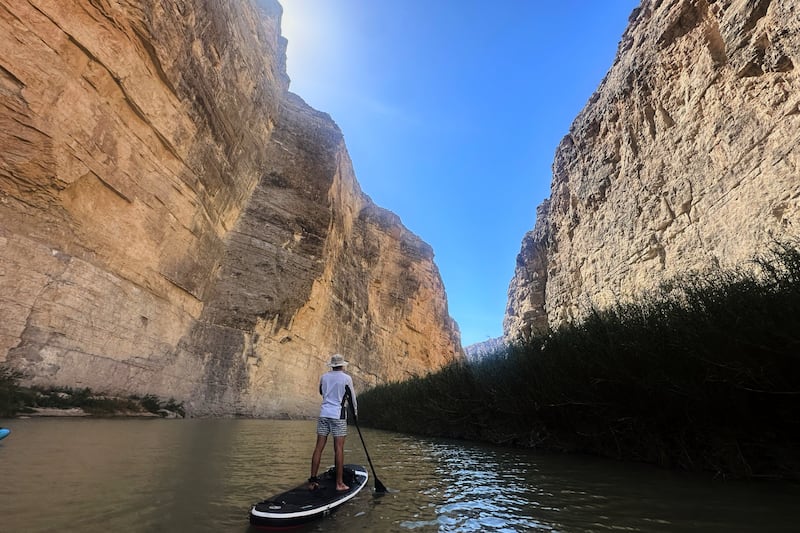
In particular, as part of its “holistic approach” to increasing border security, would Customs and Border Protection build a border wall through the region’s biggest draw, Big Bend National Park? The very same park that’s known for being both remote and the dominance of its massive cliff faces towering over the Rio Grande.
Then, earlier this month, the DHS indicated its plans to build various infrastructure in the region by contracting a construction company and waiving a number of laws that call for public comment and environmental review.
Those confirmations led seven former superintendents and deputies of Big Bend National Park to write a letter to the new Homeland Security Secretary Markwayne Mullin expressing their opposition to the plan.
“With 259 collective years of National Park Service (NPS) experience, to urge you to reject the waiver of federal laws that would allow physical barriers and roads, as well as related border security infrastructure, to be built inside the park in the absence of environmental or cultural compliance or public involvement,” they wrote.
“If a border wall — or other unnecessary and highly destructive border infrastructure — is built inside Big Bend National Park, it would be the most egregious assault on the integrity of the entire National Park System since the construction of a dam in the Hetchy Hetchy Valley in Yosemite National Park more than a century ago."
Their voices joined a chorus of opposition in the region that includes 46 state legislators, 14 district judges, more than 100,000 petition signers and the five sheriffs whose jurisdiction includes the area under consideration. One adjacent Texas community, Alpine, unanimously passed a resolution opposed to a wall.
Customs and Border Protection made clear it would not build walls, per se, but rather other infrastructure to support security that “leverages advanced technology and the area’s natural terrain.”
“By deploying cameras, sensors, and barriers in strategic areas, CBP is restricting unlawful vehicle access while utilizing the natural barriers that already exist in the area,” according to a statement. “In locations where minimal barriers may be adjacent to parks, we are actively coordinating with park officials to ensure the alignment does not impede recreational access or activities. Additionally, CBP will use and improve existing public and park roads where possible to provide agents with continued access along the border.”
Homeland Security border plans at Big Bend
In February, then-Homeland Security Secretary Kristi Noem published the agency’s intention to bolster security through Big Bend in the Federal Register.
“The Big Bend Sector is an area of high illegal entry where illegal aliens regularly attempt to enter the United States and smuggle illicit drugs,” Noem wrote. “Given my mandate to achieve and maintain operational control of the border, I must use my authority ... to install additional barriers and roads in the Big Bend Sector.”
The Big Bend region, however, is among the least-used sections of the southern border for illegal immigration. According to CBP numbers, the Big Bend sector had the second fewest encounters of all the stretches of the Texas border this year with 1,236. Meanwhile, some sections of the Texas border have had as many as 10,700 encounters.
From that data, CBP determined that the Big Bend segment of the southern border’s encounters are down 42.5% year-over-year from 2025.
As of April, two new details emerged about the proposed border security through the Big Bend region.
The first was a document published in the Federal Register that waived 29 environmental laws under the Illegal Immigration Reform and Immigrant Responsibility Act. Those include the Administrative Procedure Act, Safe Water Drinking Act, Federal Land Policy and Management Act and the National Environmental Policy Act.
The other was a $1.72 billion federal contract with an Albuquerque-based construction company called Southwest Valley Constructors Co., described as “award of construction tas order for border wall in Big Bend, Texas,’” according to USASpending.gov.
Our Public Lands and Waters, an independent public lands news site reported by Bram Reusen, obtained a copy of the contract. According to Reusen, it does not include a wall in Big Bend National Park or the other adjacent parks.
But Reusen wrote that it does include “17 miles of vehicle barriers inside and adjacent to the park,” as well as “205 miles of ‘system attributes (patrol roads and technology)’ in unspecified locations.”
What were the superintendents’ concerns?
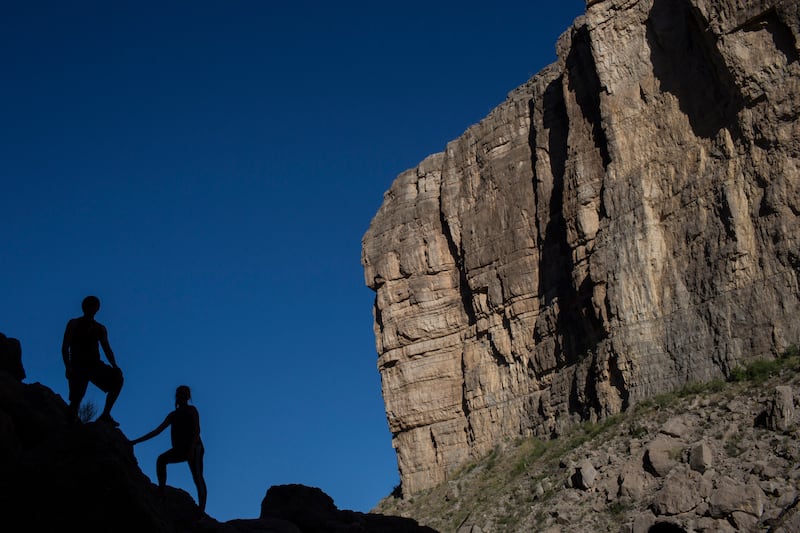
The superintendents who signed the letter were responsible for the national park for the most of the last 45 years. They agree on the importance of border security, but disagree with the current plan to achieve it.
“The fact is that the rugged terrain, natural barriers, isolation, and distance from highways in Mexico are the reasons this area already has, by far, the lowest level of illegal activity of the entire border — and the entire Big Bend Sector, which your most recent waivers have invoked,” they wrote. “The Sector, and the national park in particular, are not an area of high illegal entry, which is a prerequisite for your invoking the waiver.”
Their “grave concerns” include the necessity of measures that would be “harmful to what people care about in the national park” for “minimal improvements to security, if any.”
Those include paving roads in the remote backcountry, installing vehicle barriers and patrol roads in a region that already has no risk of river crossings and would likely be vulnerable to washout from flash flooding.
In the letter, the superintendents highlight ways for greater park security without having to use waivers that could harm the park’s character. They cite payments that CBP used to make to the park for border security, which no longer are paid, and reduced staffing. If the same funds were directed to hiring more people and paying for border patrol, no construction would be necessary, they claim.
“There does not need to be a conflict between a strong border, a thriving local economy, and conservation of the wildest, most intact landscapes of Texas and our nation,” they wrote. “If Customs and Border Protection would engage the public, local elected officials, sheriffs, and the National Park Service, we are absolutely confident that we can find a solution to realistically improve border security at a reasonable cost to the taxpayer.”