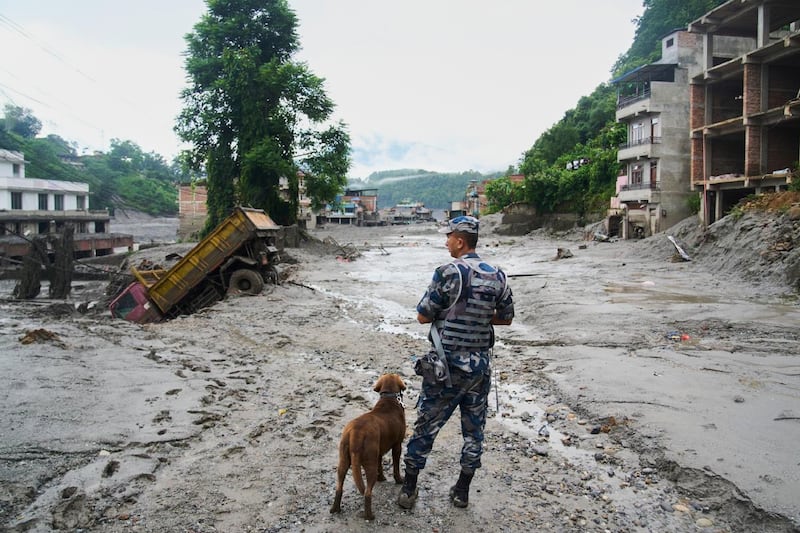

In Nepal’s Rasuwa district, rescuers are currently looking for over 1,000 missing people following massive flash floods that destroyed homes, swamped villages, and crossed bridges between Nepal and China on Tuesday.
At least 359 people have been confirmed dead as of Thursday, BBC News reported.
Hikers and tourists come from around the world to visit Nepal’s stunning mountain ranges — including Mount Everest. Some of the people reported missing included American tourists, according to reports.
What caused the flood — and scientists’ new concern
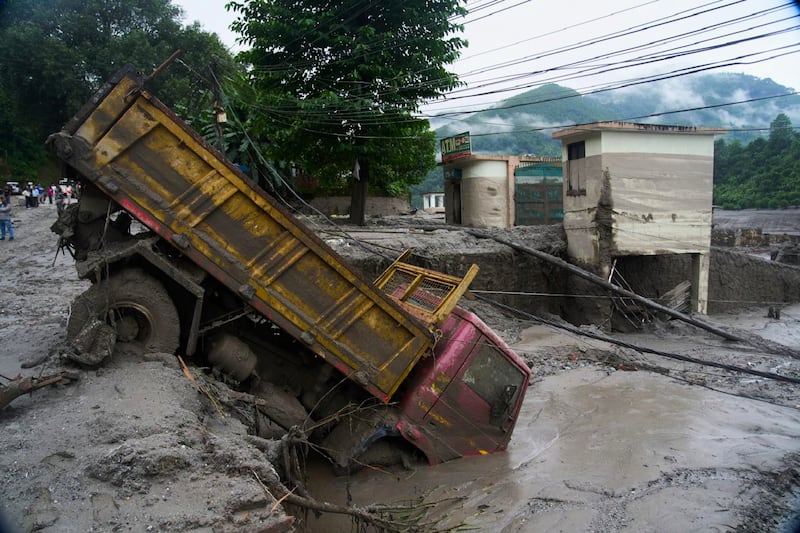
What was initially reported as a 4.4 magnitude earthquake Wednesday morning that caused the floods was later confirmed to be a glacial collapse.
A large ice chunk, which broke off a glacier, fell to the valley below, pulverizing on impact, causing what Nepalese scientists say was a 5.2 magnitude earthquake. The ice immediately mixed with water and mud, creating a 250-foot-tall wall of debris tearing though buildings, bridges and infrastructure throughout the valley.
“Additional analysis of nearby seismic stations, long period seismic waves, and satellite imagery led to the determination that the seismic event was instead a glacial collapse and debris flow, and that no earthquake had occurred,” the USGS said on Thursday morning to BBC News.
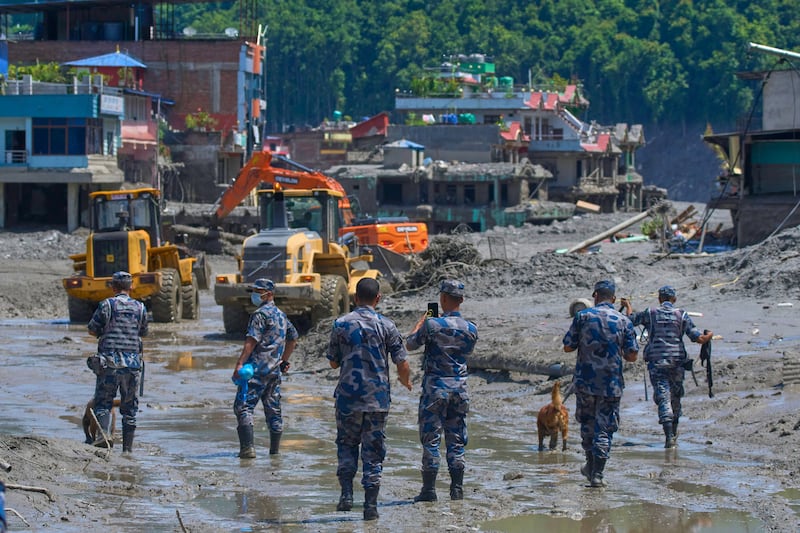
The landslide of ice and rock resulted in a downpour of mud, water and debris sweeping through Trishuli river — also known as the Bhotekoshi — which runs along the borders of China and Nepal, according to The Guardian.
The International Centre for Integrated Mountain Development released a detailed assessment Wednesday, in which experts said the current floods are “raising concerns over further potential downstream impacts.”
The assessment claimed the debris blockage at the river banks “can create (a) secondary hazard if impounded water is suddenly released,” it read. “Authorities and scientists are continuing to evaluate the size, location and stability of any potential blockage.”
Ongoing rescue efforts throughout the valley
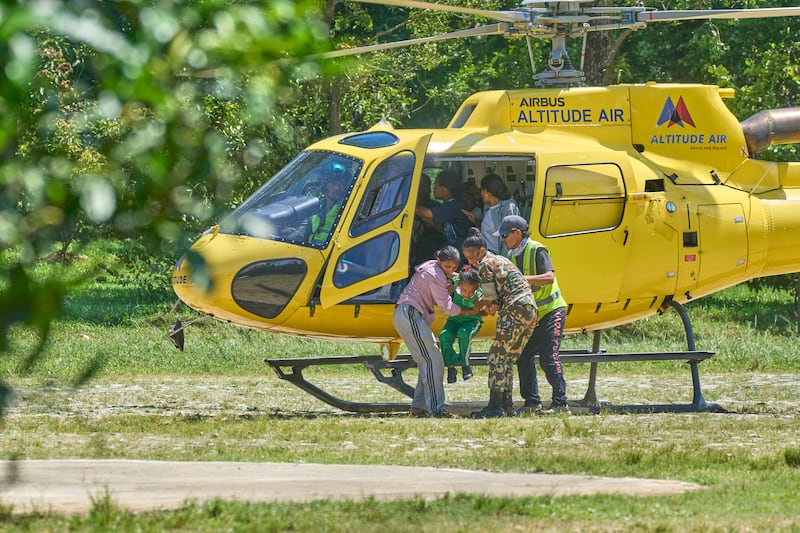
The Nepalese army has rescued more than 100 people by helicopter, army spokesperson Brig. Gen. Raja Ram Basnet told The Associated Press. Army teams also evacuated people trapped inside facilities linked to the Trishuli hydropower project, he added.
Dozens of injured people have been transported to Kathmandu for medical care. Rescuers found bodies in Chitwan district hundreds of miles downstream from the hardest-hit areas.
The BBC reported yesterday that rescue operations have grown increasingly difficult due to uncertain weather conditions — mainly continuing rains. Chinese officials say the mudslide that struck Tibet’s Gyirong county is nearly 5 feet deep and 1.5 miles wide, which significantly hindered subsequent rescue efforts.
Meteorological authorities don’t expect the weather to let up soon.
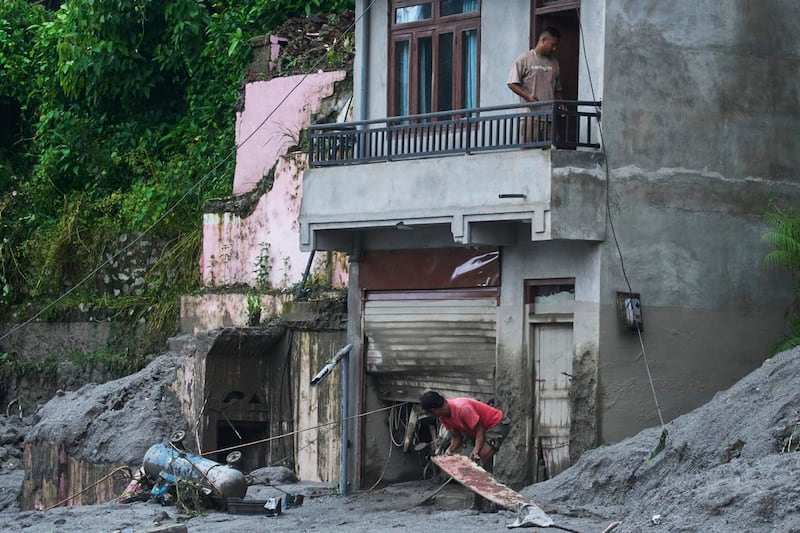
They say rain could continue over the next three days, also making the deployment of large vehicles and heavy equipment through narrow mountain roads nearly impossible.
Many injured people throughout the region are in local healthcare centers and hospitals — some severely injured residents are in hospitals of Kathmandu.
The United States, China, the European Union and India have offered help in rescue and relief efforts. Five trucks carrying relief supplies have already been sent to affected areas, with more aid on the way, according to BBC News.