



- Early Latter-day Saint missionaries were called to acquire skills, settle new communities and build the economy of a fledgling territory.
- Missions included studying art in Paris, obtaining medical education, establishing a sugar beet industry and manufacturing iron.
- The Church of Jesus Christ’s missionary legacy continues with more than 88,500 Latter-day Saints serving proselyting and service missions.
Each Pioneer Day, many Utahns and others commemorate the call that sent early Latter-day Saints trekking west, ultimately arriving in the Salt Lake Valley in July 1847.
For early Latter-day Saint pioneers, however, arrival was just the beginning of another calling: the call to learn, settle and build what would eventually become the Beehive State.
“(There are) examples of people not only going out and getting skills and bringing them back to Utah, but also people utilizing their skills to do things to help build up Utah,” said Matt Godfrey, a senior historian at the Church History Department.
Early leaders of The Church of Jesus Christ of Latter-day Saints sent several Saints back East to pursue education and then return to benefit the Utah Territory. They also assigned groups of Saints to settle different areas and explore a variety of industries to strengthen the territory’s self-sufficiency and “build up Zion,” Godfrey said.
Church leaders’ willingness to send people out indicates they realized “they needed skills in Utah that they couldn’t get in the territory at that time,” he said. Their willingness “to try to make Utah self-sufficient really did create a foundation that the economy of Utah was built on and thrived on for many years.”
Here are some of the early Latter-day Saints’ missions and ventures which helped build Utah and its surrounding communities.

Pioneer missions in art and architecture
Not all early “skills missions,” to give them a name, looked the same. Some were formal calls from church leaders; others began as petitions from the Saints themselves, seeking church sponsorship for skills they wanted to acquire; and others fell somewhere in between.
In the case of three early Latter-day Saint artists, named John Hafen, John B. Fairbanks and Lorus Pratt, they petitioned to be sent to France to study art and then paint the murals inside the nearly finished Salt Lake Temple.

Their petition was granted by the church’s First Presidency, and in June 1890, the three were sent as art missionaries to study at the Académie Julian in Paris, France. Artists Edwin Evans and Herman Haag joined the original three soon after.
When they returned to Utah around 1892, they immediately made plans to begin painting the Salt Lake Temple’s “World” and “Garden” room murals. They finished the murals in time for the temple’s dedication in April 1893.
“Their impact was huge, probably even more than the murals themselves,” said Laura Paulsen Howe, an art curator at the Church History Museum.
These art missionaries returned and helped build Utah’s art scene, she said. They helped organize the Society of Utah Artists, held annual exhibitions, and advocated for art and art education, among other things.
Other early Saints, including women, similarly traveled to pursue training in art, music, architecture, engineering and other disciplines.
Latter-day Saint architect Truman O. Angell, for instance, was sent to Europe in 1856 to expand his training and gather ideas for the Salt Lake Temple. He had previously helped build the church’s temples in Nauvoo, Illinois, and Kirtland, Ohio, and was the main architect for the Salt Lake Temple.
The church’s commitment to art signifies it “understands that art can be a testimony and it can be a record,” Paulsen Howe said. “It also provides space for people to see their relationship with God and to work out that relationship.”
The church views art “as keeping a record of the faith and testimony of Latter-day Saints, both in Utah and all over the world,” Paulsen Howe said. “I think the precedent of the Paris art missionaries and that first financing of their mission set the scene for that.”

Pioneer missions in medicine
Church leaders in the 1870s and 1880s also called and encouraged women to obtain medical education.
Martha Hughes Cannon was one of several Latter-day Saint women who heeded this call, obtaining four degrees by age 25. She studied chemistry at the University of Deseret, medicine at the University of Michigan, pharmacy at the University of Pennsylvania and oratory in Philadelphia.

In 1878, she was called by church leaders to serve as a medical practitioner and later became the youngest head surgeon at Deseret Hospital, according to an article published in a 2025 Liahona magazine issue.
She later worked on several health-related measures as a state senator, the article states. “These pursuits helped motivate further change in accessibility, women’s rights and public health.”
Other women — such as Romania Pratt, Ellis Reynolds Shipp and Margaret Curtis Shipp — likewise traveled east to study medicine and become pioneering doctors in Utah. Pioneer men, such as Heber John Richards, also received medical training in the eastern United States and returned to serve the Utah community.
The sugar beet mission
Wanting the Utah Territory to be more self-sufficient in the early 1850s, Brigham Young instructed John Taylor — who was already out serving a proselyting mission — to study the sugar beet industry in France and bring it to Utah.
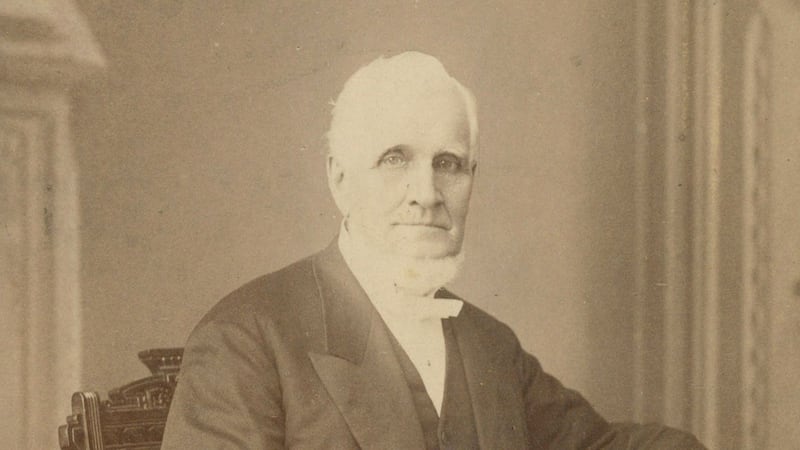
Taylor followed through, collaborating with Philip DeLaMare, a pioneer convert from the Channel Islands. Together, they investigated sugar beet operations, transported processing machinery from Europe to the Salt Lake Valley, formed the Deseret Manufacturing Company and tried to establish the sugar beet industry in Utah.
Their efforts didn’t work out as they hoped, however. “Their equipment doesn’t really work properly, and they’re never really able to produce edible sugar from beets at that time,” Godfrey said.
Still, their failed attempt laid the groundwork that allowed the church and pioneers to successfully establish the region’s sugar beet industry roughly 40 years later.
The sugar beet industry “impacted Utah’s economy for a long time,” Godfrey said. Once the Utah Sugar Company was formed in 1889 and successfully produced sugar in 1891, sugar became the “major cash crop” that Utah farmers grew.
This established an industry in Utah and Idaho that lasted nearly 100 years and still exists in Idaho, Godfrey said. It helped build Utah’s economy and agriculture and provided employment for many.
The iron mission and other settler missions
In 1850, Brigham Young also called about 119 men, 30 women and 18 children to southern Utah to manufacture iron and establish an iron mission.
George Albert Smith, of the church’s First Presidency at the time, oversaw the mission and said “it was not designed to build up the individual alone, but the cause of Zion,” according to Godfrey.
“They’re as much in the service of the master as those sent out to preach the gospel,” Godfrey said, quoting the early Latter-day Saint apostle.
The Saints called to the iron mission were “never super successful” at producing iron and discontinued the effort after about a decade, Godfrey said. The communities of Parowan and Cedar City, however, were established from their endeavor, paving the way for Iron County, Utah, and eventually St. George.
Other Saints in the 1850s and subsequent decades were also sent to settle new areas in and around Utah Territory. They likewise explored industries — such as mining lead and growing cotton — with little success. However, their ventures allowed for new areas to be established, particularly in southern Utah.
How the missionary pattern continues
The missionary force of the Church of Jesus Christ recently hit a new record, with more than 88,500 Latter-day Saints currently serving full-time missions worldwide, including as young service missionaries and full-time senior teaching missionaries.

Godfrey noted a direct line from the faith’s early missionary history to today’s breadth of church service opportunities and service missionary assignments.
“The whole concept of service missionaries and being called on a mission to do something that is not focused on proselyting … I think really stems from what was going on in the church in the 19th century and in the 20th century,” Godfrey said.
Latter-day Saint missions then existed for the cause of building up Zion and helping the territory become self-sufficient, he said. Church members today are likewise asked to develop and consecrate their talents for the benefit of their communities and congregations.
Whether it’s through callings or missionary service, “you have people who are asked to do things and to serve other people,” Godfrey said. “We may already have the skills necessary to do those things, but we may need to develop new skills.”
Latter-day Saints Evan and Terisa Gabrielsen recently came to appreciate that history firsthand. They led members of their stake in building a float highlighting early Saints’ missions for Utah’s Pioneer Day parade and said the monthslong experience broadened their understanding of service and missionary work.
“That’s the building Zion process,” Evan Gabrielsen said. “It’s not hammers and nails. It’s the … wonderfully generous and consecrated people who jumped in to solve problems and fix things and build, build, build.”