


- Marriage is viewed as a capstone rather than a cornerstone in adulthood not just in the U.S., but in other countries, too.
- Young adults cite economic uncertainty as just one reason they may struggle to commit.
- A historian who writes about marriage says supportive policies could help more couples feel confident they can sustain family life.
Lucy Kelley, 21, will soon graduate from Georgia Tech, and I recently encountered her on a plane as she was heading to Copenhagen with friends and I was traveling to Brussels for a conference on family policy.
When I asked, she told me she wasn’t married but thinks she might like to be one day, maybe a few years down the road. She’s less sure if she wants to have kids, she said.
That’s a lot like the answers I get from my own kids and from many of their friends, most of them in their late 20s. The American Family Survey, a nationally representative collaboration of Brigham Young University and Deseret News, has tracked a decrease among adults in the belief that marriage is essential for a good life compared to a decade ago. It’s not that American adults don’t like marriage. They think it’s a fine institution — and perhaps one they’d like to be part of, if they aren’t already.
Someday.
But just 54% in the last survey said marriage is needed to create strong families. And only 45% agreed that society is better off when more people are married.
Marriage is becoming life’s dessert, something to be enjoyed when you’ve satisfied other goals. The popular term is “capstone,” rather than the “cornerstone” marriage of yesteryears.
And children? That story in the U.S. and much of the world can be seen in the steady decrease in the total fertility rate. While 2.1 children per woman is the replacement rate to keep the population stable unless it’s bolstered by immigration, the U.S. is just below 1.6 and well below replacement. And America’s rate is actually much higher than a lot of countries. South Korea’s, for instance, is less than half that, while many others fall somewhere in between.
So my seatmate on the plane, who’s from Columbus, Georgia, is not alone. The question of both marriage and kids has created some mixed feelings.
Roadblocks to marriage
Several of the young adult speakers at the Family Policy Exchange conference in Brussels, which was convened by the European Union & International Affairs Office of The Church of Jesus Christ of Latter-day Saints and the Sutherland Institute, talked about what they see as roadblocks to family formation.
Arjola Breshanaj, 34, of Tirana, Albania, hopes to marry one day. “It’s something I think about not as a milestone to check off, but as a covenant I want to enter into with intention and faith,” she said.
Then she cited barriers that we’ve all heard over and over in the past few years. Clearly, they’re not just an American challenge.
“In Albania, I think young people are caught between two strong currents. On one side, there is the weight of economic uncertainty. Housing is expensive, salaries don’t always match the cost of building a life, and many of my generation are emigrating or postponing big decisions until things feel more stable,” she confided by email.
“On the other side, there is a cultural shift: We’ve grown up watching marriages that didn’t always model partnership or joy, so many of us are cautious, wanting to be sure before we commit. Add to that the pressure of social media, where everything looks curated and effortless, and the fear of ‘getting it wrong’ can quietly delay people from even trying,” she said.
Lorenzo Shakespeare, a young man working on a master’s degree at Brigham Young University, introduced a couple of twists to the conversation about relationships: Against the backdrop of what he calls a loneliness epidemic, he noted “problems of young people preferring AI (artificial intelligence) romantic partnerships over real human interaction.”
He asked those at the conference to consider “the damage that comes from being chronically online to a young adult’s emerging development and well-being.”
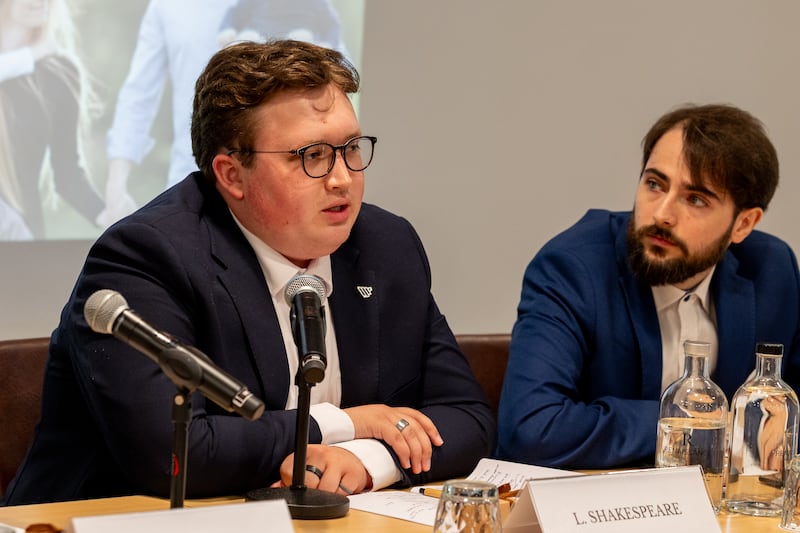
Shakespeare cited findings from the Institute for Family Studies that about half of young adults say they want to be in a relationship, but just a third actively date. He said he’s among the daters. But “a lot of people our age have lost a lot of hope when it comes to marriage formation,” he said. And he’s not sure that parents who grew up without social media pressures as they were moving into the family-formation stage feel they can confidently offer salient advice.
And don’t forget the impact of pornography on relationships, either, he said, noting that “the younger someone is when they’re exposed to pornography, the harder it is for them to maintain relationships later on.”
Making better family policy
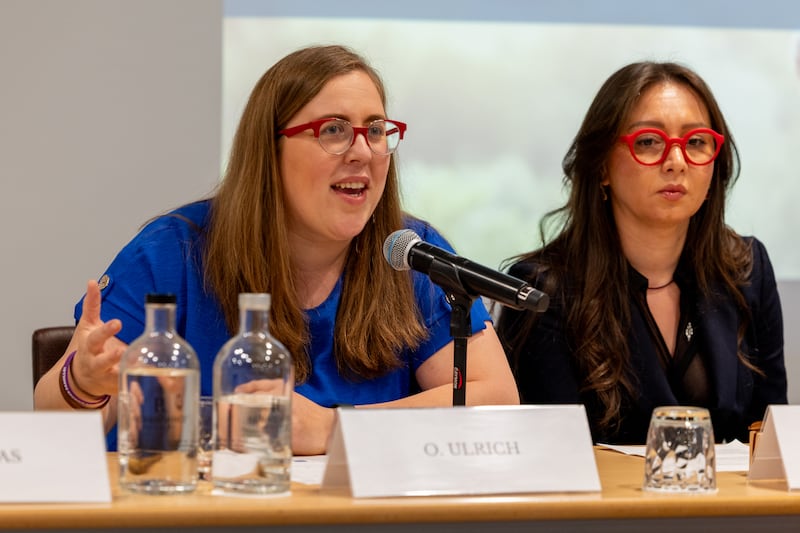
Ornella Ulrich, a participant from Luxembourg who is both a wife and mother, said the fear of an insecure future is real and has impacted her extended family. “It feels like the young people are starting adulthood in a boat that is already sinking, with holes.”
Policies countries adopt to shore up faith in the future, she added, “sometimes feel more like patches.”
Ulrich, who is a national communication director for The Church of Jesus Christ of Latter-day Saints in Luxembourg, said that Europe would benefit from holistic policies that have “family at their center.” An example could be helping women who leave work to raise a family build a bridge so they can re-enter the workforce when their kids are older, she said.
Breshanaj said part of the insecurity her generation in Albania feels comes from past policies and politics back when the country was communist. “I belong to a generation which is trying to build stability in a time of emigration, economic uncertainties and most importantly, changing social expectations.”
The “economic uncertainties” part was a theme I’ve heard in the U.S. repeatedly, as well.
The American Family Survey in 2025 found that the cost of family life is the biggest concern of American adults, with more than 70% saying raising kids isn’t affordable. Research shows children’s well-being is related in part to whether parents have financial stress or economic stability.
Helping families thrive
She wasn’t at the conference, but Stephanie Coontz is a historian who has studied marriages extensively and written at least five books on the topic, including this year’s “For Better and Worse: The Complicated Past and Challenging Future of Marriage.” She’s also the director of research for the University of Utah-based Council on Contemporary Families and professor emerita at The Evergreen State College.
When I asked her about the future of marriage, she said, “You don’t need forecasters. You need change agents now.”
The book examines a social paradox: that marriage has become both more rewarding and more fragile.
According to Coontz, “It’s not that people don’t value marriage. It drives me crazy when people say that people respect marriage less than in the past. But people have much higher standards for marriage than they used to and they have alternatives outside of marriage.”
Because both men and women have higher standards of “consideration and mutuality,” she said, while they want that partnership, they’re “increasingly unsure that they or their partner will be able to live up to that.”
There are well-documented, research-backed benefits to a high-quality marriage, from emotional support, better physical and mental health to longer life and greater financial stability. There are even legal benefits and protections. The key is the high-quality part, and many young people have told me that’s the part that worries them.
A good marriage is a real boon for any children, as well. But as Jason Carroll of BYU’s Wheatley Institute has noted, having one of those takes intention and effort. As he wrote in October, “The truth is that different couples marry for different reasons, have different priorities and have different patterns of interaction. Spouses also enter marriage with different values, virtues and communications skills.”
Young adults pondering marriage also want a more egalitarian marriage than their parents and grandparents had, per Coontz. That is also something I hear a lot in interviews. “They have very high standards for communication and mutual support that were simply not there in the 1950s marriages that people are nostalgic about.”
Since most people want marriage, Coontz said the U.S. and other countries need to make young adults “feel they have a secure enough future and solid enough support systems so that they can pull that off.”
Coontz told me just 6% to 8% of adults say they definitely don’t want to marry. But the share who are uncertain they’ll ever actually marry is growing “and especially among young women.”
Not just a money issue
As for the non-marriage-minded, “There’s certainly more room now for people who don’t want to marry or would resent being married. I think that’s a good thing instead of them having to impose that on a partner who can’t get away from them,” Coontz said. She’s seen plenty of examples of that reading old diaries and letters while researching her books, she added.
Nor is the sole issue finances when it comes to family formation. For several years, I’ve done interviews where academics, young adults, mental health experts and demographers talk about concerns behind the anxiety and depression crisis, some of it driven by big-picture issues like the environment or nasty partisan politics that young people don’t feel they can solve.
That was a point Ted Gray-Barnes Jr., 25, made in Brussels. Gray-Barnes is a Utahn who lives with his wife in Europe as he earns a degree that’s part of a consortium of seven different universities across Europe. He said money isn’t the only reason people don’t have children. “It’s a big one and I don’t think it should be ignored, but I don’t think that’s the whole story, either. We see that as the economy does better, birth rates decline, generally speaking.”
He said that happened in both the Roaring Twenties and the Gilded Age in the late 1800s. The baby boom in the 1940s is another of Gray-Barnes’ examples of resources and birth rates not lining up logically. It was bolstered, he said, by a sense of strong local community and social trust.
“There was this sense of positivity about the future, a hopefulness ... and that’s something that we’re lacking right now partially due to what technology makes us aware of, all the problems happening in the world,” he said. “Even in times of global instability, trust in our local social support systems can help. That’s something we can help with, even as we’re acutely aware of instability around the world.”
Gray-Barnes talked about people he knows who can afford kids and want to have them, but are uneasy because of those challenges over which they have no control. Plus “polarization and contention” make it really difficult to trust the people around you, he said, “and you need to be able to trust the people around you to feel safe starting a family,” which he described as a vulnerable time.
As she sees people who are reluctant to form unions, Coontz said she also sees the need for help. “From my perspective, to put it a little harshly, our political leaders should stop preaching to us about what we should be doing to make our marriages better, and start figuring out what they can do to make us feel more confident about making those commitments in the future.”
Breshanaj shared her own recipe for making marriage — and perhaps one day having kids — work.
“What makes marriage possible, I believe, is the same thing that has always made it possible. Shared values, faith and the courage to choose someone honestly, even when life is uncertain. For me, growing up in a post-communism, ascension country, I’ve learned that you don’t wait for perfect conditions to build something meaningful. You build it because it matters, and the stability comes from the commitment itself, not the other way around.”