

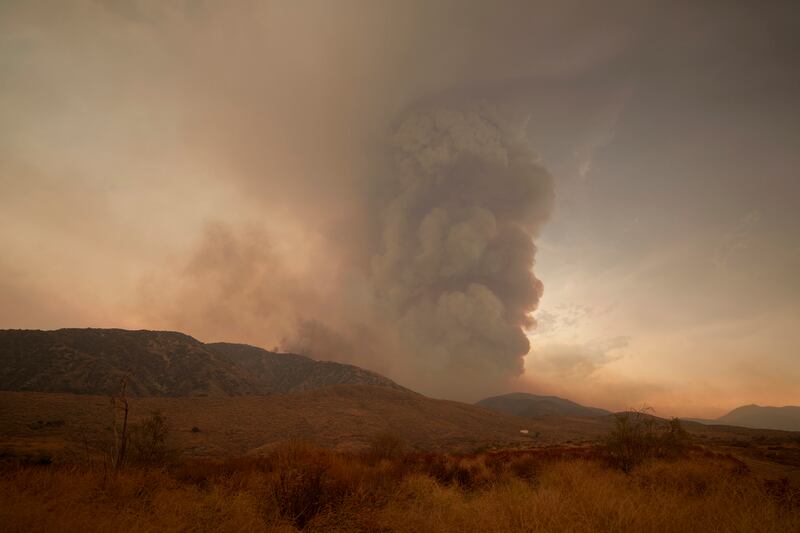
Firefighters are struggling to contain the Line Fire in Highland, California, as it continues to spread due, in large part, to extreme heat and dry vegetation.
California Gov. Gavin Newsom declared a state of emergency on Saturday night as the fire grew, with containment efforts still at 0%.
As of Monday morning, the blaze has reached 3% contained, according to Cal Fire.
More than 1,800 personnel have been deployed to fight the flames, which have been burning since Thursday evening. The fire ignited near Base Line Road and Alpin Street in Highland. The cause of the fire is under investigation.
According to CBS News, by Friday night, the fire had spread to over 3,000 acres. As of Monday morning, it had grown nearly seven times that size to 20,553 acres, threatening more than 36,000 structures.
Firefighters have been battling not only the flames but also triple-digit temperatures that have made containment efforts more difficult.
“We know that triple-digit temperatures are coming again today, so that’s why it’s so important to get that work done at night when it is cooler,” Cal Fire Battalion Chief Brent Pascua said, per CBS News. “We had the water-dropping helicopters back last night, so hopefully we’ll see that containment come up.”
Evacuation orders have been issued for more than 6,000 residents by the San Bernardino County Sheriff’s Department. Affected areas include the mountain communities of Running Springs, Arrowbear Lake, Forest Falls and Mountain Home Village.
Thousands of additional evacuation warnings were issued for Cedar Glen, Lake Arrowhead, Crestline, Valley of Enchantment, Angelus Oaks and Seven Oaks.
The significant smoke produced by the fires, combined with the intense heat, contributed to what Cal Fire described as “thunderstorm outflow winds,” leading to “very erratic behavior,” per CBS News. Over 1,100 lightning strikes have been reported in the area, adding to the challenges faced by firefighters.
Meteorologist Dave Munyan from the National Weather Service in San Diego told The New York Times that the fire spawned its own storm, known as a pyrocumulonimbus.
“The fire itself helped spawn its own thunderstorms,” Munyan said. “Most of the aviation-based fire tactics had to be suspended yesterday due to the lightning.”