


Demographers talk about a coming “silver tsunami,” a unique phenomenon. For the first time in recorded history, they say, there will be more people over the age of 60 than under the age of 20.
It could be revolutionary, overwhelming health care systems and retirement plans alike. And remaking family and community relationships. Currently, 17 % of the U.S. population is retired. By 2030 — only five years from now — one out of five Americans will be retired.
Television is catching up with these evolving times. Two recent programs featuring older people navigating life in their later years are among today’s most viewed shows.
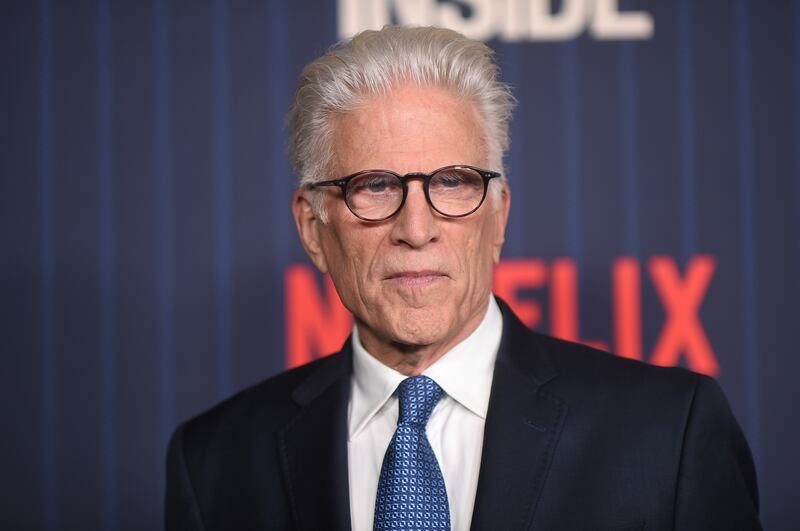
“A Man on the Inside,” stars Ted Danson who responds to a classified ad by becoming an investigative assistant for a detective agency. In the first season of the series, he is hired to go undercover by investigating a theft at an assisted living center. Danson, who is 76 years old in real life, depicts a lonely widower whose wife has passed away from complications related to dementia. His daughter, who regularly gets newspaper articles her dad has cut out and mailed to her, wants him to move on: get a hobby, find a job, start volunteering. Try something new. Anything. Just do it.
The second television program features Kathy Bates as “Matlock.” It isn’t a reboot of the old Andy Griffith series, but instead depicts a lawyer returning to work post-retirement. She is perceptive and disarming while also telling others that she can get access to people and places because her age makes her nominally invisible.
Each of these new television series portrays realistic situations that older people face every day. Neither are melodramatic. Both show characters who are interesting and energetic as well as characters who are lonely or sullen. Along with movies like Walter Matthau and Jack Lennon’s “Grumpy Old Men” and Henry Fonda and Katharine Hepburn’s “On Golden Pond,” television and movies have characterized aging in different ways revealing how both society and time take their toll.
But there is a changing landscape and new research demonstrating how Americans are growing older differently than previous generations. Longevity research, podcasts and dinner table conversations are a hot new topic. Even on TikTok. Currently, there are 22.7 million posts that refer to “longevity” on TikTok. Books with titles like “Lifespan,” “Outlive” and “Forever Strong” proclaim the realistic possibility of people living to 150 years old with fully functioning mental and physical capabilities. In recent years, scientists have identified bodily molecular and cellular markers called “the hallmarks of aging” which may be controllable and promote healthy living longer than previously considered possible.
That changes everything.
One of the dramatic conditions it changes is family relationships. As we grow older, our adult children may not only feel more protective of us, but they may also feel more entitled to tell us what to do. ”Are you still riding your bike on the road? How well do you see while driving at night? When was the last time you had a physical exam?” Our adult kids have poked around asking these and other nosey questions several times just this past week! Such questions can — and did — morph into unsolicited advice about finances, health care and daily habits. If we asked them these same questions, we would be “meddling.” Not them. They are asking us because they are “concerned.”
Such role reversals not only can happen in family relations but also in other aspects of daily living as well. “Past your prime,” “over the hill” and “aging gracefully” are common stereotypes that imply there is little left to do at a certain age except sit on the proverbial park bench and feed the birds.
That too is changing. There’s plenty of new names emerging to replace the outdated moniker “the golden years.” From “the third act” to “fourth quarter” to “ageless,” these fresh new appellations suggest the many new possibilities available for living longer and better. They all refer to new beginnings, new opportunities and new horizons.
We often think about aging as a decline, but new research suggests it might be more like a rollercoaster with all sorts of ups and downs. The new data doesn’t fit our old assumptions and stereotypes anymore. Living well into our 80s and 90s and beyond also seems to have more to do with our mindset than our genes, according to new research from UC Berkeley.
Researchers found that our genetic makeup affects our tendency toward such maladies as Alzheimer’s, diabetes, cancer and heart diseases when younger, but as we age our DNA has a lower impact than outlook and environment.
According to Dr. Peter Sudmant, assistant professor of Integrative Biology at UC Berkeley, our genes ramp up or down based on certain “markers” causing various ailments. These seem to be controlled less by our DNA as we age and more by factors such as where and how we live. “Massive amounts of public resources have gone into identifying genetic variants,” he says, even though “genetic variants” matter less than other factors as we age.
These other factors seem to hinge on what today is termed “movement” or daily activity and “mindset” or outlook and sense of well-being.
Perhaps the old saying, “You are only as old as you think we are” may be more accurate than we ever knew.
Or, as my wife likes to say, “Age is just a number and mine is unlisted.”
Start now. Rethink your future. Renew. Refresh. Reboot.