

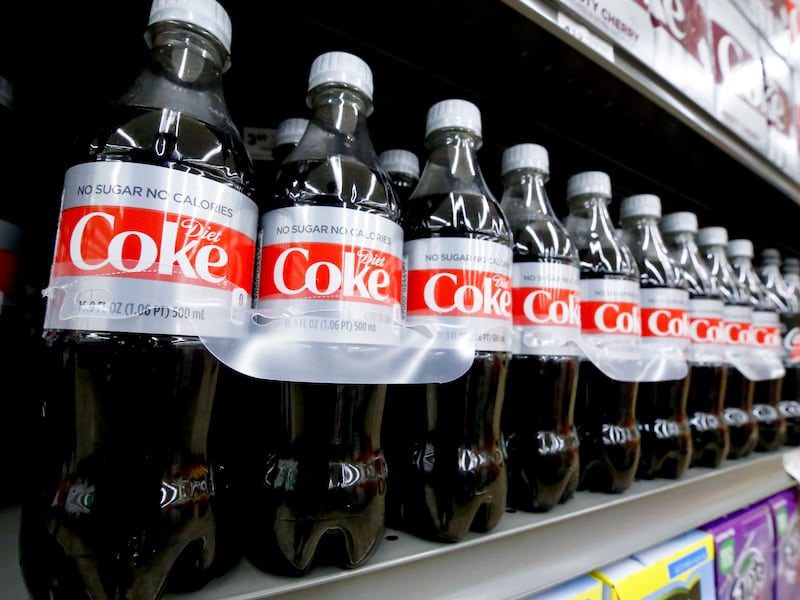

The scientific community has long debated whether zero-sugar or sugar-sweetened sodas are the “healthier” choice. But a recent study has shifted the focus to a different comparison: diet soda versus water.
For those loyal to a daily Diet Coke, the research findings may offer some validation.
While switching from sugar-sweetened Coca-Cola to its aspartame counterpart is a common step to decreasing sugar intake, researchers did not pit the two sodas against each other. Instead, they compared artificially-sweetened drinks to plain old water.
The results showed that for certain patients, drinking diet soda may be no different than drinking water — and in some cases, potentially better.
Researchers at the University of California, Irvine, and the University of Minnesota recruited adults 35 and older with Type 2 diabetes who had a habit of drinking artificially-sweetened beverages.
They set out to understand how those artificial sweeteners impact blood sugar management and other biological processes that shape an individual’s health.
The study, funded by the U.S. National Institutes of Health and the National Institute of Diabetes and Digestive and Kidney Diseases, found evidence that artificially-sweetened beverages may actually improve health outcomes, specifically for those with Type 2 diabetes.
The “Study of Drinks With Artificial Sweeteners (SODAS)” trial was a randomized clinical trial conducted from 2019 to 2023. Of the 181 individuals who enrolled, 179 completed the 24-week research trial period.
Half of the participants were asked to switch their usual diet soda to water, while the other half continued drinking their zero-sugar beverages. Both groups were given three servings a day of their assigned beverage throughout the trial.
Gideon Meyerowitz-Katz, an epidemiologist at the University of Wollongong in Australia who was not involved in the study, noted the research is one of the more robust he has seen. He also pointed out that it was one of the few of these types of studies that was not sponsored by the beverage industry. However, he added the latest research found consistent results with other studies of the same nature that were funded by industry.
What did researchers find?

Researchers focused primarily on hemoglobin A1C, a common test that measures average blood sugar levels over a two- to three-month period. If an individual has higher A1C levels, it indicates poorer blood sugar management, according to the Mayo Clinic.
For the participants who continued drinking artificial sweeteners, A1C levels improved slightly, dropping from 7.19% to 7.14%.
In the group that switched to water, the average level worsened, rising from 7.20% to 7.44%.
Other metrics were looked at, including fasting glucose and insulin, which also showed better results in the diet drinks group.
So what does that mean for you?
At least in the case of this study, there were no noticeable benefits for those who switched from diet sodas to water; if anything, it may have had slight negative effects.
While the results might seem to favor soda, Meyerowitz-Katz says a more likely explanation for the researcher’s results would be that water and diet drinks are relatively equal when it comes to blood glucose levels and health.
The researchers concluded that maintaining usual diet soda intake may be an effective tool to help manage Type 2 diabetes, if the individual’s blood sugar measures are already stable.
Meyerowitz-Katz agreed with the findings, saying, “At worst, there is no difference between diet soft drinks and water when it comes to diabetes control. At best, the diet drinks might be slightly better.”