

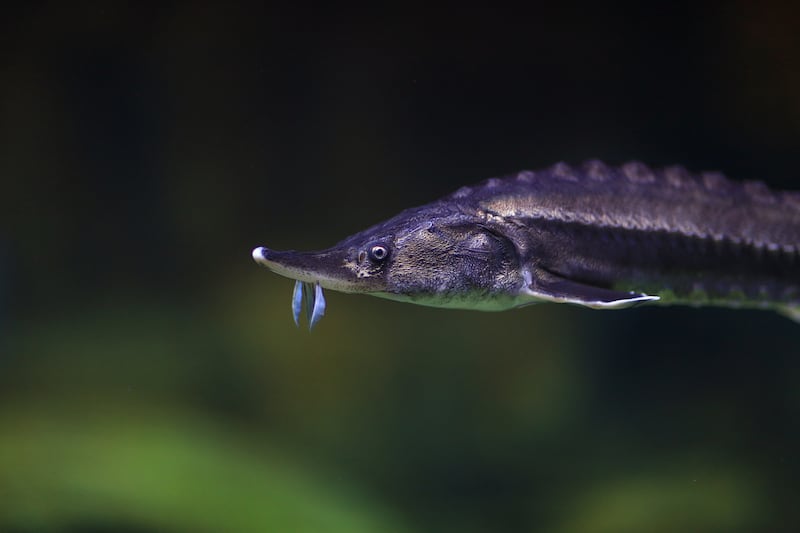

- The Utah Division of Wildlife Resources proposes to stock two reservoirs with white sturgeon.
- White sturgeon can grow to 20 feet long and more than 1,500 pounds in their native habitat.
- Wildlife manager says it's unlikely the fish will grow that large in the Utah waterbodies.
A big fish — North America’s largest freshwater fish, in fact — could find its way into a couple of small Utah lakes.
The Utah Department of Wildlife Resources is proposing to introduce white sturgeon to Hobbs Reservoir in Davis County and Grantsville Reservoir in Tooele County.
About 50 of the fish would be stocked in each of the two reservoirs. The Hobbs Reservoir is known for its rainbow trout and brown trout. Grantsville Reservoir, too, has rainbow trout and brown trout along with smallmouth bass.
“We are exploring the use of white sturgeon to increase species diversity in Utah’s fisheries, thereby enhancing the fishing experience for anglers who prefer waterbodies with multiple fish species,” DWR Aquatics assistant section chief Craig Walker said. “These proposed introductions are part of an effort to find new ways to manage fisheries amid changing water conditions, while simultaneously creating new fishing opportunities in the state.”

Capable of reaching 20 feet in length and weighing more than 1,500 pounds, it truly would be a big fish in a small pond. But that’s in its native habitat. Wildlife managers don’t expect those waterbodies to ever produce fish that size.
What is a white sturgeon?
The white sturgeon is a large, prehistoric fish species native to several large North American rivers that drain to the Pacific Ocean, including the Columbia River and its largest tributary, the Snake River. They have a long, pointed snout, a shark-like tail and rows of bony plates called scutes along their bodies.
The fish primarily live in estuaries, but migrate to spawn in freshwater, and travel long distances between river systems. They feed on mollusks and crustaceans when they’re smaller and move to a fish diet as they mature. They can live more than 100 years in their native range.
“Although white sturgeon become sexually mature at age 25, these fish rarely reproduce successfully within reservoirs,” Walker said.
The most common way to catch them is by using fish parts fished on the bottom with heavy tackling when going after mature fish, he said. Smaller bait like dead crayfish would probably be effective for hooking the smaller fish that would be stocked.
While the fish’s firm, white meat is good to eat, its eggs, known as caviar, are a delicacy.
Utah anglers, though, won’t or shouldn’t be tasting them. Regulations call for sturgeon to be catch-and-release only in both reservoirs.
A fishing experiment
Walker said Wildlife Resources doesn’t take the introduction of a new species lightly, regardless of the potential benefit. It takes into consideration the risk of white sturgeon escaping the reservoirs and its impact on aquatic systems, native species, sport species as well as whether anglers will embrace the fish.
“Additionally, as is the case with white sturgeon, angler expectations must be tempered,” he said, noting the fish are unlikely to grow as big as they would in their native habitat.
Calling the introduction experimental, Walker said wildlife managers will monitor the growth and condition of the fish in the two reservoirs. They wouldn’t be stocked until Wildlife Resources completes a review process and gains the necessary approvals. No timeline was specified.