

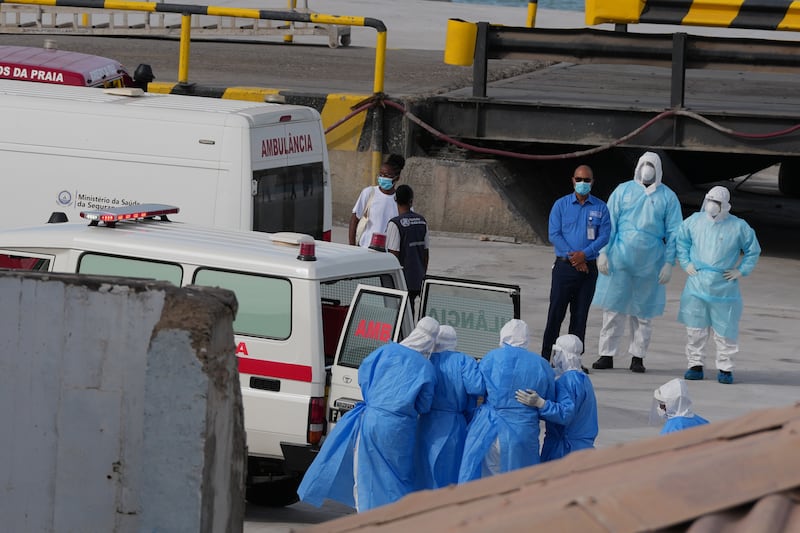

- The incubation period for hantavirus lasts up to six weeks after exposure.
- Health officials are actively tracking passengers who left the ship early.
- Human-to-human hantavirus transmission is rare and mainly associated with close contact.
As passengers on the beleaguered cruise ship Hondius may finally be heading home next week, a crucial question is circulating: Could a strain of hantavirus that spreads from one person to another come with them?
Many countries are on high alert after five cases of hantavirus were confirmed — three of them deadly — and another three infections are suspected among people on the ship, according to the World Health Organization.
But the ship’s operator, Oceanwide Expeditions, noted in an update Thursday that none of the passengers still on board have any symptoms of illness. There is still a chance someone will have the infection, though, as the WHO reported that hantavirus incubation can be six weeks.
The WHO’s director general, Tedros Adhanom Ghebreyesus, told reporters that the risk to the public remains low.
Officials are also tracking down passengers who left the ship early.
Where is the cruise ship now?
The ship left Cape Verde on Wednesday and is sailing to the Canary Islands, where it is expected to dock in a few days in Tenerife. The company said in a news release that no one onboard has symptoms. The company added that it “remains in close and continual discussion with relevant authorities regarding our exact point of arrival, quarantine and screen procedures for all guests, and a precise timeline.”
If “all goes well,” Spanish authorities said the ship should arrive on Sunday and evacuations would begin Monday.
The Centers for Disease Control and Prevention said Wednesday that along with the State Department, the public health giant is keeping a close eye on the health status of the 17 Americans aboard the ship.
While the risk to the public is “extremely low,” CDC reported in the news release, “The Department of State is leading a coordinated, whole-of-government response including direct contact with passengers, diplomatic coordination, and engagement with domestic and international health authorities.”
Dr. Jay Bhattacharya, head of the National Institutes of Health, posted on X that hantavirus doesn’t spread from people who do not have symptoms and emphasized that the risk to the public is low.
But as NBC News reported, “The United States was among the countries on Thursday urgently tracking dozens of passengers who traveled on the cruise ship at the center of a deadly hantavirus outbreak.” Dozens of them disembarked a couple of weeks ago.
The Andes virus is different
Atypically, the spread is believed to have been person-to-person, though the hantavirus normally spreads through contact with rodent excretions. The WHO reported that “to date, human-to-human transmission has been documented only for Andes virus in the Americas and remains uncommon. When it occurs, transmission between people has been associated with close and prolonged contact, particularly among household members or intimate partners, and appears most likely during the early phase of illness, when the virus is more transmissible.”
Person-to-person spread of even the Andes hantavirus, while possible, is rare.
A Dutch married couple on the cruise ship died, as did a German national. A British passenger is hospitalized in South Africa. Per NBC, “It emerged Wednesday that a man who had left the ship was being treated in Zurich with suspected hantavirus.”
NBC also reported that one of the suspected cases involves a woman who was not on the ship, leading health authorities to believe the outbreak started with a birdwatching expedition. All three who died participated in that.
Tracking passengers who left early
Weeks after the first death on board, 30 passengers left the ship in St. Helena, including the body of a passenger who died, Oceanwide Expeditions said Thursday. Once it was discovered the illness could pass person to person, the company has been reaching out to them. “We are working to establish details of all passengers and crew who embarked and disembarked on various stops of m/v Hondius since March 20.”
The ship’s timeline includes loading 114 guests on April 1, the departure of the 29 passengers and the deceased person on April 24 and the confirmation the illness was hantavirus May 4.
NBC said that of those who were aboard and left the Hondius, one is in Arizona, one in Virginia, two in Georgia and an unknown number are home in California. “None were reported to have symptoms of the rare virus, with officials saying the risk to the public remains low.”
The WHO’s Maria Van Kerkhove emphasized the point. “This is not the start of an epidemic. This is not the start of a pandemic,” she said.