

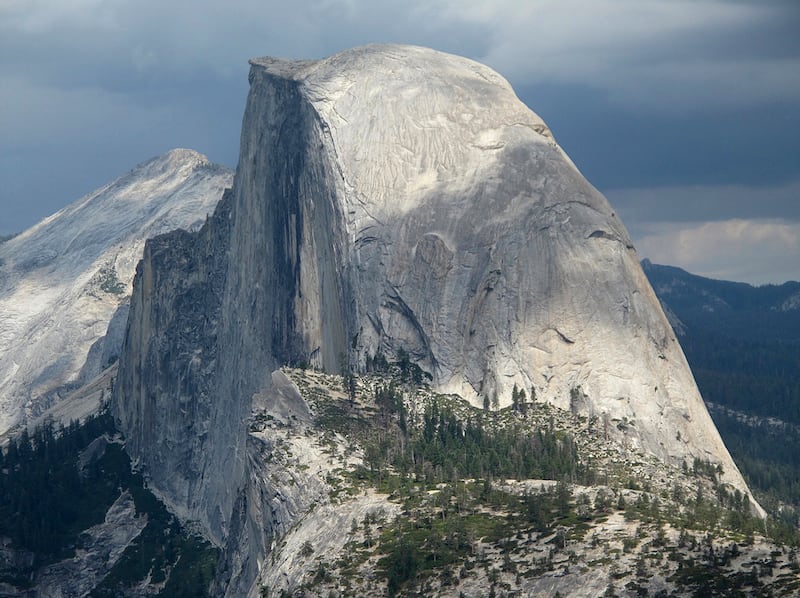

- The National Park Service ended the reservation system at some of its busiest parks.
- Crowds swarmed Yosemite National Park over the Memorial Day weekend.
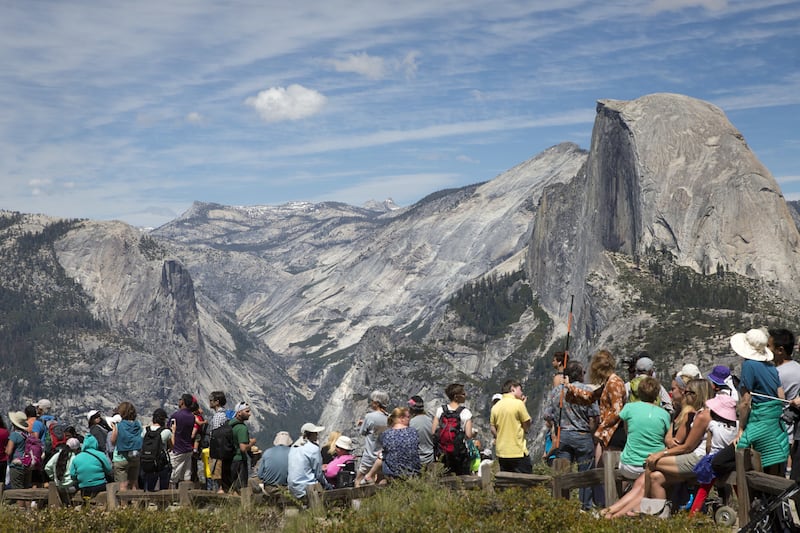
- Visitors described it as chaos and social media posts showed long lines of hikers.
Yosemite National Park announced this past February that it would no longer use an entrance reservation system.
One of the most visited parks in the country — fifth on the 2025 list after Great Smoky Mountains, Zion, Grand Canyon and Yellowstone — it put visitor limits in place in 2020, like Arches National Park, which also ended its timed-entry system this year.
As of last month, however, Yosemite is already experiencing a 20% increase in visitors year-over-year, with around 90,000 more people entering the park in 2026. In comparison, Arches’s visitation is up less than 10%.
But since the announcement was made, the change at Yosemite has been palpable. President’s Day Weekend, which fell soon after the announcement and included Valentine’s Day, was especially challenging, according to SFGate.
And this summer has the potential to be the first real opportunity to assess whether the reservation system benefited the park service. And Memorial Day offered a glimpse of what a future without entry limitations might be like.
Some visitors described the scene at Yosemite to ABC7 as “chaos.” One Instagram post user overwrote her story with, “When you decided to go to Yosemite this weekend, but so did the rest of the world.”
Chaos in Yosemite
It took some visitors over an hour-and-a-half to get into the park. Congestion then cascaded from the parking lot to the shuttle and onto the trail.
Parking was especially challenging with social media and local news videos showing cars parked along roads for miles. Some cars were parked in places that were clearly not intended to be spaces.
One park visitor, John Leerskov, told ABC7 that “it was impossible to park.”
“I would say by 7:30, the entire park, it was impossible to park there,” he said. “There’s nowhere to park for anybody.”
A local conservationist, Beth Pratt, described the scene as people “waiting to find parking, waiting to get on the shuttle, with many getting impatient and just illegally parking wherever they could. There are people pulling onto meadows, pulling off pavement, going off-road.”
Instagram user adv.of.grace posted a video with heavy music that showcased some of the crowds. Her caption read:
“Visiting Yosemite on a weekend or Holiday means heavy crowds, extremely early morning starts, loads of people, and some added chaos to your trip!”
Why did national parks end the reservation system?
According to the February announcement, the park system’s analysis found that the traffic and visitation on “most weekdays” was within the operational capacity of the parks. Based on those findings, it decided restrictions that spanned across the entire season were not the “most effective approach for 2026.”
“We are committed to visitor access, safety, and resource protection, and will continue active traffic management strategies to ensure a great visitor experience,” Ray McPadden, Yosemite superintendent, said in a statement.
“While reservation systems are one valuable management tool, our data demonstrates that a season-wide reservation requirement is not the most effective approach for the coming season.”
At the time, Yosemite suggested that visitors plan to arrive early, consider weekday trips, make sure they are aware of the real-time updates provided by the park service and to “explore options for hiking, sightseeing and recreation outside Yosemite Valley.”
For now, the park’s central road is closed due to snow in the forecast. Even though the park service decided to no longer limit the number of visitors, there are still some systems in place to prevent overcrowding.