


- Two people in Michigan have died from cyclosporiasis — the first fatalities in this outbreak.
- The 6,707 lab-confirmed cases far exceeds the previous record of 4,700 in 2019.
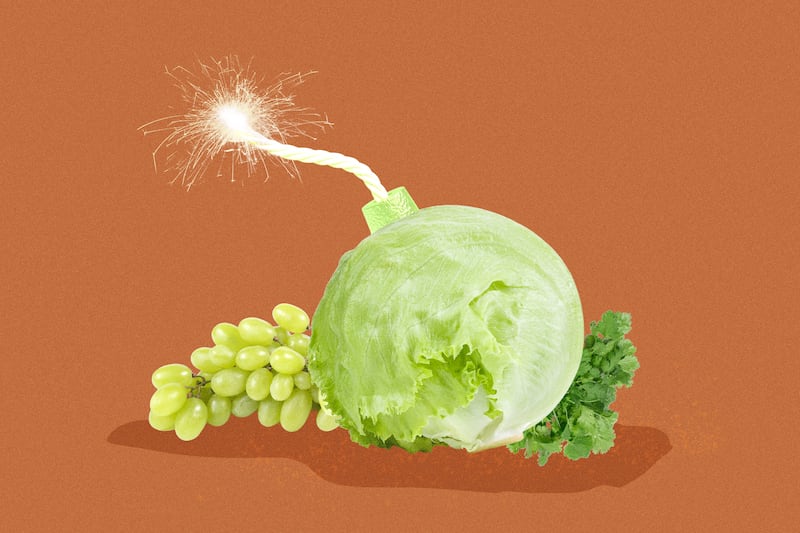
- A nine-state outbreak is linked to iceberg lettuce from Taylor Farms de Mexico.
Parasite-caused cyclosporiasis has now killed two people in Michigan and the Centers for Disease Control and Prevention is reporting that thousands of cases have been confirmed across the U.S. since May 1.
According to the official count, the CDC has 6,707 lab-confirmed cases that were acquired in the U.S., while more than 11,500 other cases are either not yet lab-confirmed or need more investigation, including whether they involved international travel. None of those who became ill had traveled outside the U.S. within two weeks of becoming sick.
There are officially now “multiple clusters” of gastrointestinal illness linked to the Cyclospora parasite, including one nine-state outbreak that has been tied to iceberg lettuce from Mexico that came from Taylor Farms and was sold at retail stores and served in restaurants.
The investigation of that outbreak continues, led by the CDC and the U.S. Food and Drug Administration in cooperation with local public health officials.
CDC surveillance currently shows 45 states reporting lab-confirmed cases, including the two deaths and at least 423 hospitalizations. Maine, Montana, New Mexico, Hawaii and South Carolina are the only states without at least one confirmed case.
There are also 1,018 lab-confirmed cases acquired outside the U.S., per the CDC. Of those, 42 people were hospitalized, but no one died.
Few details were released about the two individuals who died, though the Michigan Department of Health and Human Services said that both individuals had health conditions that made them more vulnerable to serious illness and dehydration.
What is cyclosporiasis and who got sick?
Cyclosporiasis is the illness caused by the parasite Cyclospora. It occurs when human feces contaminates food or drink, and is most often tied to irrigation water that’s used to help grow produce. It can cause watery diarrhea, “with frequent and sometimes explosive bowel movements,” as the CDC describes it. There’s a season — typically May 1 to the end of August — when exposure is more likely.
As NPR reported, “These parasites rely on the digestive tracts of humans — and only humans — to reproduce. To get there, they’ve likely been hitching rides on crops from places where the parasite is relatively common, to the unwitting mouths of hungry people across the U.S. Their complex biology contributes to why they’re so hard to kick, leading to infections that can last for weeks or months."
The CDC describes the illness as miserable, but seldom deadly.
The list of symptoms published by the FDA includes loss of appetite, weight loss, stomach cramps and pain, bloating, increased gas, nausea and fatigue. Some people complain of body aches, headaches and fever. They may vomit. Others don’t have any symptoms. It’s not passed person to person like flu or COVID-19, but poor hygiene could lead to spread.
Symptoms can last days, weeks or even a month or more. For some, symptoms can abate and then return, sometimes more than once. Those with weakened immune systems can experience severe illness that lingers and complications that require “close medical attention.”
The CDC said in the cases acquired in the U.S., those sickened ranged in age from 1 to 98, with a median age of 44. The majority — 56% — were female. And the count includes illness onsets from May 1 to July 25.
In the foreign-acquired cases, those who became ill ranged from 8 months old to 89 and 58% were female. The dates of illness in the count covered May 1 to July 22.
The Associated Press quoted Dr. Joel Kammeyer, Wayne State University infectious disease division chief and Detroit Medical Center, who called the deaths tragic, but pointed out that although there are thousands of cases, only two people have died.
“For someone who comes into an urgent care and cyclosporiasis is their only issue, it’s relatively easy to treat,” Kammeyer said. He noted that if there are other underlying health issues, “it stands to reason that there are some patients that might not be able to withstand the dehydration that can come with severe cyclosporiasis.”
Per AP, the largest previous outbreak in the U.S. was in 2019, when 4,700 cases were confirmed. In the current outbreaks, because reporting lags behind, there may be more than 20,000 cases.
Cases in the Beehive State
Utah has had 48 cases of cyclosporiasis since May 1, according to the Utah Department of Health and Human Services. And the Utah Department of Agriculture and Food said that Utah did not receive the recalled product — lettuce from Mexico — that has been implicated in the larger national outbreak.
Of the Utah cases, 31 of the individuals reported foreign travel, while 12 reported traveling outside of Utah but within the U.S. Five cases, which are still under investigation, involved no travel outside of Utah.
In several of the cases, interviews are still needed, per the Utah public health update.
Utah-based ARUP Laboratories announced it has added Cyclospora positive test results to its National Infectious Disease Test Positivity Trends Dashboard to help clinicians, laboratories and public health professionals monitor the outbreaks and other emerging infectious disease trends nationwide.
Per its website, “The dashboard uses deidentified test results to reveal national trends that may help clinical laboratories, medical directors, and clinicians detect unusual patterns, seasonal shifts, and emerging infectious disease activity.”
The dashboard contains data from tests performed at ARUP labs.
Retailers, restaurants and brands linked to outbreaks
The FDA lists stores and restaurants where exposure has been linked, but notes that the list could very well be incomplete.
Lettuce served at Taco Bell in nine states is believed linked to illness in Illinois, Indiana, Kansas, Kentucky, Michigan, Ohio, Oklahoma, Pennsylvania and West Virginia. Taco Bell said it is no longer using lettuce from Taylor Farms de Mexico.
Taylor Fresh Foods, per FDA, distributed iceberg lettuce products from June 29 to July 16 in 27 states: Alabama, Arkansas, Connecticut, Florida, Georgia, Iowa, Illinois, Indiana, Kansas, Kentucky, Louisiana, Massachusetts, Maryland, Michigan, Missouri, Mississippi, North Carolina, New Hampshire, New Jersey, Ohio, Oklahoma, Pennsylvania, South Carolina, Tennessee, Texas, Virginia and Wisconsin. The lettuce was later recalled.
In retail stores, the recalled Marketside-brand products were sold at Walmarts in Alabama, Arkansas, Florida, Georgia, Indiana, Kansas, Kentucky, Louisiana, Missouri, Mississippi, Oklahoma, Tennessee, Texas, Virginia and West Virginia.
Staying safe
No one suggests that people stop eating fruits and vegetables because of the possibility of Cyclospora contamination. Produce is a key part of a healthy diet. But they are urging consumers to take some precautions in the preparation of produce.
The FDA offers this guidance:
Discard outer layers, where possible. “Throw away the outer two to three layers of leafy greens,” for instance.
Rinse produce thoroughly with clean running water. It’s an important first step with any produce to avoid a lot of things, but in the case of the Cyclospora parasite, it may not be enough. Before you peel or prep fruits and vegetables, rinse them under clean running water. Use a clean vegetable brush to scrub firm produce.
Don’t use bleach or soap to rinse them. It doesn’t help and isn’t a good idea. Besides, Cyclospora can resist chlorine-based sanitizers.
If your produce is pre-washed or pre-cut, be aware it may not remove the parasite.
Avoid cross contamination. Clean scrub brushes, counter tops, knives, cutting boards, etc., with hot, soapy water.
If your produce can be cooked, cook it to a temperature of at least 158°F. The parasite can’t survive at that temperature.
Wash hands before and after handling food for at least 20 seconds in warm water and soap.