



- Utah State University has built the world's largest collection of outdoor recreation history.
- Major brands travel to Logan to comb through old catalogs, magazines and sketchbooks.
- The Outdoor Product Design & Development program uses the archive in its curriculum.
Abercrombie & Fitch might be best known today for its casual 20-something clothing, as it transitioned away from teen wear and provocative ads a decade ago.
But that might not be the most dramatic change the company has undergone in its long history.
In fact, when camper, hunter and fisherman David T. Abercrombie founded the store in Manhattan in 1892, he dubbed it the “greatest sporting goods company in the world.” Its 12-story building on Madison Avenue featured a rooftop fishing pond, basement shooting range and packing services for global expeditions. Customers included the adventurous Theodore Roosevelt, Ernest Hemingway and Amelia Earhart.

Abercrombie published a digest-sized catalog showcasing the store’s high-end camping, hunting and fishing gear in 1903.
Utah State University has an original copy in its vast Outdoor Recreation Archive, the world’s greatest collection of outdoor gear catalogs, photographs, periodicals and audiovisual materials documenting more than a century of outdoor industry history. The Abercrombie catalog is one of the oldest and most surprising items among the thousands upon thousands stored in the Merrill-Cazier Library on campus.
Clint Pumphrey, manuscript curator for Special Collections and Archives, and Chase Anderson, industry relations manager for the Outdoor Product Design & Development program, started the project in 2018 with 1,200 catalogs from collectors in California who kept every one they received in the mail from the 1960s to the 2010s. The idea was to make them available for students in the outdoor products design program.
The power of Instagram

Anderson decided to put images of what the pair had gathered on Instagram, “and that’s when it kind of blew up,” Pumphrey said.
People from all over the world started to message them: What is this? Where is it? How can I see more of it?
“We were like, wow, OK, this is obviously a valuable resource for the students, but it’s also maybe something that people outside the university would really value, too,“ Pumphrey said. ”And what we ultimately realized was that there was no public institution systematically collecting the history of the outdoor industry and outdoor brands.”

Eight years later, the archive has nearly 8,000 unique items in the catalog collection alone representing more than 1,000 brands, including all the big names — The North Face, Patagonia, JanSport and REI, to name a few, as well as obscure companies long out of business.
“The oldest item is from 1900, and the newest items are things that I literally take out of my mailbox and just put it in the archives,” Pumphrey said.
And it’s not just catalogs. The shelves contain outdoor industry magazines, trade publications, how-to-use-gear guides, books, videos, sketchbooks, manuscripts, financial records, company histories, biographies, photographs and posters.
Pumphrey and Anderson travel far and wide to gather materials for the archive. They drove 800 miles from Logan to St. Peter, Kansas, — “10 miles off the nearest paved road in the middle of nowhere” — where JanSports co-founder Skip Yowell’s widow, Winnie Kingsbury, had stored a treasure trove of items in the basement of a parsonage for an abandoned Catholic church. They sorted through tubs of stuff and hauled back all of his papers in a USU van.
Taking the show on the road
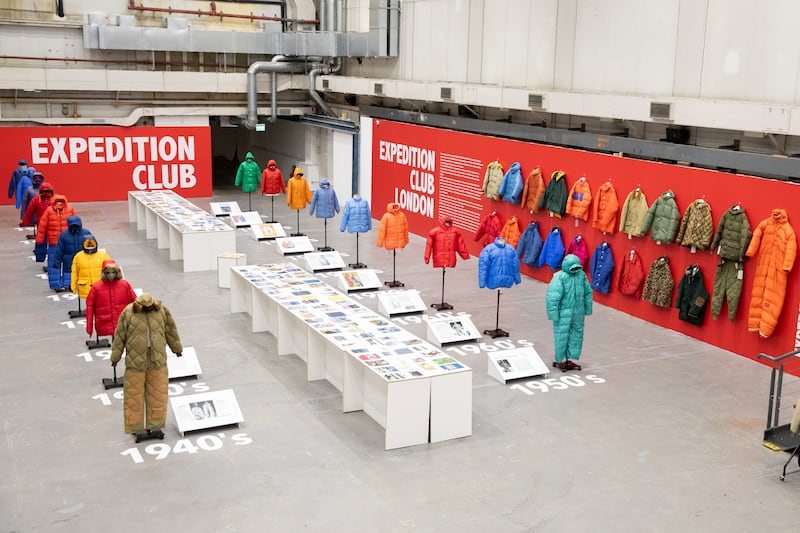
The pair also take select items from the archive on the road in partnership with Beams, a major Japanese retailer, to exhibitions and trade shows in Tokyo, London, Munich, New York, Portland, Nashville and even Paris Fashion Week. They’re headed to Taiwan in October.
“So much of this is unexpected,” Anderson said. “We never imagined going to Paris or Kansas.”
The Instagram account, outdoorrecarchive, has amassed a global audience and nearly 53,000 followers, second only to the university’s general account and surpassing both the football and men’s basketball teams.
They’re always looking to acquire new items. A whiteboard in their office lists at least 50 names of people who have expressed interest or are in the process of donating.
“Because no one else in the world that we are aware of is doing this, no other institution, it’s really fertile ground to collect and preserve,” Anderson said. “No one else has done this work of gathering the documents and preserving the stories. So there’s a lot to uncover still.”
Last month, Anderson and Pumphrey received the Philip M. Hamer and Elizabeth Hamer Kegan Award from the Society of American Archivists for building the Outdoor Recreation Archive.

What they have uncovered has attracted the attention of major national and international outdoor brands. At least 30 different companies, including The North Face, Patagonia and Italian footwear manufacturer Vibram, have sent teams to Logan the past few years, including 11 in 2025 alone. Sometimes it’s to educate employees about the history and heritage of the company. Often they come looking for vintage inspiration or to integrate a feature or design element from the past into new products and ad campaigns.
“I think a lot of companies, especially in the outdoor industry, are kind of hitting milestone years,” Anderson said. “I think it’s an opportunity for those brands to remind everyone, ‘We’ve been around a while and this is what we’ve done and this is what made us successful to begin with.’ That’s part of the value that I see in history and archives is this opportunity to remind brands and customers of why people fell in love with the brand to begin with.”
Each visitor to the archive gets a Polaroid photo tacked to a corkboard in the office. “The coolest archive ever,” one wrote on the photo. “My eyes burn from looking at so many amazing magazines.”
Pumphrey said the companies usually find out after they arrive that they haven’t planned enough time. Rather than three or four hours, they need three or four days or weeks.

“Now with all these visitors and events that we’ve been able to do, we realize that it’s something that the entire industry has found valuable,” he said. “That’s really exciting as an archivist, for sure.”
One thing that’s very noticeable in the catalogs and ad campaigns from the ‘70s and ‘80s is how whimsical and playful they were — far less serious than those of today. Anderson said that reflects how the brands were started.
“I think that’s a big takeaway ... There’s a lot of risk-taking. It was less corporate,“ he said. ”A lot of these companies were just like a group of climbers who decided to make their own stuff because they couldn’t find the kind of gear that they wanted to go do the activities they loved."
Both Anderson and Pumphrey had a hard time coming up what they might see as the crown jewel of the collection. But Anderson said iconic brands created in Utah are still very much an untapped resource.
Big city, bright lights
Beams, one of Japan’s most influential fashion and lifestyle retailers, has made two trips to Logan from Tokyo.
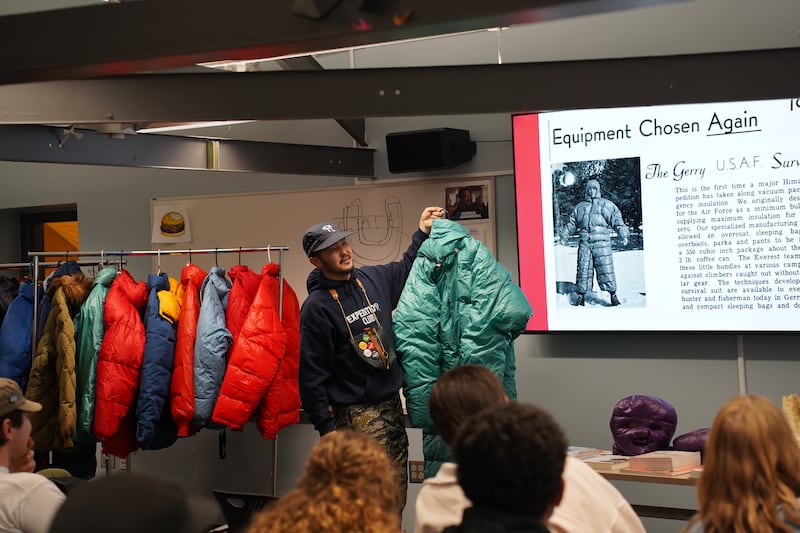
Shigeru Kaneko, chief buyer for Beams Plus, one of the company’s premier labels inspired by classic Americana, learned about the outdoor recreation archive on Instagram. He’s active on the platform posting images of his large collection of vintage clothing, particularly rare down parkas. The guys at USU sent him a direct message: “You have an incredible collection of vintage outdoor gear, and we have a massive archive of outdoor reference materials. Let’s collaborate and do something interesting together!”
Vintage clothing is hugely popular in Japan but American outdoor brand catalogs in particular were not widely distributed there back in the day, he said. To source them as reference material, the company had to hunt them down on eBay or at secondhand bookstores.
Kaneko hit the motherlode 5,400 miles away.
“Vintage catalogs are not just online speculation — they are authentic textbooks. In today’s design and manufacturing landscape, where products need more than just a price tag, these historical materials are invaluable because the background and story behind a piece matter now more than ever,” he said via email.
Kaneko made his first visit to the archive in 2024. He said it offers both accurate technical details about the products and a genuine feel for the brand atmosphere of bygone eras.
“Beyond the catalogs and magazine archives that you simply can’t find in Japan, seeing original photographs and designer sketches revealed the mood of the time and the stories behind how these garments were brought to life. There was so much there that you could only learn at ORA,” he said.
And the “interesting” thing Kaneko, Pumphrey and Anderson came up with after that initial outreach is called Expedition Club. It combines the USU traveling archival materials with items in Kaneko’s personal collection for events in various cities around the world.
Shaping the outdoor industry future

The archive is now fully integrated into USU’s Outdoor Product Design & Development program.
To mark its 10th anniversary this past April, Kaneko delivered a lecture to students about the history and stories behind expedition down jackets.
“It was an absolute honor that a connection formed on Instagram evolved into an opportunity to pass this knowledge on to the next generation shaping the future of the outdoor industry,” he said.
Kaneko said what impressed him most was the sheer passion the USU archive team has for preserving and passing down the history of the outdoor industry. While they curate the materials for the students in the program, their commitment to creating an environment that teaches that history to the future pioneers of the industry — through classes and exhibitions— was “deeply inspiring for someone like me who works with classic clothing.”
For example, the faculty might give students in the design course an assignment to design a product for a specific company like Black Diamond or The North Face. Before they put pencil to paper, they have to go into the archive and look at those brands’ catalogs to better understand where the company came from, how it evolved and see the look and feel of its products, Anderson said.
“It’s a good opportunity for students to learn and understand the value of what they’re learning in class,” he said. “They can see it, like these iconic designers, the work that they did and how sketching was important to them, and they can maybe translate that into some motivation to sketch in class.”
And who knows? Maybe their designs will be part of the outdoor recreation archive someday.