



- CDC wastewater data shows COVID-19 activity rising in all 50 states, with the South and West seeing the highest levels.
- A new FDA-approved drug, Xocova, allows post-exposure prophylaxis for the first time.
- Older, very young and immunocompromised individuals remain most at risk. Updated vaccines are recommended.
A federal health agency is warning that COVID-19 cases are on the rise, part of a not unexpected summer surge. And while emergency room visits as a result of the virus are low, they’re increasing, according to the Centers for Disease Control and Prevention.
In fact, respiratory illness severe enough to send people for care is very low in general at the moment. But it’s not expected to stay that way. Recently, COVID detection in wastewater has been high in Texas and Mississippi and moderate in California and Hawaii, as well as in U.S. territories Guam and Virgin Islands.
Activity level for two other respiratory illnesses that often circulate at the same time as COVID-19 — respiratory syncytial virus and influenza — are also both low but expected to grow in winter, as of Aug. 21, 2026 for all three illnesses.
Some have speculated that peak season for the coronavirus has migrated from winter to summer in the Northern Hemisphere. Recently, The Los Angeles Times wrote that California has been seeing a summer wave that seems to be outpacing its winter cases.
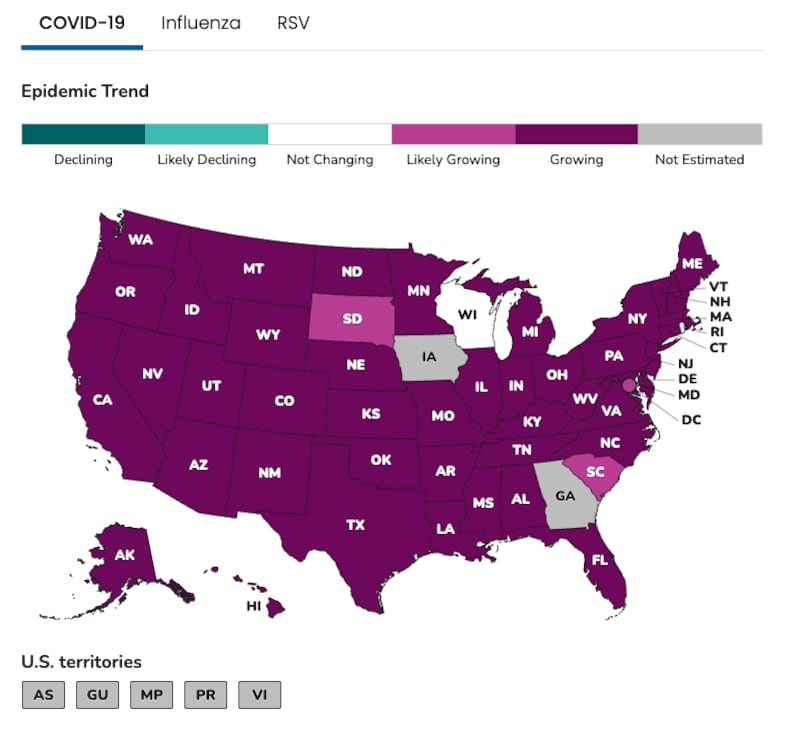
Health officials say there have always been two peaks for COVID-19, with cases rising in July, August and September and another peak season from December through late February or March.
There are still two peaks, but they may not impact the entire nation. It’s likely that regions that have a harsher winter COVID-19 don’t see as much of the virus in the summer or people have more immunity, which decreases the number of at least severe cases. The reverse is also true. Parts of the U.S. with more severe COVID-19 in summer don’t peak as much in winter.
As the CDC puts it, “Lower projected activity during the summer could be due to increased population immunity to COVID-19 following higher levels of infection during the preceding fall and winter months.”
Utah state epidemiologist Dr. Leisha Nolen told Deseret News this week that “we have definitely seen waves of COVID come through each summer. While other states are having significant increases right now, we have not.”
So what can people expect from the next waves of COVID-19?
Predicting COVID-19
Summer and winter have some factors relative to COVID-19 in common, including that both seasons can drive people indoors, where transmission of the respiratory illness is more likely if one is exposed.
People gather indoors when it’s extremely hot or cold. And there tend to be a lot of indoor group activities during both seasons, as well, according to an informational post on COVID-19 from drug manufacturer Pfizer. But it notes that new variants can increase the number of cases at any point during the year.
“As the weather gets hot, we spend more time in air-conditioned indoor spaces, where most virus transmission occurs,” Andrew Pekosz, professor of molecular microbiology and immunology at Johns Hopkins Bloomberg School of Public Health, told Bloomberg School’s news blog. ”With the windows closed to keep the cool air inside, we restrict ventilation and air circulation that has shown to reduce virus spread."
That article also reported that many people travel more during the summer, where they are exposed to more people and also may be more inclined to ignore mild symptoms as resulting from jet lag or other causes. Symptoms like a headache or sore throat are common after long flights, so someone can unwittingly not consider COVID-19 and expose others.
Pekosz predicts cases will ramp up but drop down a bit starting in middle September, then rise again during the winter.
What about illness severity?
“Cases are increasing at a relatively steady pace, they aren’t surging dramatically,” Pekosz told Newsweek. “This is what we have come to expect from COVID-19 now that we are in the ‘seasonal’ phase and out of the ‘pandemic’ phase of the disease. There aren’t any virus variants or mutants that are particularly concerning in the U.S. at this time. COVID-19 is still an important disease to follow and for people to pay attention to, but these numbers are consistent with what I would call the expected or usual COVID-19 season.”
The CDC notes that hospitalizations for COVID-19 have been declining over time, partly because so many people have had and recovered from the illness, which their immune system remembers. Previous vaccines could help lower severity, too, though health officials are urging people to continue to get updated vaccines. The CDC adds that there could be larger increases should a variant the immune system no longer knows starts circulating.
“What we’re seeing is very likely evidence of growing herd immunity if you will,” Dr. John Brooks, an Emory University infectious disease doctor who used to work at the CDC, told NPR. “More and more people have had one or more infections that give them some immunity against the virus and have had more than one vaccination, or maybe both. And all of that really has begun to offer us a lot of protection.”
Other possibilities for the decreased number of hospitalizations include no new variant capable of evading the immune system response so far this year, lower actual virus virulence or even a reduction in reporting, per the feds.
“Scenario modeling” suggested that the South and the West could see more COVID-19 in summer if the winter disease peak is fairly low, bolstering the California claim that summer was rougher.
Some people still very vulnerable
Being older, very young or immunocompromised puts individuals at higher risk of severe illness and even death.
And that’s a lot of individuals, as Caitlin Rivers, an epidemiologist at Johns Hopkins University’s Center for Health Security at the Bloomberg School of Public Health, told NPR. “In a typical office, if you have 20 colleagues, it’s likely that one or two of them have some degree of immunocompromise. So it’s very common that people have risk factors that make COVID-19 dangerous.”
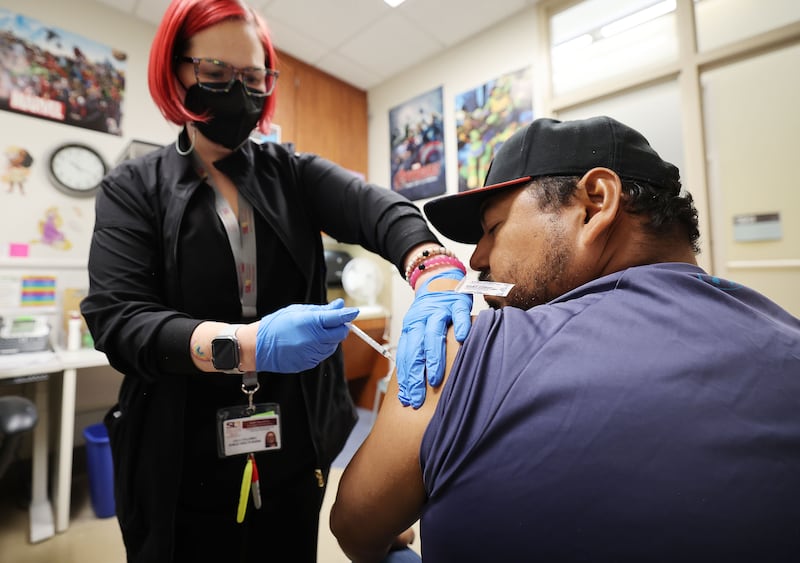
She recommends people continue to get updated vaccines and noted that the next batch looks like a good match for the COVID-19 that’s going around. That vaccine should be available soon, she said.
The Trump administration no longer recommends the annual shot for everyone 6 months and older. But major medical groups do and most insurers have said they will cover the vaccines, the article said. It also noted that “there’s also even a new drug, called Xocova, that people can take right after they’ve been exposed to the virus to cut their chances of actually getting sick from COVID.”