


Born from one of America’s darkest days, the Department of Homeland Security has become a complex node of federal power. Its mission is sprawling and unwieldy, its agencies a puzzle of legacy functions, current objectives and evolving legal frameworks. Built to protect America from foreign threats, it has itself become a battleground, a Rorschach test of political positions in budget fights and congressional oversight. Questions persist about its reach, spending and accountability. How did the Cabinet’s youngest department become so controversial? Here’s the breakdown.
27 days later
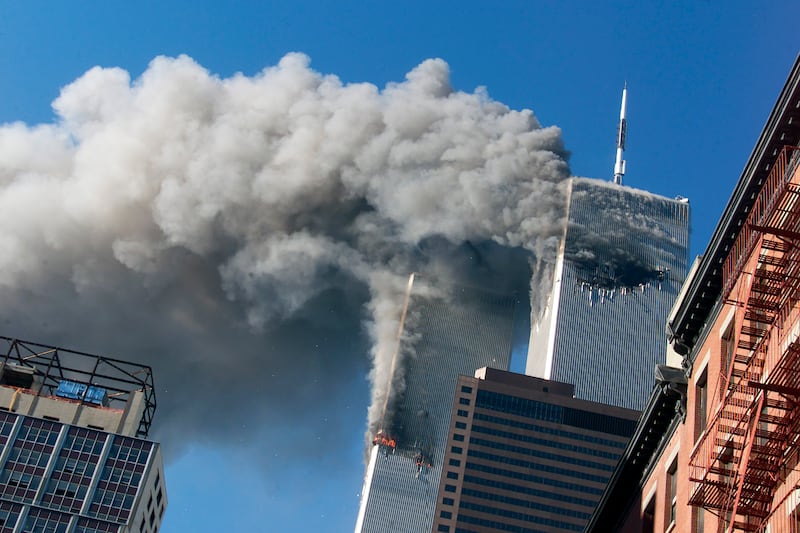
President George W. Bush signed Executive Order 13228 on Oct. 8, 2001, a month after 9/11, creating the Homeland Security Council “to coordinate the executive branch’s efforts to detect, prepare for, prevent, protect against, respond to, and recover from terrorist attacks within the United States.” In 2002, the House (295-132) and Senate (90-9) passed the Homeland Security Act, enshrining DHS as the third-largest department, a megamerger with 22 agencies and 170,000 employees — the biggest reorganization of the federal government since World War II.
227,987 employees
The DHS workforce has grown by 15,338 over the past five years — which may or may not include the secretive Office of Intelligence and Analysis. Agencies range in size from the Domestic Nuclear Detection Office (137) to the Coast Guard (8,881) and Customs and Border Protection (67,811). In 2025, Immigration and Customs Enforcement (30,355) offered new recruits a $50,000 signing bonus after eight weeks of training.
110 checkpoints
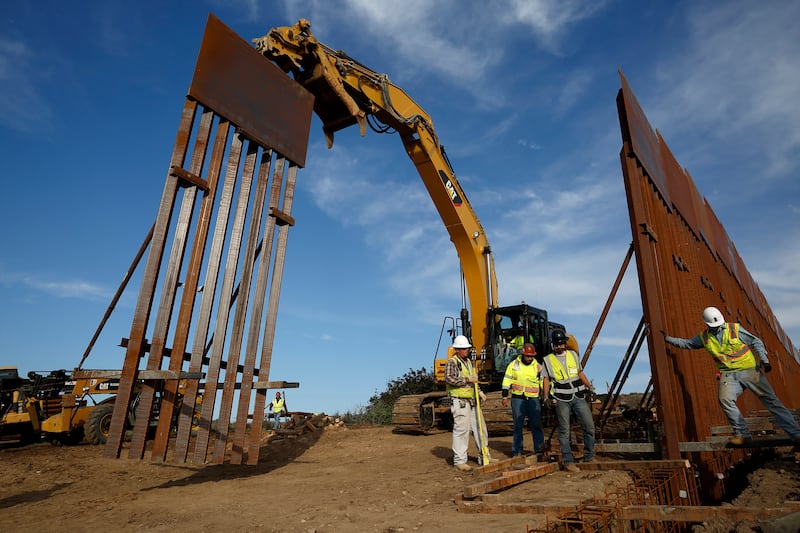
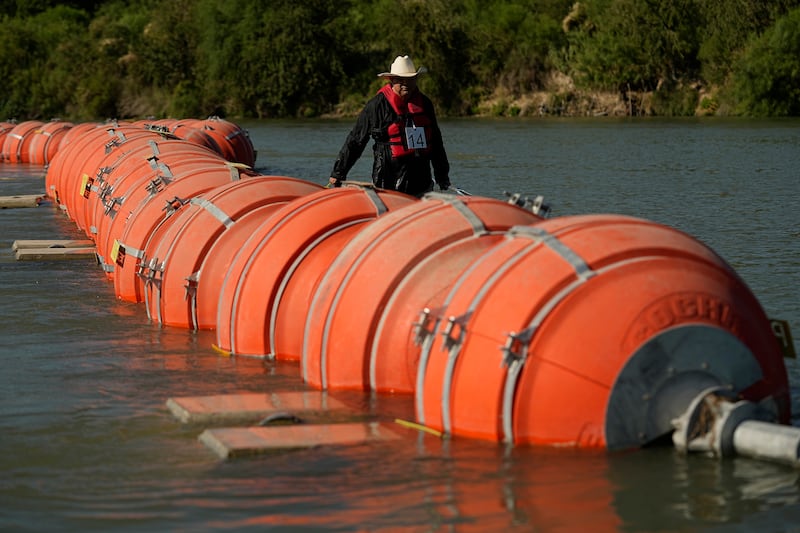
CBP operates more than 110 inspection sites on American highways. Most are between San Clemente, California, and Laredo, Texas, with another cluster in Vermont and upstate New York. Checkpoints are legal within 100 miles of any national boundary, including coasts. Cato Institute calls this “the Constitution-free zone.” CBP is also building a 1,419-mile “smart wall” on the Mexican border, combining steel bollard fencing with access roads, cameras, lights, sensors and 536 miles of floating barrier on the Rio Grande.
“We have come a long way in a short time. … And now? Our homeland bristles, thickens, fortifies. … We build walls in ourselves and between ourselves. No place is safe — not even the homeland.”
— James Traub, author of “The Cradle of Citizenship: How Schools Can Help Save Our Democracy,” writing in The New York Times.
92,593 posts
That’s what ICE monitors each second on social media – more than 8 billion posts each day in 100 languages, through a contract with Zignal Labs. Its $28.7 billion surveillance budget also covers license plate readers, cell-site simulators, facial recognition, iris scanners, software to crack smartphones and extract encrypted messages, and data integration with Palantir at $30 million per year. DHS reported 238 “use cases” for AI in 2025, up 20% in a year, including 86 in law enforcement and seven in cybersecurity.
108 committees
DHS delivers thousands of briefings to this stunning number of congressional committees each year, due to its size, scope and amalgamated origins (Defense reports to four; Justice reports to two). The Government Accountability Office has flagged DHS as “high risk” on its federal watchlist since before its inception. In 2025, Congress gave DHS about $190 billion in funding through 2027, bypassing annual appropriations, including $10 billion in unallocated cash for ICE/CBP.
26.1/100 morale
DHS scored abysmally in the 2025 Federal Employee Viewpoint Survey. Its Countering Weapons of Mass Destruction office ranked sixth-worst among 273 small agencies. FEMA’s workforce shrunk by 10 percent over six months in 2025, from 25,800 to 23,350, deepening long-standing shortages amid increasingly frequent disasters. Back in 2017, 48% of staffers declined to deploy after Hurricane Maria hit Puerto Rico, citing burnout.
10-42 days
That’s how long six Secret Service agents were suspended after a failed assassination attempt on then-presidential candidate Donald Trump in Butler, Pennsylvania, on July 13, 2024. None were fired, but the director resigned. Agents foiled another attempt at a golf course in Florida that fall. More recently, another shooter was stopped at the White House Correspondents Dinner, and an agent protecting former first lady Jill Biden accidentally shot himself in the buttock at the Philadelphia airport.
This story appears in the June 2026 issue of Deseret Magazine. Learn more about how to subscribe.