

Is it too much to expect that our leaders turn to God for deliverance from ills that plague our world in times of upheaval? In June, in the wake of George Floyd’s death, I wrote an op-ed suggesting that one way to develop effective, inspiring leadership in times of trouble was to look to the examples of historical figures in their own pursuit of justice. These individuals included Mohandas K. Gandhi, Martin Luther King Jr. and Nelson Mandela.
As part of my own contribution to instilling the virtues of these figures in the next generation, I am teaching a class during the fall 2020 semester at Brigham Young University entitled “Memoirs of Courage,” which features the writings of these three men, as well as the autobiography of Ellen Johnson Sirleaf of Liberia, the first female president in Africa.
Throughout the course, we observed that in more cases than not, these leaders acknowledged or invoked the hand of a higher power in individual and collective efforts to pursue social change on a nationwide level.
For Martin Luther King Jr., the most direct encounter that he had with the divine took place in his kitchen in Montgomery, Alabama, shortly after the Rosa Parks incident created a social movement he was appointed to guide. After a troubling phone call, threatening the life of King and his family, the young minister (still in his mid-20s), found assurance from God that he would be sustained until his work had been done. He feared no longer with such a conviction.
For Mohandas K. Gandhi, his personal mission sustained his broad endeavor to defend the rights of Indians in South Africa, as well as to spark a peaceful movement for independence in India. His personal mission, as he clearly outlines in the introduction of his autobiography, was to encounter God and pursue truth. He acknowledged at various times, in both his personal and public life, the hand of a higher power rescuing him from his own weaknesses, as well as directing his public activities.
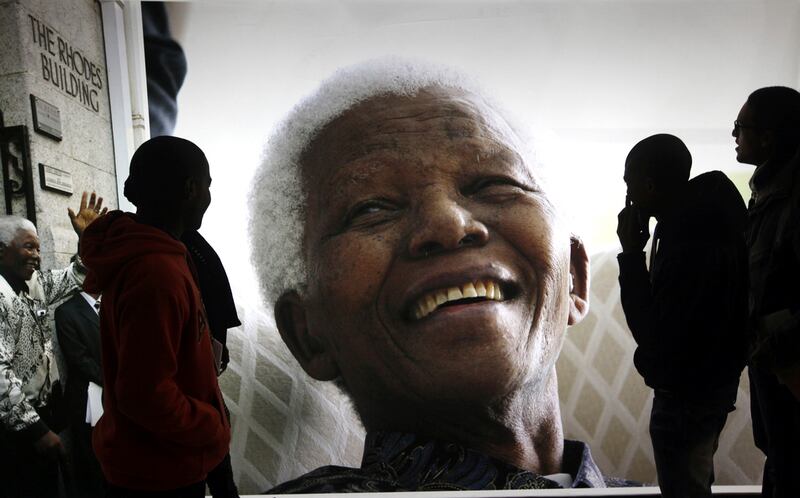
For Nelson Mandela, the appeal to a higher power was more discreet, but a boon to his personal crusade for justice and the rule of law. Though he wrote or spoke little about his personal religious beliefs, the Deseret News reported shortly after his death that a quiet faith sustained him as he toiled to bring social justice to all South Africans.
Finally, in more recent years, world leaders have also recognized how personal acts of devotion, often noted in their personal writings, have sustained their broad efforts. The former Liberian president (2006-2018), Ellen Johnson Sirleaf, pointed on numerous occasions during her preparation for political leadership to the faith of her mother and her own experiences with God, in leading her along the path to righting the ship of her country’s economic and social ills (see her autobiography, “This Child Will be Great: Memoirs of a Remarkable life by Africa’s First Woman President”). What’s more, she expressed gratitude frequently for those tender mercies.
All of these individuals, save Gandhi, were awarded the Nobel Peace Prize, a measure of their effective leadership. Whether Hindu, Christian or denominationally unaffiliated, their belief in a higher power that assuages the ills of humanity figured into the successful resolution of those challenges.
While earthly institutions surely bear the brunt of responsibility for coping with challenges such as COVID-19 and the administration of social justice, surely we, even in this age of a society tossed to and fro by the changing secular winds of the day, should select and support leaders who rely on powers other than their own to guide us toward equanimity and justice.
Evan Ward is associate professor of history at Brigham Young University, where he teaches courses on world history. His views are his own.