

This is a time of acute global emergency. Survival is the priority.
And yet, survival comes with a huge monetary cost, at a time when every entity, from the federal government to the average household, already had considerable debt heading into the pandemic.
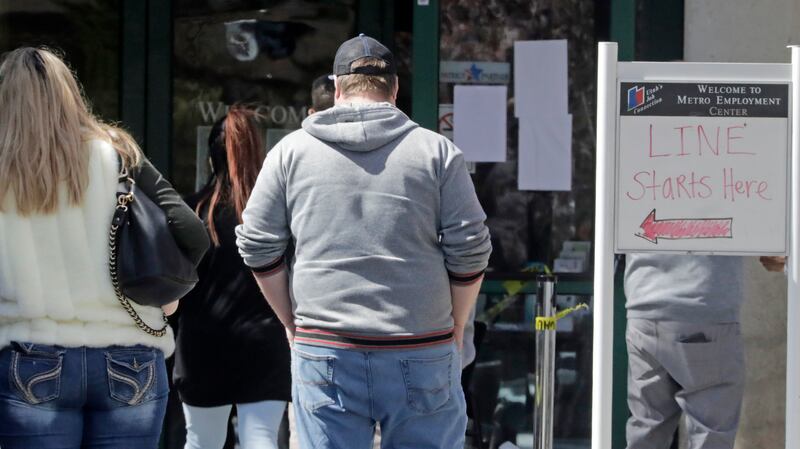
It’s not too early to talk about money and how to confront the bills that surely will come. The economic slowdown associated with COVID-19 will soon manifest itself in dramatically lower tax collections in both sales and income taxes, which will affect everything from your local school district to your city, county and state governments. Political leaders will necessarily grapple with whether to drastically cut services or to increase taxes on a population struggling to recover.
Earlier this year, Utah lawmakers were forced to repeal a tax reform package due to the threat of a referendum. At the time, legislative leaders said the state could continue with a growing imbalance between sales and income taxes, so long as the economy remained strong.
Now the economy is in real trouble. Governing is harder during bad times than good. However, lawmakers would be wise to redouble efforts to fix the imbalance, with an eye toward remaining revenue-neutral, rather than offering too many complicated tax hikes and cuts.
A special legislative session Thursday was needed to begin dealing with financial concerns. More will be needed.
Congress and the president were correct in passing stimulus bills that have provided checks to most Americans and forgivable loans to businesses that agree to refrain from laying off employees. Government handouts generally come with a host of moral risks, but in this case people are suffering in large part because governments put the brakes on an economy in order to protect general health.
But there are natural limits to the federal government’s ability to print money and hand out relief. No one knows what those limits are, but it is sobering to note that, even with a booming economy, the national debt had grown from $18.5 trillion in 2016 to $23.5 trillion just before the pandemic began. It now stands at $24.5 trillion and is expected to grow considerably in coming months. The annual budget deficit, meanwhile, now stands at $2.4 trillion for the current year.
When does this overspending lead to inflation? When does unemployment, the need for economic stimulus and the growing debt begin to erode investor confidence in the nation’s ability to pay its debts? The answer is unknown, although we take solace in the opinions of some economists that the nation’s fundamental ability to produce and prosper remains sound.
For most people, their own checkbooks have the greatest impact on their economic futures. Here the outlook is grim, as well. Americans owe $1.1 trillion in credit cards, and $1.6 trillion in student loans.
As four World Bank experts wrote for the Brookings Institution this week, “Markets have taken a big hit, financial systems are under stress, and banks are likely to see huge pressures on their balance sheets. Private firms are being hurt by the collapse in demand. The likelihood of large-scale bankruptcies is rising. Rapidly increased risk aversion among investors has led to a sudden stop in capital flows to emerging markets.”
Michael Hudson, a professor of economics at the University of Missouri at Kansas City and president of the Institute for the Study of Long-Term Economic Trends, has proposed a biblical “debt jubilee,” which would amount to a massive forgiveness of outstanding personal debts as well as those of state and local governments.
The only problem with such a suggestion is that each debtor represents a creditor who also has obligations. Also, Washington’s ability to underwrite such a thing is now severely limited because of its own debts.
If there is good news, it may come in the form of a newly published study by researchers from the Federal Reserve and the Massachusetts Institute of Technology. They examined the 1918 flu pandemic and found that, despite huge economic decline, communities that imposed the greatest restrictions on the public — the equivalent of today’s social distancing and limited gatherings — recovered quicker economically than other communities.
That pandemic is not entirely synonymous with COVID-19, but it did cause considerable economic distress. It is hopeful to note that this was followed a few years later by what is now known as the Roaring ’20s.
We hope that happens again, and that when it does, the nation becomes more cautious about overspending during times of plenty.