


Next year we’ll celebrate the semiquincentennial — the 250th anniversary of America’s independence. Under the aegis of America250, nationwide preparations are well underway; indeed, many commemorations are already occurring.
In the understandable excitement over this milestone, let’s not forget that declaring independence — audacious, bold and brave though that was — was relatively easy. Securing it was the greater challenge.
Declaring it was accomplished by elected representatives in Philadelphia. Securing it was accomplished by the longsuffering soldiers of the Continental Army — the first American veterans.
On July 4, 1776, when the Second Continental Congress promulgated the Declaration of Independence, the Revolutionary War had already been underway for over a year. The shots heard ‘round the world were fired on April 19, 1775, in the battles of Lexington and Concord.
There, colonial militiamen from the Massachusetts countryside, defending their homes, their freedoms, and their own elected government, routed 1,700 British regulars, sending them from Concord to Charlestown (near Boston) in ignominious retreat.
Loosely organized farmers and tradesmen, who supplied their own weapons and elected their own officers, defeated the professional soldiers of the King’s well-equipped army. It was the first battle of the American Revolution, and it was a resounding American success.
By the next morning, 15,000 militia surrounded the British, and the siege of Boston had begun. Less than a year later, the British abandoned Boston, never to occupy it again. It was in the aftermath of that triumph that our independence was declared, with great optimism that it would soon be achieved.
But the exuberance of July 1776 dissipated as the planet’s preeminent military power brought its might to bear on the 13 self-declared free and independent states. For more than five long years there ensued a series of American routs, retreats, evacuations and defeats, punctuated only rarely by isolated victories — and those in the nick of time, when public support and the army itself were on the verge of collapse.
Through most of the war, the best General George Washington could do was maintain an uneasy stalemate and keep the army intact to fight another day — no small task under the circumstances. More than the British, Washington had to fight public apathy, congressional mismanagement, disloyal subordinates and the elements.
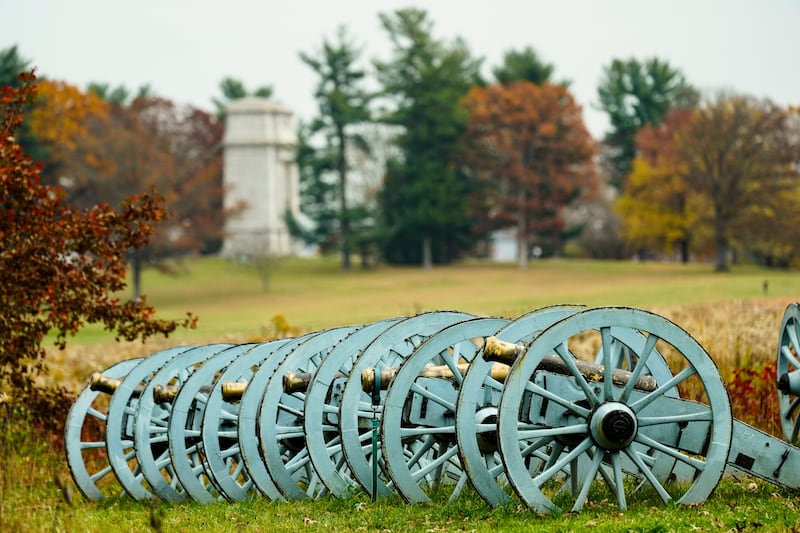
Illustrating the daunting odds he confronted was the winter encampment of 1777–78 in Valley Forge, Pennsylvania, the crucible of the Revolution. Just a week before Christmas, Washington led 11,000 bedraggled, oft-defeated, retreating troops into Valley Forge.
Snow began to fall. The weather worsened from cold to bitter to brutal. Refusing to take better shelter than his men, Washington initially insisted on camping in a tent. But heavy snows and the mud resulting from occasional thaws made it impossible to conduct the army’s business there, forcing him into a modest stone home, shared with his staff.
That winter, more than a quarter of his men died — not in battle, but from disease and exposure.
British troops occupying nearby Philadelphia were warm, well-clothed, and well-fed. So were most American civilians. But little of their prosperity reached the army.
Congress repeatedly failed to provide. When it did belatedly act, corruption and ineptitude often prevented the soldiers from receiving the equipment and provisions they so urgently needed. Adding insult to injury, they went months without pay.
Some idea of their suffering can be gleaned from Washington’s words, now engraved in the National Memorial Arch:
Naked and starving as they are / We cannot enough admire / The incomparable patience and fidelity / Of the soldiery.
Naked? Alas, yes. Thousands of his men lacked boots, coats, gloves or blankets. Shocked visitors wrote that many soldiers wore shirts and trousers so tattered that their skin was exposed, and for shoes wore only rags.
Starving? Here are those same words from Washington in context, in a letter he wrote to New York Gov. George Clinton (punctuation modernized):
“It is a subject that occasions me more distress than I have felt since the commencement of the war. ... I mean the present dreadful situation of the army for want of provisions. ... For some days past there has been little less than a famine in camp. A part of the army has been a week without any kind of flesh & the rest three or four days. Naked and starving as they are, we cannot eno(ugh) admire the incomparable patience and fidelity of the soldiery.”
That admiration, Washington then suggested, extended to the fact that these soldiers had not arisen in a “general mutiny” due to these sufferings.
The situation was even worse than Washington let on. With the British army so near, and both sides employing spies, any letter risked interception — so he couldn’t disclose the army’s true condition. Otherwise General Howe, were he to learn how destitute, hungry and weakened Washington’s men really were, would surely attack, likely destroying the entire force.
Speaking in Valley Forge on Nov. 21, 1949, former Supreme Allied Commander and future President Dwight Eisenhower said:
“Meeting on this spot ... it is difficult to avoid giving way to emotion so intense as to still the tongue and to leave any American silently grateful, humble, reverent.
“Here Washington waged and won the greatest fight of a fighting career. ... The long winter of the Valley Forge encampment brought to his army the last ounce of endurable suffering, while Washington was called upon to bear ... collapse in his rear, desertion in his ranks, hostility in his associates. ...
“The freedom of the American people here experienced its greatest danger of extinction, here met its sternest challenge.”
The inspiring words our Founding Fathers wrote would matter little but for the service and suffering of the soldiers. To those valiant few who paid the price to obtain our independence, and to the many since who’ve paid the price to maintain it, we owe an incalculable debt.
The inspiring words our Founding Fathers wrote would matter little but for the service and suffering of the soldiers.
All honor to those who fought so we don’t have to. On this Veterans Day, may we remember with humble gratitude all service members, from the Revolutionary War to the present day, who have fought the fights and endured the hardships necessary to secure the liberty, prosperity and security of which we are the fortunate beneficiaries.