

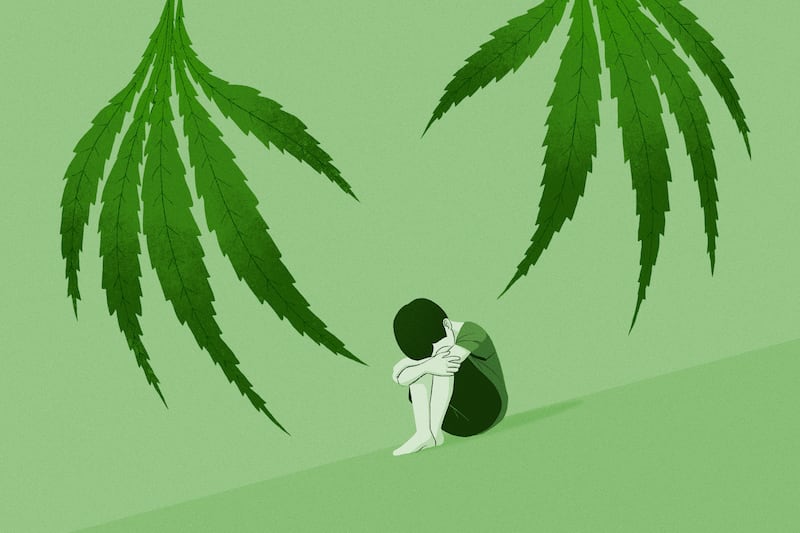

Regrets about America’s drug policies in recent years keep piling up. An article in The Wall Street Journal this week noted the proliferation of cannabis in schools since legalization began. “It’s just everywhere in the community. That’s really, really hard for schools,” said Chris Young, principal at North Country Union High School in Newport, Vt.
Marijuana, Young said, used to be something that kids did at parties on the weekend, but that changed after recreational sales began in Vermont in 2022. Another school has limited what kids can bring for lunch since they were sneaking THC into their food.
This month also saw the announcement that Colorado is considering raising taxes on marijuana to help fund a new mental hospital—necessitated in part by the proliferation of cannabis-induced mental illness in the state.
And now comes a book that offers a look into some of the ripple effects of our opioid policies on children. “Living With Opioids: A Clarion Call to Safeguarding Our Homes and Families” was released last month. Its author, Julie Gaither, is a professor in the Department of Pediatrics at the Yale School of Medicine. The publisher is an academic one, but the findings should put this book at the center of our public conversation.
Gaither has found, for instance, that in the past 25 years, 15,000 children have died as a result of opioid poisonings and another 70,000 have been hospitalized for serious nonfatal exposure. Approximately 65% of these poisonings have occurred at the child’s home.
What is happening in these environments? Some of the poisonings are the result of parents not safely storing medications. Since the federal government mandated childproof packaging for medication, the number of poisonings vastly declined. But many of these incidents were the result of illegal drug use. Not only were such drugs not properly packaged, but the parents were often not paying attention.
Even parents who are trying to get clean may be the source of some of these problems. Gaither found that children were often exposed to methadone or Buprenorphine, medications prescribed in order to combat an opioid use disorder. “In fact,” Gaither writes, “methadone is among the most misused of all prescription medication and is often used for purposes other than it was prescribed, such as for recreational use or to enhance the effects of other substances.” Gaither and her colleagues found that “pediatric hospitalizations involving methadone increased by an astonishing 950% between 1997 and 2012.”
While methadone is usually tightly controlled — addicted people often have to show up every day at a clinic to receive their dosage — Gaither notes that during the pandemic those rules were relaxed with predictably disastrous results. We prioritized the convenience and desires of adults over the safety of kids.
The pattern is true across this field when it comes to drug policy. Gaither notes that the past quarter century has seen a disproportionate rise in overdoses among women, a rise in drug use among women of childbearing age and, not surprisingly, a concurrent rise in neonatal abstinence syndrome (NAS), which occurs when a baby exposed to drugs in the womb suffers withdrawal symptoms after birth.
The outcomes for these infants, even once they leave the hospital, are not good, writes Gaither. “Multiple studies over the past two decades have shown that infants [born with drugs in their systems] are more likely than other newborns to be readmitted to the hospital within the first few months of life.” Even after adjusting for factors like low birth weight and type of insurance, these infants “had a higher risk of being readmitted for seizures, nearly double the risk of failure to thrive, and almost three times higher risk of traumatic brain injuries.” And then Gaither adds, “unfortunately, they were also more likely to be readmitted with a diagnosis of confirmed maltreatment.”
Sending home substance-exposed newborns with drug-addicted mothers has resulted in thousands of fatalities and near fatalities. But as Gaither notes, some states (including her home state of Connecticut) make it all but impossible for child welfare agencies to follow up with these families. Instead, these mothers are offered “voluntary plans of safe care” (POSC), where they can specify sober caregivers they can leave their children with in case they want to get high.
Gaither worries that even basic information about keeping infants away from opioids is not being communicated to parents. “The inadequate protections for children evident in POSC are mirrored in the approach healthcare providers take toward opioid safety.” Even doctors who work with mothers and these infants in the hospital rarely talk about these issues. Asked about storage of these drugs, many providers believed these conversations could wait until the child was older and crawling. Others were reticent about having these conversations at all because, as one provider told Gaither, “they’re feeling like maybe they are stigmatizing, accusing people.”
And this is where we are. Our concern about parents’ feelings outweigh our concerns about risks to children. When we look back on this drug epidemic 50 years from now, there will be plenty of blame to go around. Our regrets will not bring back these thousands of souls. But the sooner we change course, the fewer we will have to mourn.