

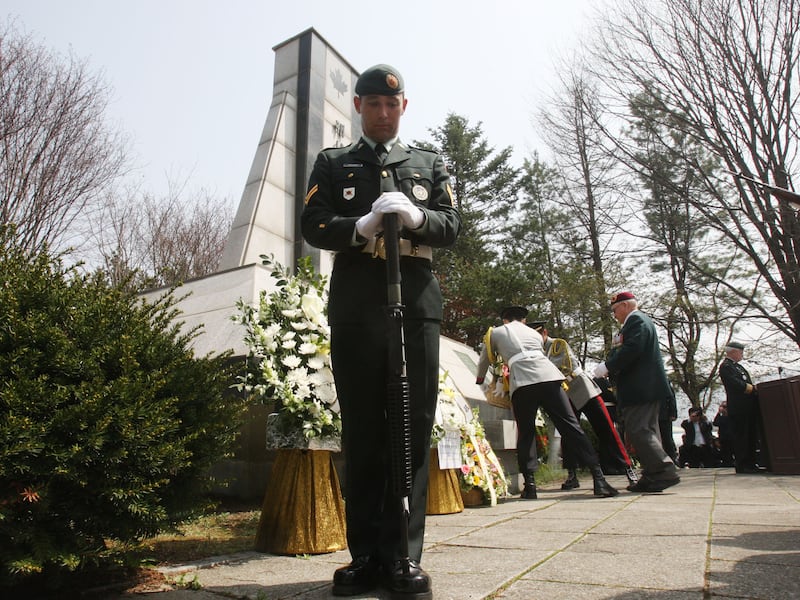

In May 1951, a battalion of young men from southern Utah found themselves in a narrow Korean valley facing a Chinese force that outnumbered them 16 to 1. By every conventional measure, the odds were not in their favor.
Over two nights at the Battle of Gapyeong, the 213th Armored Field Artillery Battalion helped stop a major Chinese offensive cold, protecting the flank of allied forces and preventing what could have been a catastrophic breakthrough.
Not a single soldier in the battalion was lost. Koreans call it the Miracle of Gapyeong. For Utah, it will always be something more personal than a miracle.
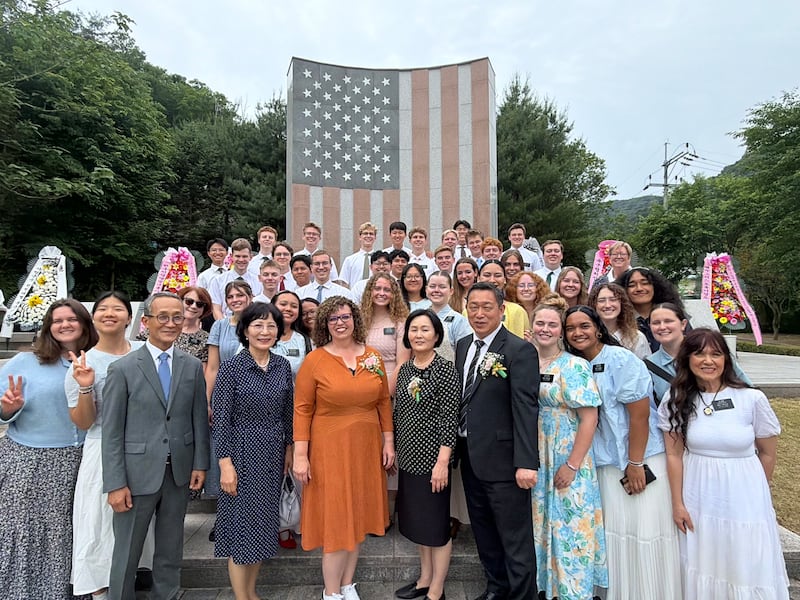
I was in Korea this week for the 75th anniversary of the battle, and standing in that valley, I kept coming back to a question that comes before the battle itself. What made them ready?
It is easy, in retrospect, to call what the 213th did inevitable. They were brave, trained and they did what soldiers do. But bravery is not a reflex. It’s a habit, built over years, before the hard moment ever arrives.
In my faith, there is a story about 2,000 young men who went into battle vastly outnumbered and came out without a single life lost. What the account dwells on is not the battle itself but their preparation. They were described as men who were “true at all times,” who had made commitments to something larger than themselves, and who kept those commitments because of what their families and communities had instilled in them from childhood. The miracle began long before they reached the battlefield.
The men of the 213th came mostly from small towns across southern Utah. I have spent most of my life in that same part of the state, and I know what families there have passed down for generations: personal responsibility, respect for individual rights, and a deep sense of obligation to serve others. These are not abstract values. They are practiced things, learned at kitchen tables, church pews and farms where the work does not stop because you are tired.
Every generation tells itself it will rise to the occasion. Usually, people rise to the level of what they have been taught, what they have practiced and what they have learned to value. If we want young people who can stand steady when everything is on the line, we have to teach those things before the hard moment arrives. We cannot expect courage in trying times unless we teach them what is worth defending.
That is true in Utah. It is true across America. And it is true for free nations everywhere.
The alliance between the United States and Korea was forged in war, but it has lasted 75 years because it rests on a shared understanding that freedom is not self-sustaining. It has to be actively defended, deliberately strengthened and consciously passed from one generation to the next — primarily in our homes. The moment a society stops doing that work, freedom begins to erode.

Today, South Korea is free, prosperous and strong because of the sacrifices of brave citizens and the men at Gapyeong, and because the Korean people chose to build something worthy of those sacrifices. Standing there this week, I did not feel like the price was wasted.
Utah has never stopped telling the story of the 213th, and it should not. But telling the story is only part of what we owe those men. The harder — and more important part — is doing what their parents and communities did for them: preparing the next generation to stand for correct principles under pressure. Teach them what is worth fighting for and give them something solid to stand on when the ground starts to shake.
That is how we keep faith with the men of Gapyeong. Not just by remembering what they did, but by understanding how they became the kind of men who could do it, and by doing that same work for the generation coming up behind us.