



Between Memorial Day, celebrated in late May, and D-Day on June 6 is a good time to reflect on the lessons of war. The Cold War ended in the early 1990s with the literal collapse of the Soviet Union and associated developments.
Yet, that historic victory for the United States and allies has not resulted in a new age of peace. Every U.S. administration since has been involved in armed conflicts.
Memorial Day parades are essential to this holiday. From ancient times, parades have been vital to the reintegration of warriors into society.Even the rare man who finds combat invigorating needs help in reintegrating into a peaceful and civilized society.
Homer, classic chronicler of the Trojan War, is extremely sensitive to this. “The Iliad” focuses on the fighting between Greeks and Trojans; “The Odyssey” describes the very long painful voyage home of Greek leader Odysseus and his men. They struggle to traverse allegorical geography.
Generals James Doolittle and George S. Patton Jr., great combat leaders, were honored at a special ceremony in the Los Angeles Coliseum on June 9, 1945, following the surrender of Nazi Germany.
An estimated one million people attended a victory parade from the airport.
Doolittle early in the war led the first air raid on Tokyo, then commanded the Eighth Air Force in Europe. He introduced Patton, who celebrated the accomplishments of his Third Army in Europe, in particular the 40,000 who lost their lives.
D-Day, June 6, 1944, launched that offensive across Europe.
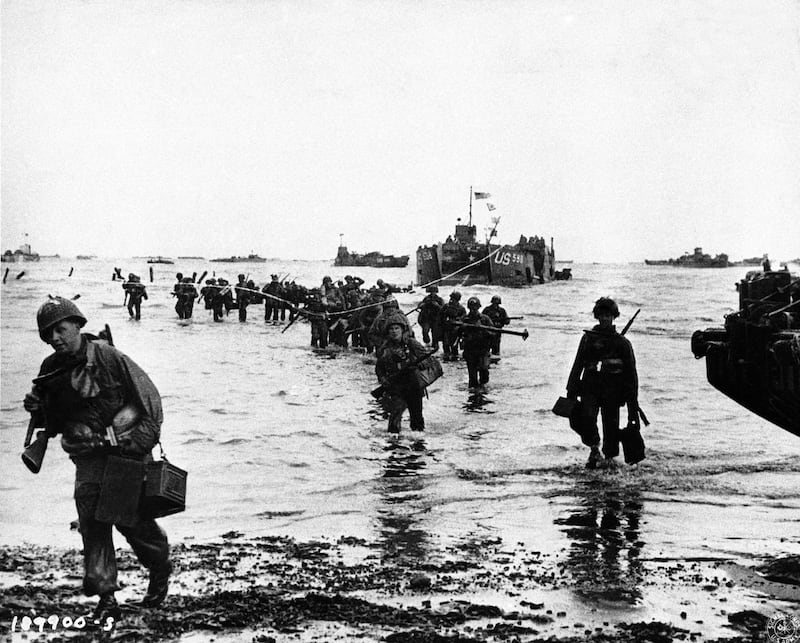
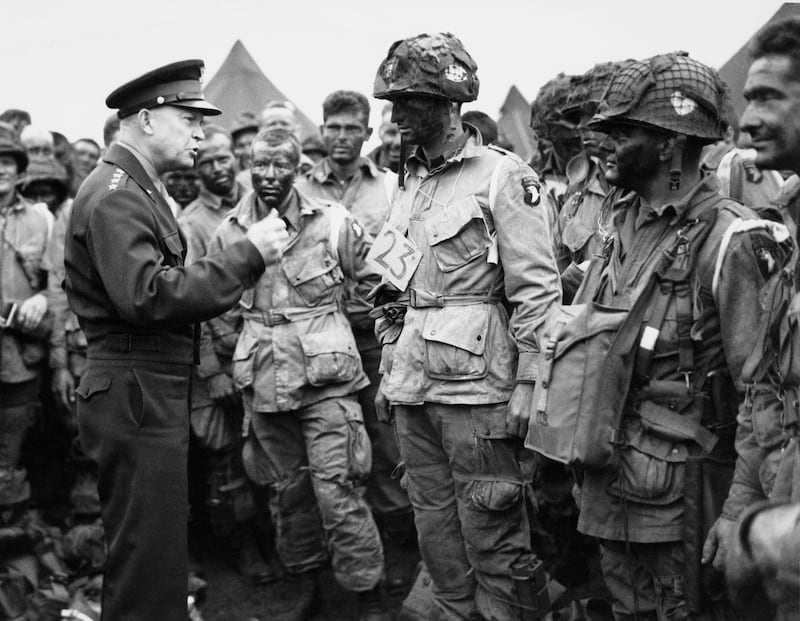
The leadership of Supreme Allied Commander General Dwight D. Eisenhower was crucial. Ike demonstrated great executive ability in supervising the enormous planning and brilliant interpersonal skill that welded and held together the most diverse military alliance in history.
Remarkably, he was able to establish overall unity of command. This eluded even the American military alone in the Pacific, where Army General Douglas MacArthur pursued one strategic vision, while U.S. Navy admirals implemented a different strategy.
Extensive bombing of transportation routes and supply depots in France was crucial preparation. Such action would bring an estimated minimum of 60,000 civilian casualties and perhaps far more.
Yet Eisenhower was adamant about the absolute need for extensive bombing. Free French General Charles de Gaulle agreed unequivocally. Ike had managed to establish an effective working relationship with the insecure, temperamental French leader.
Doolittle was appointed commander of the Eighth Air Force on Jan. 6, 1944. Destruction of German fighter aircraft became the priority. While this resulted in more losses of bombers, the Luftwaffe was devastated.
On D-Day, few German planes appeared. Doolittle piloted a P-38 fighter to observe firsthand, then reported to Eisenhower
Finally, Eisenhower demonstrated brilliant imagination. During heavy fighting for Sicily in 1943, General George S. Patton Jr. slapped two U.S. soldiers suffering extreme combat stress.
Intense controversy resulted.
Ike moved Patton to England, to reflect in agonizing isolation. Meanwhile, a fictitious army emerged around him. Actors were assigned roles, bogus information generated, phony buildings and vehicles constructed. On D-Day and immediately thereafter, crucial German units remained in reserve because Patton’s (nonexistent) forces had not yet moved.
Eisenhower never lost awareness of the terrible human costs of war, borne primarily by the enlisted ranks. He constantly stressed the fundamentally important role of the combat soldier and regularly visited troops.
Consider how today’s leaders compare to these, and sincerely honor our veterans.
