

Eighty-two years is not a round number. It usually doesn’t gather much attention as an anniversary.
But the 2026 D-Day remembrance should be the exception. Not only should every D-Day anniversary be accentuated while a few cherished veterans of that pivotal hinge point of history remain, it should be an important part of the nation’s 250th birthday celebration this year.
Without a successful D-Day invasion on the beaches of France, Allied forces may not have successfully liberated Europe. The Allies may have been forced to seek a negotiated, perhaps unsustainable peace or to drag on through many more intense and costly battles. The Axis may have gained strength and momentum, changing the course of history.
Beyond heroic
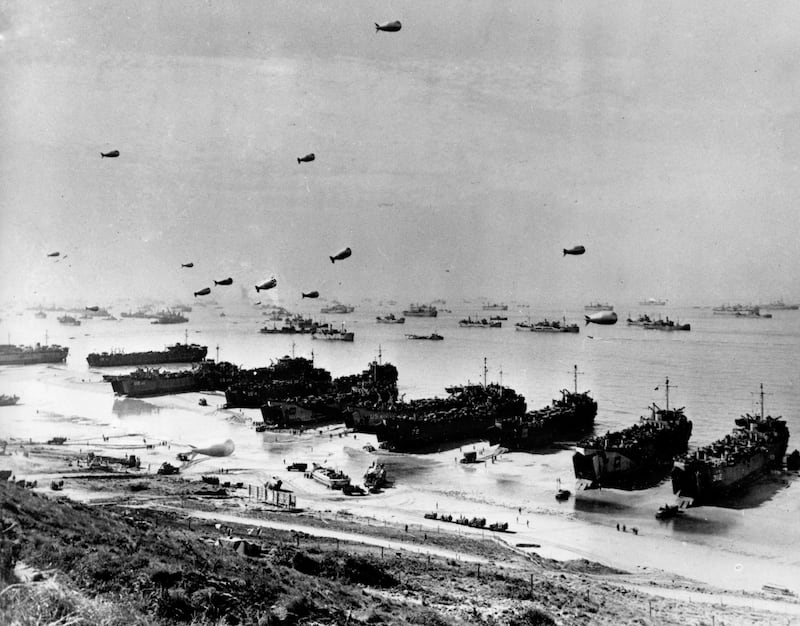
What U.S. and allied forces did on June 6, 1944, was beyond heroic. Officially, 4,414 allied soldiers died trying to establish a beachhead. Among those were 2,501 Americans — young, fresh-faced and with hopes and dreams of a long life that never came to be.
The U.S. Department of Veterans Affairs says only 45,418 of the 16.4 million Americans who served in World War II were still alive as of last year. Even fewer are alive today. Their median age is about 99. When they go, it will be up to today’s living generations to keep what they did alive. That will be difficult. Only those who experienced such life-altering events can adequately share the emotion and the uncertainty of that day. Only they can describe in detail how it felt to lose so many compatriots.
Museums, memorials and documentaries are vital to this effort. So are the many books and videos of first-person accounts.
Personal accounts
One of these, from a veteran who is not identified, described rushing onto the beach and diving for cover in the face of machine-gun fire. The soldier running next to him was a young man from Virginia. “When he dove, he landed on a mine,” the man said. “You know, if you walk on it, it comes up and cuts you in half, but when he did this, … there was pieces of (his) body everywhere and you had to wade through … that part of the beach was red with blood.”
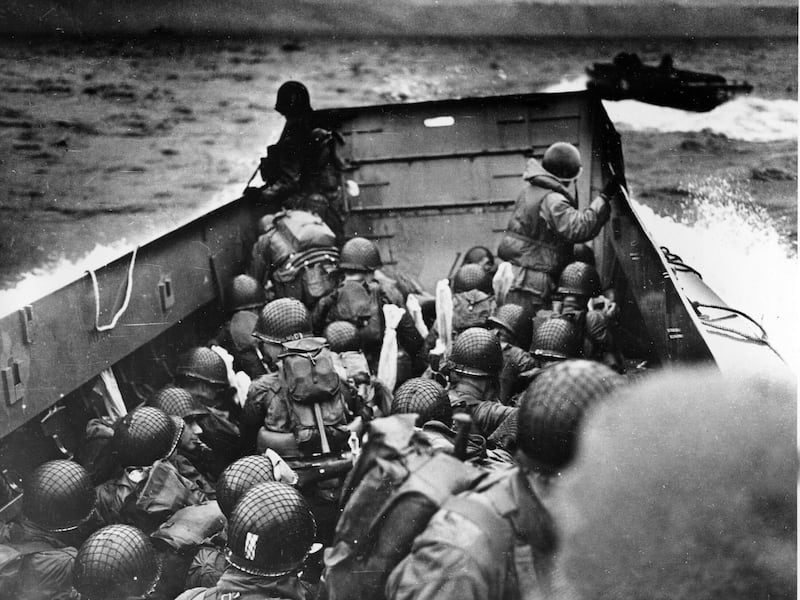
Another video is of Frank DeVita, who joined the Navy during his senior year of high school after Pearl Harbor was attacked. He recalled being in charge of lowering the ramp of his transport boat, allowing soldiers to exit onto Omaha Beach.
“They didn’t realize they were going to their death,” he said of the soldiers as they approached their destination. “They were singing and talking and laughing, telling jokes, until they got fired at.”
He described how reluctant he was to lower the ramp on his first trip because he could hear machine-gun fire hitting the boat. Then he recalled what he saw as the ramp lowered and the bullets tore into the men on the boat. Eventually, he had to move bodies in order to clear the way to raise the ramp again.
As his boat found its way to a hospital ship, two men jumped in. “They did something we couldn’t do,” he said. “They were peeling the dead off to get to the wounded.”
Later, he stood alone on the main ship, waiting for another landing craft so he could return with more soldiers. He was covered in blood and vomit. He didn’t want to die, but he knew he couldn’t live with himself if someone had to replace him and died in his place.
DeVita ended up going on 14 more transport ships to the beach that day. He ended up making two more invasions — in the south of France and in the Philippines — before the war ended.
“I’m not a hero,” he told an interviewer in 2020. “I’m a survivor.” The heroes, he said, are buried at Normandy. “They gave their life for their country.”
A great debt
Oh, how great a debt Americans owe to the men who gave their all to secure freedom and liberty that day!
The videos and personal accounts may preserve their sacrifices in powerful ways, but only if future generations will watch them and contemplate their meaning. That is the job of today’s younger generations. It is a far easier job than having to repeat such sacrifices one day because too many people have forgotten.