


This past Independence Day, and every Independence Day, John Adams’ vision of a “great anniversary Festival” that is “solemnized with Pomp and Parade, with (Shows), Games, Sports, Guns, Bells, Bonfires and Illuminations from one End of this Continent to the other,” is realized.
America’s founding documents and symbols are everywhere. Its songs are sung, its fireworks lit, its pledges are renewed, and many of our chests swell with pride.
Patriotism is probably the word that comes to mind, and this is true in spades on America’s 250th Anniversary.
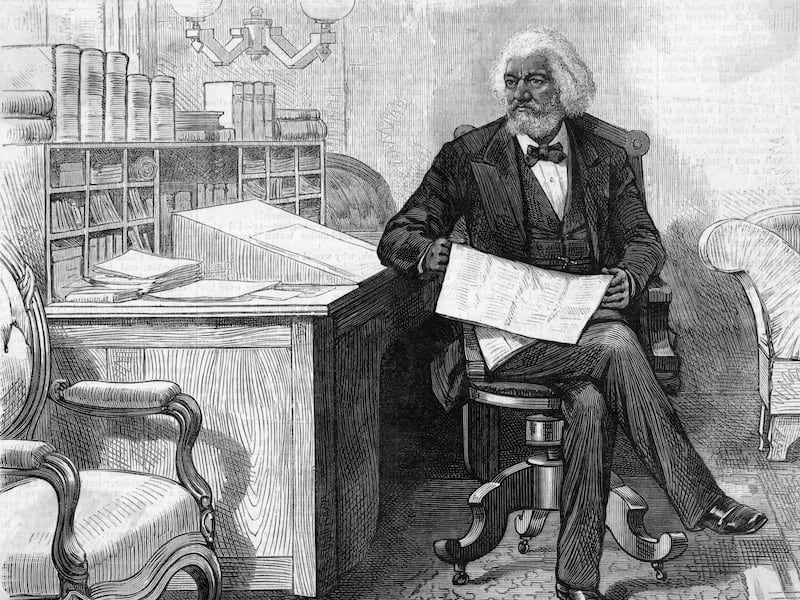
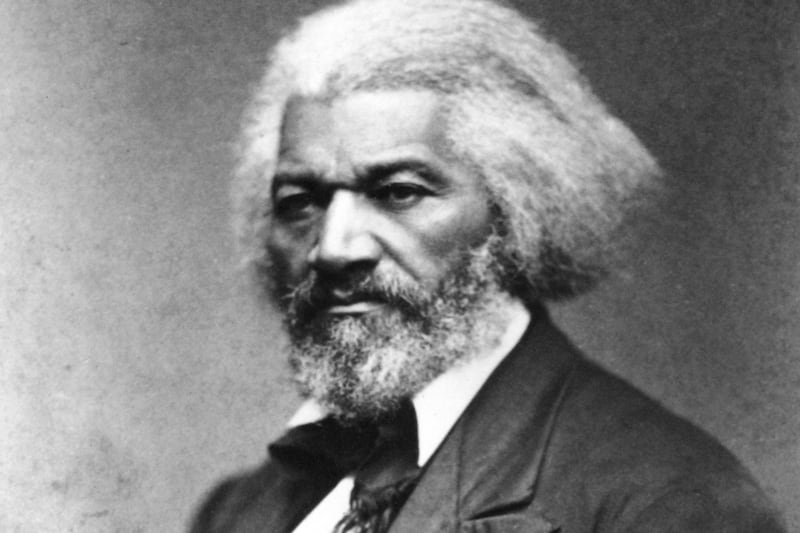
Yet also every Independence Day, including this past one, the Frederick Douglass House, now a national historic site in southeast Washington, D.C., holds an event celebrating one of the greatest speeches ever given: Douglass’ July 5, 1852 speech, “What to the slave is the 4th of July?”
Every time I hear Douglass’ speech, I find it moving, and it makes me think hard about if I am doing enough to right our country’s wrongs. But it raises a difficult question: Is Douglass’s speech patriotic, or isn’t it? Should one celebrate America or critique it?
Even asking this question is uncomfortable. Most Americans both love their country, and want to celebrate it, and know it has committed grave sins. As conservative commentator Erick Erickson said a few days ago, “Slavery was the original sin, and I won’t sand it down. The founders knew it. Jefferson knew it, and he owned slaves — the hypocrisy was staring right at them, and they kept kicking the can down the road.”
There is no doubt whatsoever that Douglass’s speech is unhesitatingly fierce and critical. It clearly documents the brutal reality of slavery, condemns the hypocrisy of the country in no uncertain terms, and damns American churches for their silence. He states, in its most famous passages, that the holiday to a slave is a “sham” and a “hollow mockery.” To those in the ministry who whitewash slavery, he deems their “Christianity a lie.” With all due respect to George M. Cohan, this is not the America of “You’re a Grand Old Flag.”
For this reason, Douglass’s speech is celebrated annually by the hard left. Left-leaning outlet “Democracy Now!” cites hard-left historian (and Communist Party USA member) Howard Zinn’s approval of Douglass’ speech. Bill Bigelow of Rethinking Schools, an organization more comfortable with the Black Panthers than the U.S. Constitution, also celebrates Douglass’s speech and openly denigrates Adams’ vision, claiming the 4th of July reeks of “noise pollution, air pollution, and flying debris pollution,” saying fireworks “terrify young children and animals,” and deeming it “propaganda.”
Indeed, Rethinking Schools’ curriculum is aimed at reframing the American Revolution, specifically telling the teachers that use it to teach their students not to love America, but to “question it.” Zinn, for his part, dismissed the Constitution as of “minor importance compared with the actions that citizens take.”
But, their approval of the speech aside, this is not how Douglass saw things. Indeed, earlier in the speech, Douglass praised America’s very foundation, saying that the Declaration of Independence contained “saving principles,” and urged his audience to be “true to them on all occasions … at whatever cost.”
Douglass praised the Constitution as a “glorious liberty document” and called the American Founders “great men … statesmen, patriots and heroes.”
He declared any assertion that the framers of the Constitution were intending to entrench slavery as a “slander upon their memory.”
It is true that there were debates among abolitionists about whether the Constitution and Declaration were a help or a hindrance to their cause of liberty. But by the time of his speech, Douglass had moved decisively in the direction of those abolitionists that believed America’s founding principles and documents were precisely those ideas that would lead to liberty.
It was America’s founding sentiments and institutions that, eventually, after much blood and toil, gave slaves their freedom after the North’s victory in the Civil War. 100 years later, it was those same principles that gave them their civil rights. “Almighty God and the First Amendment,” as Civil Rights legend Rev. Walter Fauntroy put it.
Seen in this light, Douglass’ speech was not only patriotic; it was the epitome of patriotism, of dedication to America’s founding principles. His condemnation was of those who aided and abetted those who denied the fruits of American liberty to a huge swath of Americans. I don’t think anyone can credibly argue that he was wrong, or that his dedication to the principles of this country was anything but heroic, even if he damned the country’s actions.
Indeed, the dual purpose of Douglass’s speech, praising American ideals while condemning its hypocrisies, contains competing ideas about how we interpret many contemporary political debates. Put crudely, people may say about their political opponents, “They are godless Communists who hate America,” or “They use patriotism as a shield for oppressing minorities.” This kind of thinking colors our debates, and too often, we pick a side without thinking about it.
There is no doubt, in my mind, that the Howard Zinns and Bill Bigelows of this world miss the mark considerably. Douglass’ dedication to the philosophy that America was founded on shows that. The ideas of the Declaration of Independence — that all men are created equal and are endowed by their creator with unalienable rights — eventually did free the slaves, and these ideas are still reverberating around the world and having hugely positive effects. Americans are right to be skeptical of people who denigrate that truth.
At the same time, this past 4th of July, the so-called “Patriot Front” marched through D.C. holding both American and Confederate Flags while discussing a “total Aryan victory.” The White House tweeted out pictures of Confederates seemingly celebrated as equals with Unionists, all while attempting to find creative ways to restore Confederate memorials that clearly sanitize the “lost cause” of the South that Douglass fought, victoriously, to bury.
At such a time, can you blame those who think patriotism is used to smuggle in horrible ideas?
Today, we live in a divisive time where America’s founding ideas are being questioned by people on the left and the right. Patriotism and America’s highest ideals are both used to defend bad ideas and under attack as a joke.
But Douglass’ genius is not that he saw through America’s hypocrisies; it’s that he saw the correction of those hypocrisies in its promise.
There is a time to critique America, even harshly, around its most cherished holidays. To quote the Bible, there is “a time to every purpose under heaven.” But any sort of legitimate patriotism must love its country sincerely, and call it to live up to its ideals. The Latter-day Saint community, who were by any measure horribly oppressed but also among America’s most ardent patriots and revere its founding documents, understand this tension better than most.
Douglass embodied this idea in his “What to the slave is the 4th of July?” speech. All American patriots should keep this idea close to their hearts.