

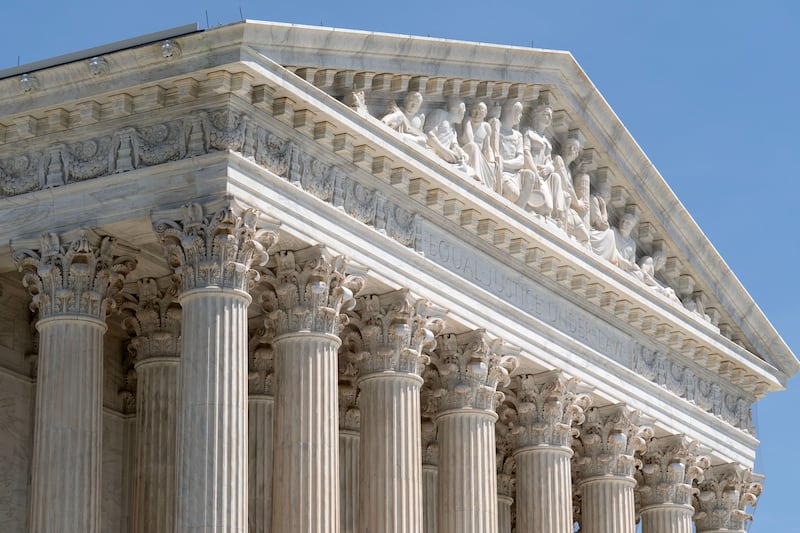


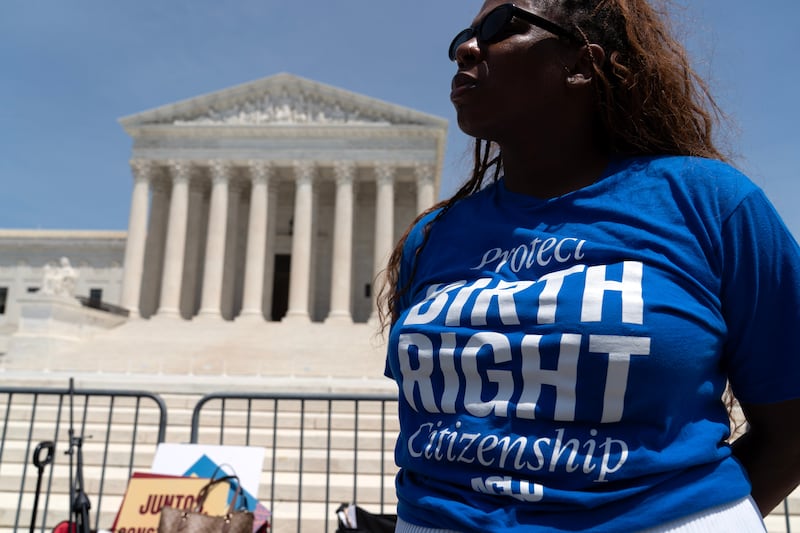
On the final day of its term, the Supreme Court handed down its much-anticipated decision in Trump v. Barbara, holding that the Fourteenth Amendment of the Constitution guarantees citizenship to most people born on American soil, including children whose parents are in the United States temporarily.
The public response was as it should be in a democracy — some rejoiced, others despaired.
While Chief Justice Roberts authored the majority opinion, most of the loudest and angriest criticism was directed at Justice Amy Coney Barrett, who joined the Chief Justice’s opinion.
Some opponents of birthright citizenship went further than expressing disappointment with Justice Barrett’s vote, attacking her as a “traitor” to President Donald Trump, a “turncoat” who is “weak” and not sufficiently committed to the president’s agenda.
Such attacks reflect a profound misunderstanding of the role of a judge under the Constitution.
The Framers of the Constitution built the federal judiciary to be independent, insulated from political pressure. Under Article III of the Constitution, federal judges hold their offices “during good Behaviour,” which means — absent an impeachment from Congress — for life.
Alexander Hamilton explained why in Federalist 78.
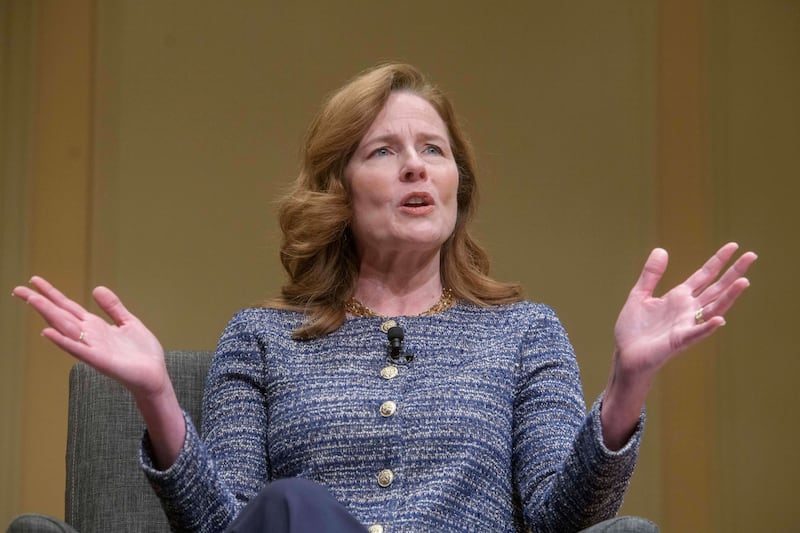
A judge shielded from political pressure is free to decide cases according to the law rather than the wishes of those who supported his appointment or whoever happens to be in office.
This independence was not meant to place judges beyond accountability, to make them rulers in robes. It was meant to make them accountable to the law and only the law. When creating the Constitution, the most pressing question the Framers faced was who would make the laws that govern us.
Their answer was emphatic: “We, the people” through our elected representatives.
They left no room for judges to make law and take that power from the people.
This is why every federal judge is required by law to take an oath before donning the robe.
A judge promises to God and the people of our nation to “administer justice without respect to persons,” to “do equal right to the poor and to the rich,” and to “faithfully and impartially” discharge her duties under the Constitution and the laws of the United States.
The oath says nothing about loyalty to party, policy, or politician. A judge’s loyalty should run in one direction — to the Constitution and the rule of law. What that loyalty requires in practice is not mysterious. Justice Felix Frankfurter described the judge as “merely the translator of another’s command.” The command comes from the law that the people’s representatives have made. The judge’s task is to apply that law to the case before her, even when — especially when — the outcome cuts against her own preferences.
Cynics who view everything through a partisan lens find it hard to believe that a judge is capable of making decisions based on something other than his own policy preferences.
Yet setting those preferences aside and following what the law requires is not the exception in judging. It is the job.
Sometimes this may lead to a judge deciding a case against what he thinks is best for the country. One of us has firsthand experience of this, having sat on a federal appeals court for 15 years. On more than one occasion, he applied laws he did not like that yielded outcomes he did not prefer. That’s true for every judge.
As Justice Antonin Scalia once observed, “the judge who always likes the results he reaches is a bad judge.” It is not a judge’s place to decide what is best for the country — that task rests with the people’s elected representatives.
It was not long ago that progressives were the ones upset with Justice Barrett.
In 2022 she joined the majority in Dobbs v. Jackson Women’s Health Organization, which overturned Roe v. Wade and returned the question of abortion policy to the states. The backlash from the political left was ferocious then, and critics cast her as a rubber stamp for President Trump’s agenda.
The attacks on Justice Barrett were unjust then, and the attacks on her now are unjust for the same reason.
A judge who follows the law will, sooner or later, disappoint whoever was counting on a political ally. That Justice Barrett has angered both sides of our polarized citizenry is a sign that she adheres to principle over politics, the rule of law over the policy preferences of partisans.
In short, it’s evidence that she is properly fulfilling her role as a judge.
The criticism of Justice Barrett from the right — that she is somehow a traitor for ruling against the president who appointed her — gets things exactly backward. Had Justice Barrett abandoned her honest interpretation of the original meaning of the Fourteenth Amendment in favor of the president’s agenda, that would have been the real betrayal, not of President Trump, but of the oath she swore and the Constitution she is bound to uphold.
Americans of every political persuasion should be grateful for — and strive to preserve and sustain — our independent judiciary.
Majorities do not last, and presidents leave office. When the tables turn, as they always do, the same citizens now demanding a judge loyal to a party or president will be grateful for an impartial one, bound by the law rather than political pressure.
That is the judiciary the Framers built, and it is the judiciary Justice Barrett is upholding as she swore by oath to do.