



Mary Alice Marriott Hatch:
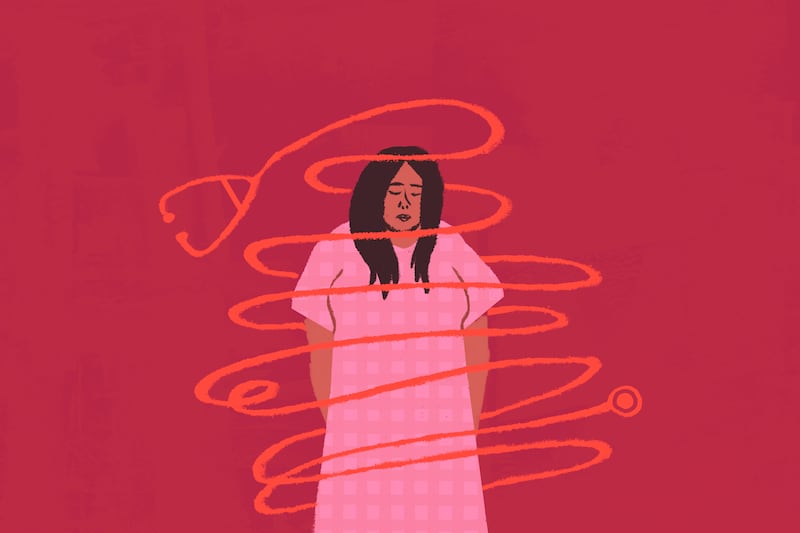
For an agonizing 18 months during her teenage years, my daughter Emily endured debilitating pain. The pain was so intense that she couldn’t even walk 20 feet down our driveway. It kept her curled up in her bed for days on end, causing her to miss school, her friends and life.
Our family embarked on a long and frightening search for answers. We sought care from leading hospitals and highly respected doctors. She endured test after test and tried countless medications, yet the answers never came. Well-meaning doctors chased symptoms, but she was repeatedly misdiagnosed and the underlying cause of her pain remained a mystery.
After this lasted for over a year, our family was devastated. The life we once knew began to shrink as everyday activities became difficult. There were moments when the darkness of what Emily was experiencing felt overwhelming. She had even contemplated suicide.
As a mother, I was terrified and lived my life in a constant state of fear and uncertainty as I continued to search for answers. I prayed often for guidance and a way forward. By what I can only call divine intervention, we were eventually led to a specialist who recognized what so many others had overlooked: endometriosis.
Endometriosis is a systemic, inflammatory condition where tissue similar to the lining of the uterus grows in other parts of the body. It has been found in every major organ, most often the ovaries, bladder and bowel. The misplaced tissue causes organ dysfunction, scarring and often debilitating pain. It is responsible for up to 50% of infertility cases in women.
Receiving a diagnosis didn’t instantly fix everything for Emily. The road forward remained difficult, but finally my daughter had a reason for her suffering and access to care that started to make her life better.
Although endometriosis affects at least 1 in 7 girls and women, it remains one of the most underresearched diseases in medicine. Millions of women endure years of pain, misdiagnosis and uncertainty before getting answers.
As the daughter-in-law of former Sen. Orrin Hatch, I saw firsthand how deeply he believed in the power of medical research to improve lives. He recognized that the breakthroughs we depend on today are the result of our nation’s commitment to investing in science.
Working with colleagues helped elevate endometriosis to a national priority, supporting efforts that allowed the disease to start receiving funding through medical research programs and advocating for greater attention to endometriosis.
Rep. Mike Kennedy, R-Utah, has been a dedicated voice fighting for endometriosis awareness. When we talk about endometriosis, we empower those suffering to seek help, and we push for earlier diagnoses and better care.
Rep. Mike Kennedy
Before I came to Washington, I spent years in exam rooms with patients. In that time, I saw firsthand how often endometriosis goes undiagnosed, how routinely its symptoms get attributed to other causes and how long patients typically wait before anyone identifies what’s actually wrong. That kind of experience shapes how I approach this issue in Congress.
Endometriosis is one of the most underrecognized diseases in American medicine. It affects roughly 1 in 7 women, and yet it still takes the average patient close to a decade to receive an accurate diagnosis.
The science is finally beginning to catch up as researchers are uncovering links to immune dysfunction, chronic inflammation and systemic effects that reach well beyond reproductive health. Those findings are changing how we understand the disease. They should change how Congress approaches it, too.
Policy on complex medical issues is too often written by people who have never had to deliver a diagnosis, explain a treatment plan or tell a patient that medicine doesn’t yet have an answer. My job in Congress is to make sure that the expertise of the doctors, researchers and patients closest to this disease actually reaches the rooms where decisions get made. That means building coalitions, elevating the right voices and working with members who are committed to addressing women’s health issues.
Congress has shown it can act when the medical community, patients and lawmakers pull in the same direction. Endometriosis deserves that kind of attention.
Hatch used to say that good policy starts with listening to the people whose lives are at stake. I believe that too. Women with endometriosis have been waiting a long time to be heard. The work ahead is to make sure they are.