

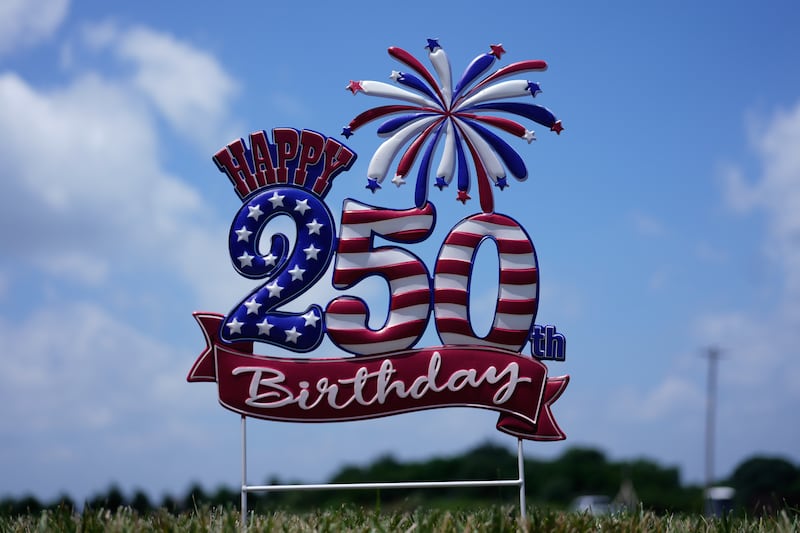
This past July 4 was the 250th anniversary of the Declaration of Independence. As our family was traveling that week, I was unable to take part in America’s Potluck and some other memorable celebrations. Since then I have wondered, “Did I miss my once-in-a-semiquincentennial chance?”
I felt this particularly deeply because as a civic-education and research fellow for the Civic Thought and Leadership Initiative at UVU’s Center for Constitutional Studies, one of my responsibilities has been to create resources for educators and families to better teach, study and understand the declaration.
Fortunately, in the waning months of 2026, we can continue to celebrate this 250th and the upcoming 250ths of colonial-era state constitutions; revolutionary battles such as Trenton and Princeton, Saratoga and Yorktown; the peace treaty of Paris, Articles of Confederation, and writing of the Constitution.
So if you want to continue learning about key components of the founding and our nation, you have plenty of time. We at the Center for Constitutional Studies are planning activities at least through 2037! Here are a few center resources available now, and it seems fitting to wrap up Utah’s American Founding and Constitution Month by reviewing them.
You might start with a five-part “master class” of 15-minute episodes on the ideas that animated the declaration. Themes include what was at stake in 1776; the momentous ideas of natural rights, equality and consent to government; the founders’ commitment to civic virtues; and the American vision for government that enables even ordinary people to pursue happiness.
Next, learn how the Declaration of Independence was created. Even before the declaration was penned by Thomas Jefferson, with particular assistance from John Adams and Benjamin Franklin, states and even towns were drafting their own declarations of independence.
As the Continental Congress was composed of patriots who truly believed that the government drew its power from its constituents, how better to confirm that independence should be declared than with local and state governments already publishing such declarations? Following that pattern, the Declaration of Independence could declare with authority and integrity that “Governments are instituted among Men, deriving their just powers from the consent of the governed.”
Once declared, how was word of official independence shared? The fastest way news could travel was by rider on a horse. After a few informal readings en route to the printing office, broadsides were posted around Philadelphia and hustled to each of the 13 colonies. Philadelphia and nearby Easton, Pennsylvania, along with Trenton, New Jersey, collaborated to hold each of their first official readings simultaneously at noon on July 8, also an election day.
George Washington, defending New York City, also received the announcement on July 8, and it was read to his joyful soldiers the next morning. Word of the declaration spread rapidly for the age — though Georgia did not receive copies of the document until the first week in August. Find a timeline, map and sample classroom handout here.
As the master-class videos affirm, the declaration’s importance stems from the power of its ideas. View related primary-source documents (original, firsthand accounts) such as a Black American preacher’s eloquent reaction to the declaration only two months after its publication, the 1848 Seneca Falls Declaration of Sentiments in which women advocated for the vote, and Martin Luther King Jr’s “Letter from Birmingham Jail” in 1963.
Read from our Adult Civics Reading List, about people, events and ideas that shaped our fledgling nation. Elementary, middle school and high school students can find books about the declaration and the Revolutionary War.
Finally, since the 250th anniversary of our nation should bring us together, Utahns can read something together. David McCullough’s “1776″ focuses on the pivotal year when American colonists fought for independence from British rule.
While “1776″ does not focus specifically on the Declaration of Independence, the battles of that year — the book’s main subject — brought Americans together, solidifying their determination to be a free and self-governed people. Find a reading guide and discussion questions to use in book clubs, classrooms or public/home-based reading activities.
It is impossible to deny the influence the declaration has had on increasing liberty throughout our nation and the big, wide world, so we hope you’ll seize this once-in-a-semiquincentennial moment to learn more about the events from 250 years ago that brought us together then — and should continue to do so now.