

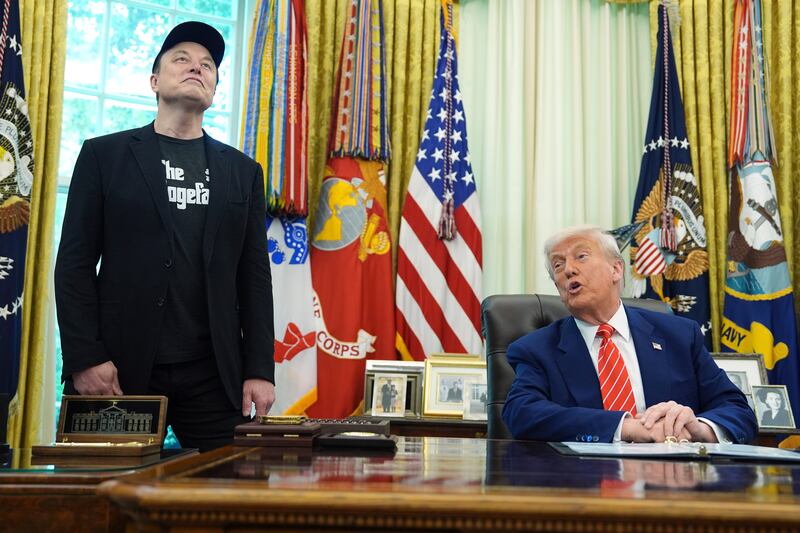

Elon Musk left his position in the Trump administration just five weeks ago, but he’s already floating the idea of reentering the political world.
Once President Donald Trump’s right-hand man and a mega donor to Republicans in the 2024 election, Musk has broken with the president and Republican Party over government spending. Now he wants to create a new political party.
He floated then revamped the idea in several posts online. Then, on July Fourth, Musk asked his followers on X, the social platform he owns, if they wanted some “independence from the two-party system.”
“By a factor of 2 to 1, you want a new political party and you shall have it! When it comes to bankrupting our country with waste & graft, we live in a one-party system, not a democracy,” Musk said Saturday. “Today, the America Party is formed to give you back your freedom.”
It looks like Musk has already taken steps to make the party official.
Pollster Nate Silver noted in a Monday newsletter that an FEC filing for the America Party listed Tesla CFO Vaibhav Taneja as the party’s treasurer. It’s not known if it’s a legitimate filing, as Musk has yet to address it, but it could be the start of real action on Musk’s part to create the country’s newest political party.
After being sharply critical of Trump’s “big, beautiful bill,” Musk’s party would likely look to curb government spending and could be successful in gaining support from younger men, which proved to be a difficult demographic for the Democratic Party to hold on to, Silver pointed out.

Trump responded in a lengthy post of his own on Sunday, saying he is sad to watch Musk go “completely ‘off the rails,’” calling him a train wreck since leaving the administration and his position at the Department of Government Efficiency (DOGE).
“He even wants to start a Third Political Party, despite the fact that they have never succeeded in the United States — The System seems not designed for them,” Trump wrote. “The one thing Third parties are good for is the creation of Complete and Total DISRUPTION & CHAOS, and we have enough of that with the Radical Left Democrats.”
Trump’s message about Musk poses a common question: Why have third parties in the United States never truly succeeded?
Unsuccessful third parties and their candidates
Mark Schrad, a political science professor at Villanova University, said a third party will very likely never succeed in elections in the United States because of centuries-old systems in place.
He pointed to the French political sociologist, Maurice Duverger, who created what is known as Duverger’s Law, which says election outcomes are determined by electoral institutions and how votes for a candidate are counted.
“It’s as close to a law-like regularity that we have in political science,” Schrad said. “And what it essentially says is that the electoral system that you have determines the number of political parties that you have.”
Schrad highlighted proportional representation systems in Europe that allow people to vote based on their ideologies, splintering the electorate into various parties like Green parties, Libertarian parties, Socialist parties and more.
In the U.S., however, the electoral system has been designed to be a “single member district plurality,” or a “first-past-the-post system,” where one candidate wins out, he said.
“There’s no consolation prize for coming in second place,” Schrad said of the U.S. system as a whole.
Musk’s idea to create a third party isn’t new.
Over the years, there’s been plenty of third-party candidates, who, Schrad noted, often want to change the world for the better and think they can be the one to do it.
The Prohibition Party, one of the oldest third parties, is the one Schrad has studied most.
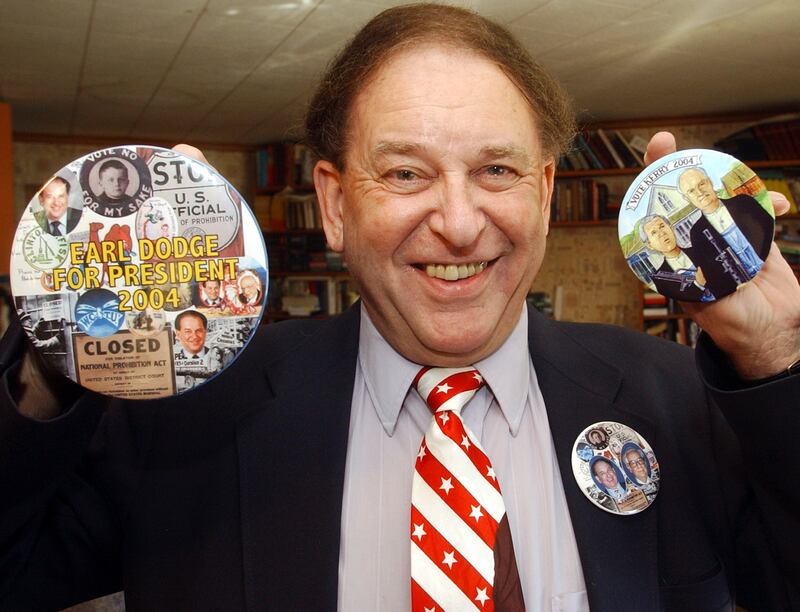
In the decades since its creation, other third parties have tried — and largely failed — to make it into the mainstream, including Jill Stein’s Green Party run, Cornel West’s switch from Green to independent and Andrew Yang’s Forward Party endeavor, among others.
In the most recent election cycle, a centrist organization No Labels toyed with the possibility of running a presidential candidate, the Deseret News previously reported.
The organization fought to get on ballots across the country — like former independent candidate Robert F. Kennedy Jr. also tried to do. No Labels eventually went on to say they’d only run a candidate that had a “credible path” to the White House and no one emerged.
The group also argued that a “well-funded and cynical conspiracy” was conducted to block No Labels and its Unity Party from gaining access to ballots in different states. States have different barriers to entry for third-party candidates to appear on the ballot. A few states, like Utah, make it relatively easy for candidates to gain access, while in other states it’s more difficult.
While gaining access to a ballot is only one issue presented to non-mainstream candidates, Schrad argued there’s an ideological battle a third party must engage in.
Winning over the hearts and minds of people who have decades-long voting patterns and “deeply engrained” loyalties to one national political party has proven to be a difficult task.

For Musk, his America Party needs to be “conservative enough that it could compete with Republicans” in traditionally red states, but also be liberal enough to compete in traditionally blue states, Schrad said.
“And … what you’ve just described is a political unicorn,” he said. “It doesn’t exist.”
There’s often frustration among third-party organizers who want to push their agenda forward, but become gridlocked by the institutional systems at play.
No Labels expressed anger after former President Joe Biden’s poor debate sparked conversation about the Democratic Party and its chosen candidate. They questioned why the Democratic Party allowed Biden — an aging and unpopular president — to run again, when dozens of polls showed Americans wanted someone else.
But the argument could be made that third party candidates, who rarely poll well nationally, are “spoiling” the electability of candidates from established parties.
Stein’s 2024 campaign concerned Democrats who said she could pull votes from an untested candidate like former Vice President Kamala Harris. Stein brushed off the concerns as “self-serving propaganda,”
Schrad noted that most third-party candidates are “true believers” who don’t explicitly want to act “as a spoiler,” but it’s just the nature of how voting works in America.
He highlighted Ross Perot’s 1992 presidential campaign, where he ran as an independent. Perot has polled the best among third-party candidates and is considered one of the most successful, yet still was crushed by the Democratic and Republican candidates.
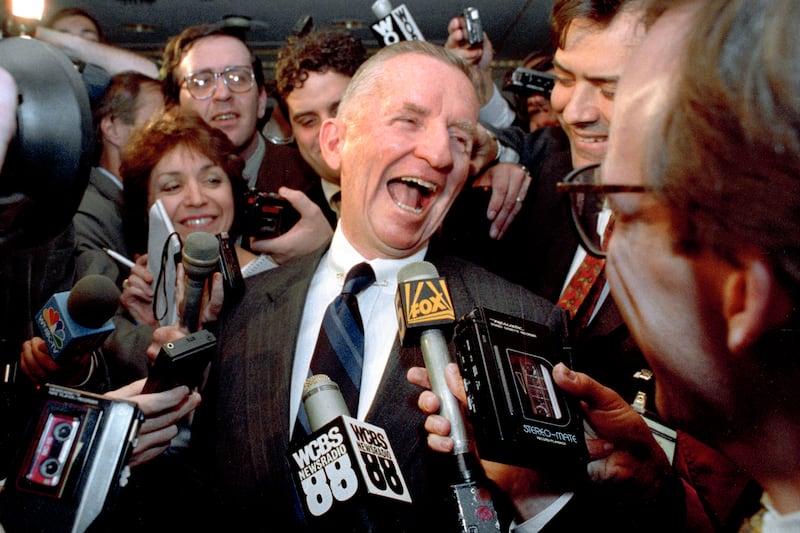
“Due to the fact that it’s a winner take all system, he got exactly zero electoral votes, which is the same number as I got and I wasn’t even running,” Schrad said. “This is not a system that allows for that.”
Silver previously shared Musk’s declining favorability with the American public. He may not have the sway he thinks he will, should he decide to back a candidate — since he can’t run for president himself.
After his work with the Trump administration and DOGE to slash federal spending, his feud with the president over the last several weeks, and after spending millions in the Wisconsin Supreme Court race that didn’t go in his favor, he may have lost his edge with voters.
Musk would have to overcome both voters’ sedentary ideological behaviors, but also the practical “on the ground” challenges third party candidates face, Schrad said.
Musk is in a unique position, however, as the world’s richest man. He would have an unusual amount of money to back his third party.
Still, those are only a few pieces of the puzzle for third-party success, Schrad noted.
“The plight of these third parties is that they come in with big ideas and they can kind of have … the sense of destiny that we can overcome the institutions, just by sheer force of will, ‘if we all just come together, we could overcome these things,’” Schrad said. “And then they fail time and time again because of Duverger’s Law, because of the electoral system.”
“And that’s something that Elon can’t buy his way out of really,” he added.
Still, as Silver noted in his newsletter, Trump’s rise to the presidency was largely unpredicted and underreported, so the future of Musk’s political party remains unknown.