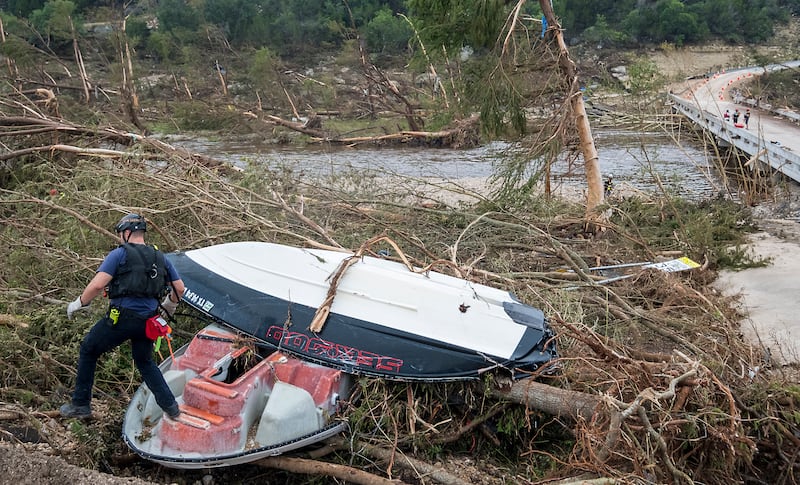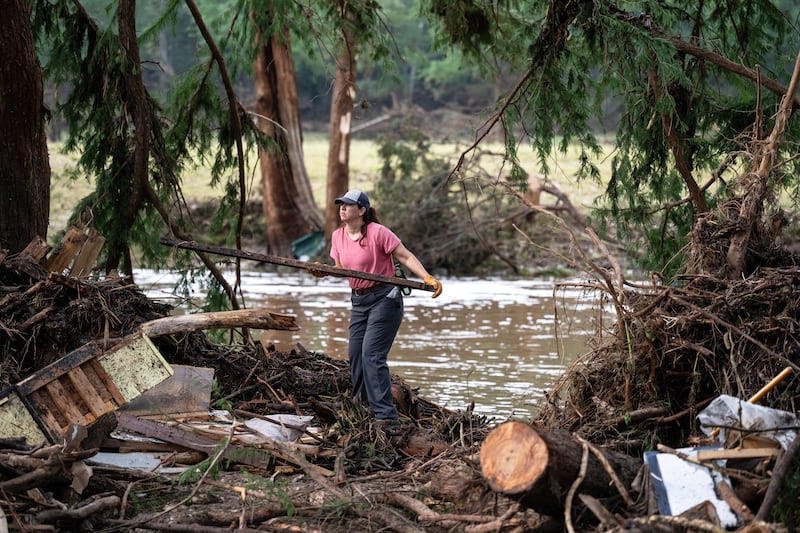

After the death toll in the catastrophic flash floods in Texas reached at least 104 people, including 27 campers and counselors from Camp Mystic, an all girls camp, the Trump administration is explaining the series of warnings that were issued ahead of the floods.
President Donald Trump is set to visit Texas on Friday, after signing a disaster declaration Sunday. Secretary of Homeland Security, Kristi Noem, has already traveled to the region, the White House press secretary said Monday.
Out of the six impacted counties, Kerr County, home to Camp Mystic, was hit the hardest.
The Trump White House’s Faith Office asked the nation to join in praying for the victims, their families and first responders, who are still conducting “rescue missions for those still missing,” according to a statement.
The Faith Office called on the nation “to join us in prayer for the precious lives lost.”

As the nation reels from this fatal disaster, many questions linger.
Did the federal weather predicting agency fail to relay information on time?
Or was this disaster a once-in-a-lifetime kind of calamity that couldn’t have been avoided despite timely warnings, as Trump suggests?
White House press secretary defends Trump
Everyone at the White House “is praying for the victims’ families and friends,” White House Press Secretary Karoline Leavitt told reporters Monday.
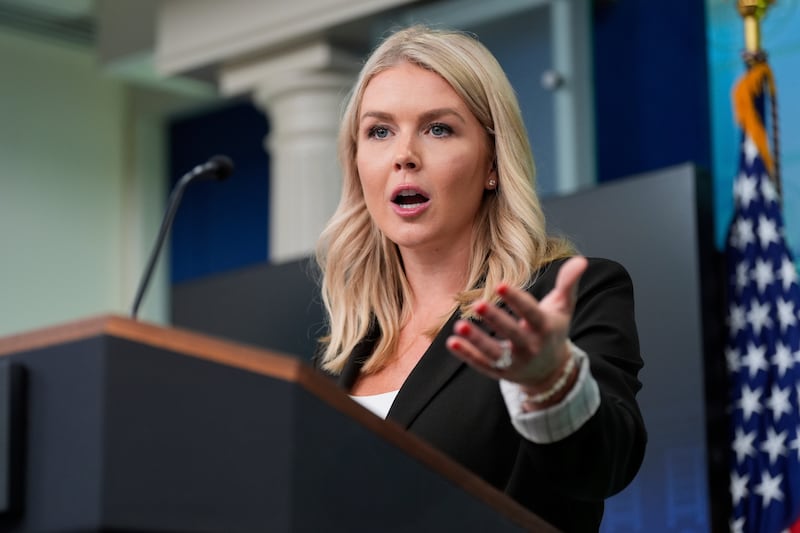
“Unfortunately, in the wake of this once in a generation natural disaster, we have seen many falsehoods pushed by Democrats such as Senator Chuck Schumer and some members of the media,” she said.
“Blaming President Trump for these floods is a depraved lie, and it serves no purpose during this time of national mourning,” she added.
Senate Democratic Leader Chuck Schumer asked the Department of Commerce’s acting inspector general to investigate whether vacancies at the NWS contributed to “delays, gaps, or diminished accuracy” in forecasting the weather emergencies.
In the letter, addressed to Roderick Anderson, the acting inspector general, Schumer said, “These are the experts responsible for modeling storm impacts, monitoring rising water levels, issuing flood warnings, and coordinating directly with local emergency managers about when to warn the public and issue evacuation orders.”
He also cited a New York Times report that said major forecasting and coordination positions at the NWS offices in San Antonio and San Angelo were vacant at the time of the flooding.
White House defends National Weather Service’s response
Leavitt responded to Schumer and the Times report by relaying a series of facts leading to the tragedy.
“The National Weather Service did its job despite unprecedented rainfall,” she noted.
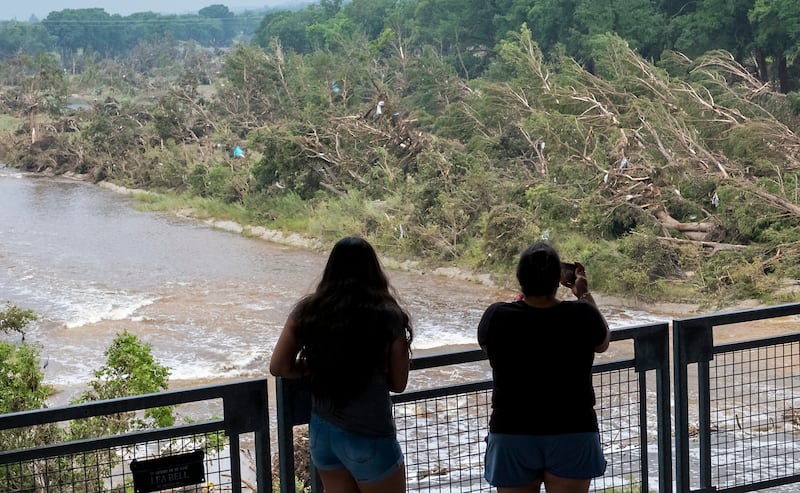
The federal weather agency’s Texas offices in Austin and San Antonio carried out “forecast briefings for emergency management in the morning and issued a flood watch in the early afternoon.”
The NWS’ timely and precise warnings came three hours before the flooding, as the agency issued warnings on the night of July 3 and early morning of July 4.
Meanwhile, “the National Weather Service office in New Braunfels, which delivers forecasts for Austin, San Antonio and the surrounding areas, had extra staff on duty during the storms, despite claims of the contrary,” the White House press secretary said.
Tom Fahy, legislative director of the NWS Employees Organization, told NBC News, “The (weather forecasting offices) had adequate staffing and resources as they issued timely forecasts and warnings leading up to the storm.”
The warning systems were functioning that day, starting with the NWS’ initial alert about a flood watch at 1:18 p.m. on July 3.
If the staffing and alert system wasn’t a problem, then what went wrong?
State officials in Texas said the NWS issued inaccurate rainfall predictions early on.
“The original forecast that we received on Wednesday from the National Weather Service predicted 3 to 6 inches of rain in the Concho Valley and 4 to 8 inches of rain in the Hill Country,” said Nim Kidd, the chief of the Texas Division of Emergency Management, at a news conference Friday.
“The amount of rain that fell in this specific location was never in any of those forecasts nonetheless.”
Trump defended the NWS, saying the flooding was “a 100-year catastrophe.”
Plus, it’s tough to concretely predict the intensity or duration of thunderstorms days in advance, and the forecasts became more accurate closer to the weather event.
Kidd said some folks don’t have cell service and probably didn’t get any messages from the weather service.
“It doesn’t matter how many alert systems you sign up for, you’re not going to get that.”
Trump White House’s staffing cuts under renewed scrutiny
In April, the Trump administration laid off and encouraged workers to opt for early retirement across federal agencies. The National Oceanic Atmospheric Administration, which oversees the NWS, lost about 600 employees at the time.
At the time, five former NWS directors in a letter said that the staffing cuts could negatively impact weather forecasting.
The letter noted the firing and retirements created a 10% staffing deficit at the NWS ahead of a busy season of weather forecasting, marred by tornadoes and hurricanes.
There were no indications that any of the vacancies affected forecasting or the issuance of warnings ahead of the Texas floods, and Trump didn’t conclusively say whether he would hire back any NWS staff.
“This was a thing that happened in seconds — nobody saw it," Trump told reporters on Sunday.