



TUCSON, Ariz. — Sitting around Maria Eugenia Carrasco’s kitchen table on a particularly warm Monday evening in suburban Tucson, Arizona, she pointed out the lack of passing cars.
It used to be noisy with rush hour traffic whooshing by, she said. But now, the streets are quiet. People only leave the house if it is truly essential, she said, like for grocery shopping or dropping the kids off at school. A once bustling block of children playing or neighborhood dinner parties no longer happen. Even church has moved to a virtual experience, Carrasco said.
“People are just not going out,” she said, explaining this is true for undocumented immigrants, but also other community members as well. “They only come out for the most essential things.”
Dwindling work opportunities and growing fear of deportation has changed life for migrants in Tucson over the last six months.
According to Immigration and Customs Enforcement data compiled by the Deportation Data Project, ICE arrests in Arizona have more than tripled in the first six months of the year compared to the same period in 2024, following President Donald Trump’s resolve to crack down on illegal immigration.
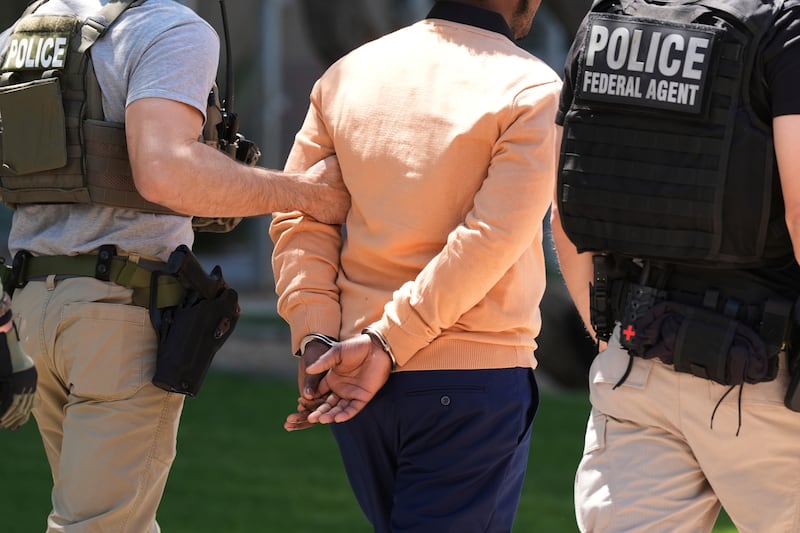
However, Tucson hasn’t seen the same level of ICE enforcement as its neighboring city of Phoenix.
Local activists say they’ve worked to provide a blanket of protection for the migrant community by acting as “witnesses,” volunteering to go to court, providing work opportunities and hosting community events.
Republican lawmakers have criticized activist actions around ICE agents, saying they’ve put the agents at risk. Rep. Darrell Issa, R-Calif., introduced a resolution last month saying activists have “repeatedly blocked, menaced, and confronted law enforcement,” while also criticizing acts of violence against the agents.
But the activists who spoke to the Deseret News say they want to be present when ICE agents are apprehending migrants so they can be “witnesses” to their actions.
A network of support in the Southwest

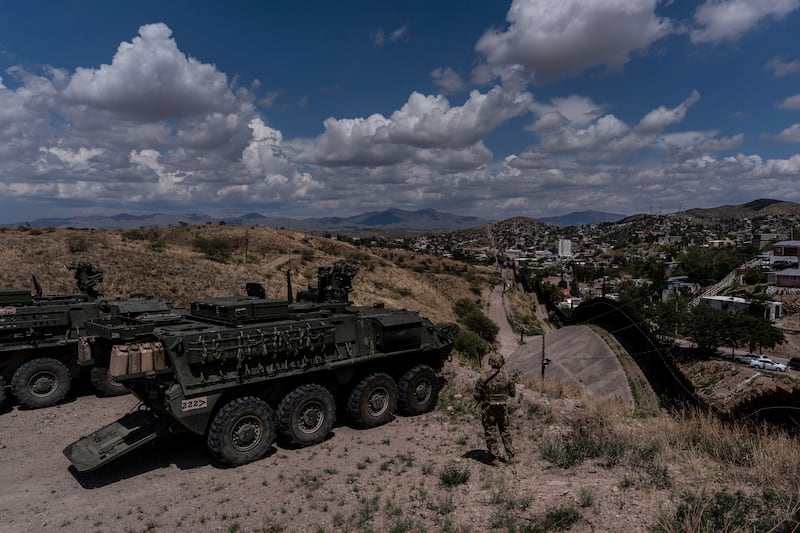
About 70 miles north of the United States’ border with Mexico, Tucson has long been home to a large migrant population, including those who entered the country illegally.
It’s a city adorned with reminders of human rights fights, including the legacy of activist César Chávez, who was born in the state.
Chávez had a complicated history with undocumented immigrants, who he criticized during his work to unionize farm workers over concerns the migrants would depress union members’ wages. Later, he defended and advocated for them to be given legal status.
Tucson is also where the sanctuary movement has its roots.
The sanctuary movement began in Tucson in the 1980s when churches protected migrants who were fleeing civil wars in their home countries and were denied asylum by the U.S. government. Rev. John Fife at the Southside Presbyterian Church started the movement and at its peak, there were more than 500 congregations across the country who were part of the movement.
Today, the Tucson congregation still aids immigrants through day labor work programs.
In the 40 years since the sanctuary movement began, many other organizations have sprung up to aid immigrants in Tucson, one of them being Carrasco’s.
Carrasco’s phone, attached to a portable charger, lights up when people in the community spot ICE agents conducting immigration raids or when they stop someone for a prolonged period of time. The work she does is through Tucson Community Rapid Response, which began over five years ago as an off-shoot of the aid organization Derechos Humanos.
Rapid Response sends an “observer” to the location where ICE agents were seen to document any interactions and show support to migrants. Carrasco said they are teaming up with the ACLU to create a database for sightings and incidents.
“If we don’t file it, if we don’t put it in writing, it didn’t happen,” Carrasco said.
About 140 people have volunteered to be observers. Carrasco said they’ve witnessed detentions of children and their parents, and arrests of migrants. Observers also confronted agents from a neighboring county, asking why they are working outside their jurisdiction, she said.
Another 60 people have volunteered with Rapid Response to do accompaniments for the organization. Volunteers have shared stories with Carrasco about what they have seen while accompanying immigrants, including waiting in shifts at a local hospital as a pregnant woman, handcuffed to her bed, delivered her baby. They’ve shown up in court as people go through the immigration process and make sure people have power of attorney documents, just in case the individual is deported and their home needs to be sold or kids need to be cared for.
Carrasco noted that they never want interactions to become violent. The Department of Homeland Security announced last month that the agency has seen a 830% increase in assaults as standoffs between the public and agents grow heated across the country.
She said the response from the community has been encouraging. There are people who have shown up to protests, others who sign up to observe through her organization and those who spend their time at various groups and events in the city, she said.
After a near-death in the desert, activist works to help migrants
However, Dora Rodriguez, a longtime activist in the area, says donations have started to dry up.
Rodriguez was one of the many immigrants fleeing violence in Central America in the ‘80s. Her story of nearly dying in the Sonoran desert led her to find the Southside church and Fife, the founding Reverend of the sanctuary movement. Since then, Rodriguez has dedicated her life to helping immigrants in the area.
Both Rodriguez and Fife have gone on to start their own aid organizations — Fife with No More Deaths, a group that treks across the desert and leaves lifesaving buckets of water, and Rodriguez with Salvavision, which provides immediate housing, medical care, legal assistance and more.
Rodriguez said it’s been difficult for her organization to continue its work of serving about 70 families. They are having a hard time finding housing for families when they arrive in the U.S., to pay for that housing, and to help them navigate the ever-changing immigration process. For example, a work permit previously was $450 and now it is $750 per person. If a permit application is denied, Salvavision doesn’t get that money back.
“What happened is, organizations like ours are the ones really preventing these families from being homeless in the street,” Rodriguez said.
“And financially, we’re hurting … people are scared to give their money away and I don’t blame them,” she added, noting the economic uncertainty around tariffs.

Another organization, BorderLinks, started in 1987, has been educating people through trips to the border, events and raising awareness to change immigration laws.
Their office is adorned with stitch work made by migrants waiting in shelters at the border, who need a creative outlet while the asylum process plays out. Tucson Samaritans, Humane Borders and Green Valley Samaritans also focus on life-saving essential services for people along the border.

A desert city’s resilience will live on
While Tucson has a long history of providing support to immigrants, advocates say there is underlying unease spreading throughout the community.
Rodriguez said families are noticeably more fearful of showing up to court and following through on their immigration process. They’re scared that if they do get a work permit, it will be taken away. They’re afraid that fewer employers will want to hire immigrants and are concerned about putting food on the table, Rodriguez said.
Carrasco said that fear doesn’t just exist among the undocumented population. It’s begun to impact people navigating the immigration court system through asylum-seeking processes and even legal residents.
Through Rapid Response, Carrasco got a call from a woman who saw ICE officers sitting in cars in her neighborhood. Carrasco asked if she’d be willing to document the incident, but the woman refused. The woman was afraid she’d be detained, despite being a legal U.S. citizen, Carrasco said.
“We have to be really careful because these are the people we want to protect,” Carrasco said.
Father Ray Riding, a missionary priest for the Missionary Servants of the Most Holy Trinity, has seen it, too. He recently drove a mother, who had a work permit, and her two children south to the U.S.-Mexico border so she could self deport after her husband was deported.
“She tried to make it here by herself, but she just couldn’t, not only financially, just by the emotional thing of being away from her husband,” Riding said.
If people go out into town for errands, they’re constantly checking over their shoulder. It’s causing real “paranoia” among immigrants in the community, Christina G. Valencia, Carrasco’s best friend of more than 40 years, said.

Despite the increase in enforcement, advocates say they will continue to do the community organizing that makes Tucson a unique place for immigrants.
Rodriguez, who said she was minutes away from dying in the desert when she was saved, said she believes that each person has hope within them and this current moment facing the immigrant community is an opportunity for people to serve other people.
“We have stories of, yes, a lot of tragedy, but also with that, a story of resiliency and stories of fight and dignity,” she said. “We see that every single day in our families in Tucson.”
Riding agreed. He said his life changed when he began working with immigrants in Tucson last year. Riding finds comfort in knowing that the work will continue to happen, whether it be with water drops in the desert, or in the court system earning work visas.
“The mountain is very steep, and we realize that. But, what keeps us going? What keeps us going is we believe 100% that goodness is stronger than evil and compassion is stronger than cruelty,” Riding said. “The mountain is very steep, and a lot of the time all we see are clouds, but we know that there’s a sun.”