

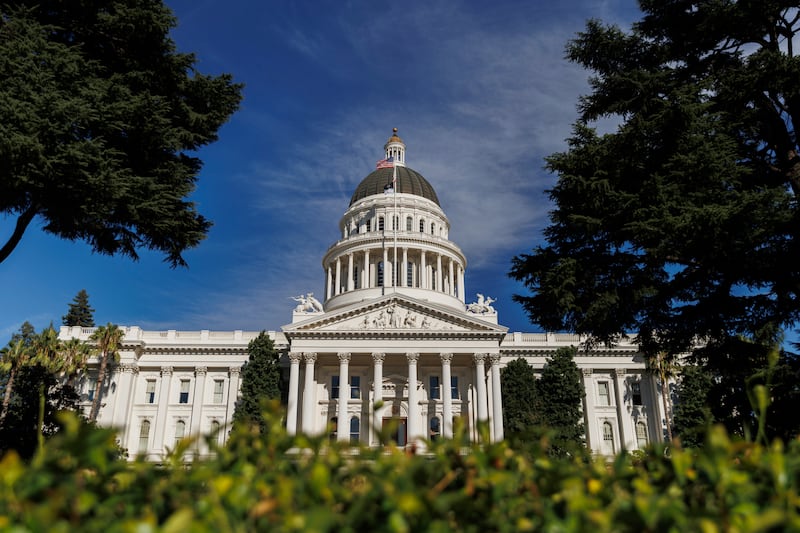

- The “Stop Nick Shirley Act” (AB2624) passed California's state Assembly 57-19, which would prohibit the posting of photos or videos of immigrant service providers to the internet.
- Supporters said the bill is needed to protect immigrant service workers, while opponents argued it could shield taxpayer-funded organizations from public scrutiny and fraud investigations.
- Critics argued the bill could violate First Amendment rights by restricting journalists like Nick Shirley from posting investigative footage online.
California’s state Assembly on Tuesday passed the “Stop Nick Shirley Act” (AB2624) by a vote of 57-19. The bill will move to the state’s Senate, and if passed there, it will await California Gov. Gavin Newsom’s signature to become law.
The bill was introduced less than two months after independent journalist Nick Shirley posted a viral video exposing fraud in Minnesota’s welfare programs.
In the video, Shirley went door to door at tax-funded daycares, asking adults if any children were present and what they thought about the allegations of fraud. The video quickly became the most viewed video on X ever.
Then in March, Shirley went to California to investigate fraud in tax-funded hospices.
Assembly member Mia Bonta, the wife of California’s attorney general, sponsored AB2624. The bill outlaws the sharing of photos or personal data of “immigrant service” providers on the internet, if done as “harassment.”
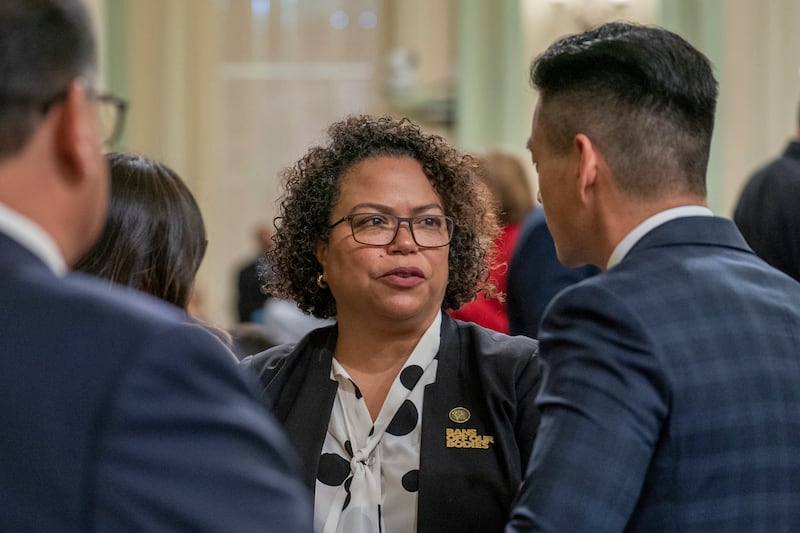
The bill expands the state’s Safe At Home program. The 30-year-old program gives privacy protections to those at risk of domestic violence, stalking, human trafficking and other forms of abuse.
AB2624 “enables California’s Safe At Home program to include immigrant service providers, their employees and volunteers,” Bonta explained.
“It allows participants to use a substitute address designated by the secretary of state, keeping their home, work and school addresses out of public records, while still allowing them to safely receive mail and legal documents through the state,” Bonta said.
Bonta said employees at immigrant service providers have been doxed and targeted online. The bill “gives them a critical layer of protection and privacy in an environment where their personal safety is increasingly at risk,” she said.
The bill’s co-sponsor, Assembly member Christopher M. Ward of San Diego, added on Tuesday that he believes the state “has a responsibility to be able to help protect” people who are “targeted because of who they are or the work they do.”
Opponents say the bill violates the First Amendment
Before Tuesday’s vote, assembly members debated the legislation.
Republican Assembly member Carl DeMaio described portions of the bill as a violation of the First Amendment freedom of speech protections.
From the bill’s text, DeMaio read, “A person shall not publicly post or display on the internet the image of a designated immigrant support services provider.”
“So let me give you an example,” he said. “Nick Shirley shows up with his camera crew to the Somali Learning Center — or maybe one of the 90 fake hospices operating in a building in Los Angeles that was highlighted by CBS News — shows up doing the work of a citizen watchdog journalist.”
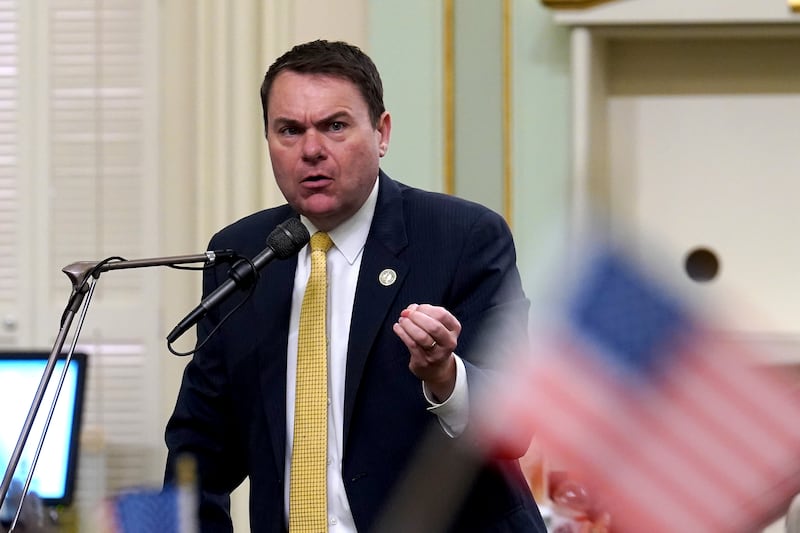
“This is something we should promote. We should want an extra set of eyes. People have a right to go out there and kick the tires and find out what these organizations are doing with our taxpayer funds,” DeMaio said.
DeMaio asked his fellow assembly members to vote no. “I am urging you to uphold the First Amendment and to protect the rights of Nick Shirley and others to do the work that they’ve been doing. They’ve been exposing fraud. This is fraud that taxpayers ought to know about,” he said.

Assembly member LaShae Sharp-Collins countered.
“This is not a game. This is not a social media stunt. And we should not legitimize harassment,” she said. “We are all here doing a public service, aren’t we? Do we stand to be terrorized out of our public service? I think not.”
She continued, “So let’s say the quiet part out loud. Some people are angry that immigrant communities are protected and fighting back against fear-based politics.” The bill “draws a clear line. And we will protect our immigrant communities and their advocates.”
Her colleague Nick Schultz agreed, adding that the bill would not prevent law enforcement, district attorneys or the attorney general from investigating fraud.
But Assembly member David Tangipa described the bill as a “Trojan horse,” which would protect nonprofits and nongovernmental organizations from scrutiny on how tax dollars are being spent.
“The definition of a designated immigration support provider is expanded beyond employees and volunteers,” he said. “It includes nonprofit organizations with no limitation, any facility deemed to be protected by the attorney general.”
He continued, “If you read the definition itself, it looks like we’re adding safeguards to cover up. Instead of going after fraud and corruption, we are going after the ability to post it online.”