

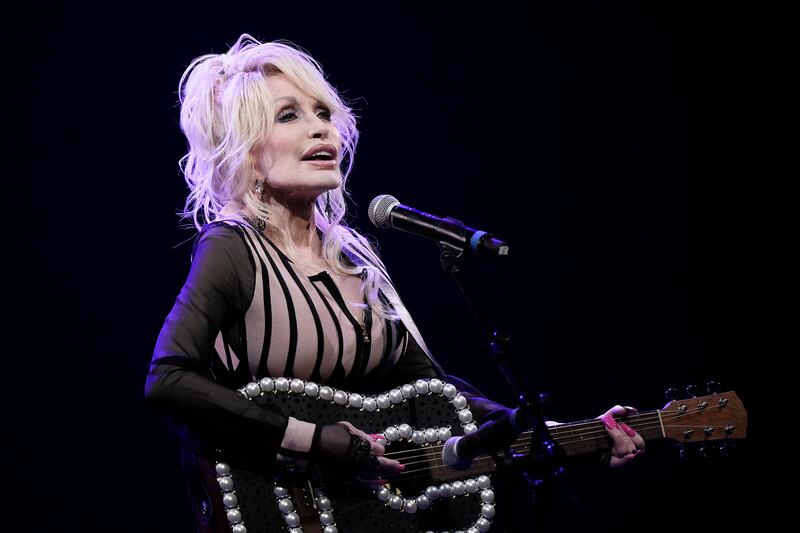

About 3 miles from my childhood home in Myrtle Beach, South Carolina, in walking distance of the Atlantic Ocean, was a 1,000-seat theater that celebrated some of the most legendary musical artists of all time.
The show, called Legends in Concert, brought in professional tribute artists from all over to create the magic of one-of-a-kind performers like Little Richard, Elvis Presley, Marilyn Monroe and Michael Jackson.
Since my mom was the operations manager at the theater, I saw this show more times than I could even count throughout the late 1990s and early 2000s.
During the day, I was an elementary school student learning multiplication and cursive. At night, I was immersed in an entirely different but perhaps even more fulfilling education, hearing some of the top songs from the major artists who have shaped the music industry.
And that’s how I learned about Dolly Parton.
From the Dolly Parton set at Legends in Concert, I got a brief introduction to the Queen of Country’s extensive repertoire — including “9 to 5,” “Here You Come Again,” “Two Doors Down,” “Jolene” and “I Will Always Love You.”
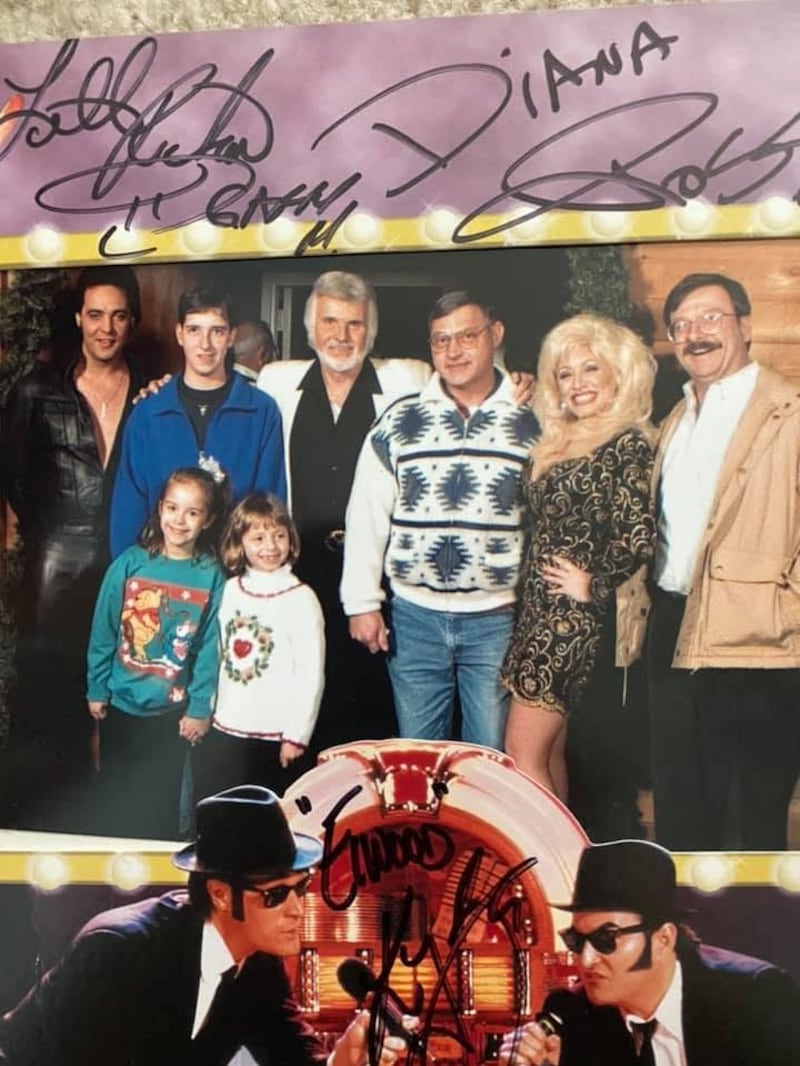
I was only 8 or 9, so I didn’t have the life experience to understand the ache in the messages driving these songs, but I loved the sound. Parton’s music, along with so many other definitive entertainers, became the soundtrack to my childhood.
Fifteen miles up the road from Legends in Concert stood a larger theater owned by Parton herself.
That show, which was then an equestrian-themed production called the Dixie Stampede, also became a staple of my childhood. The family-friendly dinner show always kicked off with a cheerful video message from Parton welcoming us to her theater. It became a go-to spot for our friends and family visiting from out of town. It also objectively has the world’s greatest creamy vegetable soup — a soup so good that I would (usually unsuccessfully) offer up my apple turnover to a friend in exchange for their bowl of soup.
Just across the parking lot from Parton’s theater sat an even larger theater called the Carolina Opry.
This year-round variety show was yet another tradition for my family. Singer Rita Gumm would always close out the Christmas show with a powerful rendition of Don Francisco’s gospel song “He’s Alive” — which Parton recorded for her 1989 album “White Limozeen.”
As a kid, I was mesmerized by the dramatic effects throughout Gumm’s performance — the flashing lights, claps of thunder and fog. I was also in awe of how the song would bring the audience to its feet every single time.
But somewhere down the line, without me really even being aware, that song became something more to me.
And now, as I mourn Parton’s death along with the rest of the world, I can’t stop thinking about it.
How Dolly Parton became a part of my Easter
By the time I left my Myrtle Beach home for college, I’d heard “He’s Alive” sung live at the Carolina Opry probably around 15 or 20 times.
“He’s Alive” tells the story of Jesus Christ’s resurrection, from the perspective of the apostle Peter. It details his confusion over an empty tomb and his guilt in denying Christ. Near the end, as the music builds cinematically, Peter sees the resurrected Christ:
“But suddenly the air was filled with a strange and sweet perfume
“Light that came from everywhere drove shadows from the room
“And Jesus stood before me with his arms held open wide
“And I fell down on my knees and I just clung to him and cried.”
The song ends with a triumphant chorus, complete with a full choir joyfully shouting, “He’s alive!”
It wasn’t until I left home that I realized how much this song had affected me.
My first Easter on my own, in a dorm room 2,000 miles away at Brigham Young University, I found myself searching for the song online. Since I had always listened to Gumm’s version at the Carolina Opry, I’m not sure I’d ever heard Parton actually sing it before.
I found what has arguably become her definitive performance of the song at the 1989 CMA Awards and was blown away. In that CMAs performance, which brought the audience to its feet, I found the spirit and a piece of home.
Since then, “He’s Alive,” and that performance in particular, has become my Easter tradition. It doesn’t get old. It’s anchored me throughout college, during a volunteer teaching stint in China and now as I raise my own family.
And even after all of these years, Parton’s soprano voice, which subtly evolves from quivering to resolute as she sings of Christ’s resurrection, still brings me to tears.
I’m sure that’s partly because of the significance of the song in my life, and the faith it has inspired, but it also stems from a conviction in Parton: She really believes what she’s singing.
The faith of Dolly Parton
“I’ll never forget that night,” Parton would tell CMT years later in an interview reflecting on that legendary performance of “He’s Alive.” “I honestly just felt the spirit fall on me.
“I just felt so much, such an overwhelming feeling, and I really think that people felt that, too,” she continued. “And I really think that was God kind of getting a good message out. I felt so lucky that I could be that vessel.”
Parton, who grew up in rural poverty in the Great Smoky Mountains, didn’t shy away from sharing about her family’s upbringing or her faith once she was on the global stage.
Both of those themes are intertwined in her deeply autobiographical hit “Coat of Many Colors,” which she wrote early on in her stardom. In the song, she reflects on the patchwork coat her mom made for her to wear to school.
“As she sewed, she told a story from the Bible she had read
“About a coat of many colors Joseph wore and then she said
“‘Perhaps this coat will bring you good luck and happiness’
“And I just couldn’t wait to wear it and momma blessed it with a kiss.”
Throughout her career, the 10-time Grammy winner would share how her faith and relationship with God were pillars in her life — inseparable from her music and her characteristic optimism. It was a lifelong theme as constant as her quick wit and the warmth of her storytelling.
“Dolly has lived in the light and is in the arms of Jesus, surely met by Carl, her parents, and countless others who have watched her and longed for her to meet them in the heavens,” her nephew, Bryan Seaver, said in a video announcing Parton’s death at the age of 80 on Tuesday.
As tributes from Parton’s fans and fellow artists began to pour in following the news of her death, it confirmed just how far her faith extended.
“She took my face in her hands and prayed over me once,” Brandi Carlile, my favorite singer-songwriter who is a longtime friend and collaborator of Parton’s, said in a touching tribute. “I’ve never been the same since. Her prayers were maybe more powerful than mine or anyone else’s, because that prayer has had a very long rainbow colored halo and I hope it lasts me my whole life.
“Your faith is a light. You are the standard bearer,” Carlile concluded her Instagram post. “Put in a good word for us all with your god and help us in whatever way you can from where you most certainly are.”
Country star Randy Travis, who recorded a duet of Parton’s “Do I Ever Cross Your Mind?” for his 1990 album “Heroes & Friends,” also praised her strong faith.
“Thank you for showing all of us how to carry success with grace and how to use the gifts God gave us to bless others,” Travis wrote in his tribute. “Your mission to make people happy and lift them up while glorifying God is complete.”
I’m just one among millions of fans who Parton lifted up through her many talents. She was peppered throughout my childhood and embedded in so many formative moments. Now, as I have two kids of my own, her influence carries on in the books we read from her Imagination Library, and the groundbreaking music that entered my life as an elementary school kid.
While writing this, I pulled up that 1989 CMAs performance of “He’s Alive.” As usual, I started to cry.
But this time, the tears were different — simultaneously sad and happy. Mourning the loss of Parton but rejoicing in the fact that we ever had her to begin with.