


- Canada announced retaliatory tariffs Tuesday amid an escalating U.S. trade dispute.
- The new fees, targeting 700 U.S. goods, aim to match new U.S. levies that took effect Saturday.
- The announcement came just hours after President Trump threatened to rename Lake Ontario.
Canadian officials announced a slate of new trade levies targeting U.S. goods Tuesday morning amid an escalating tariff dispute and just hours after President Donald Trump threatened to rename Lake Ontario in a social media post.
The announcement comes after trade negotiations between the two countries broke down last Friday and a new set of hefty U.S. tariffs went into effect early Saturday morning. Trump approved those tariffs last month relying on a little-used section of the Tariff Act of 1930 with a 30-day implementation window. They impose 50% fees on a disparate list of over 500 Canadian goods including dairy products, alcohol, flowers, paper products, makeup and hockey sticks.
Canada’s new levies include more than 700 U.S. goods and are worth about $20 billion, mirroring the size of Trump’s tariff declaration, according to a report from CNBC. The measures are set to take effect Sept. 8.
The just-announced Canadian tariffs range from 15% to 50% and cover a wide range of U.S. imports including steel and aluminum, dairy products, clothing, appliances and lumber. The most significant measure, according to a New York Times report, is the new rate on steel and aluminum, which doubled to 50%.
Both countries’ lists of new tariffs are lengthy, and each total around $20 billion in value, but those levies represent just a small slice of overall trade value between the U.S. and Canada which totaled $720 billion last year.
Renaming Lake Ontario?
Trump pilloried Canada in a series of social media posts Tuesday morning and called the U.S. neighbor one of its worst trading partners.
“I deal with many countries, and Canada is easily the most difficult and unreasonable,” Trump wrote in one post.
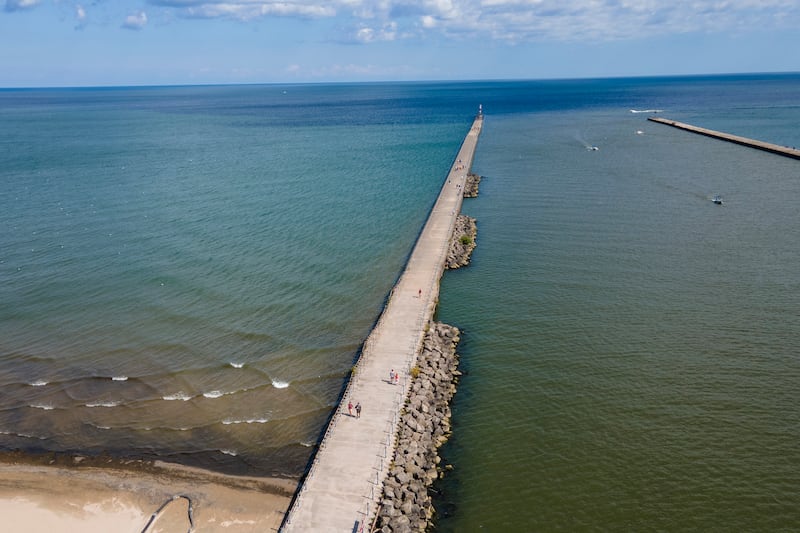
In a separate Truth Social post, the U.S. president also threatened to rename Lake Ontario, the Great Lake that is bordered by New York state on its south end and the province of Ontario to the north.
“The United States is giving serious consideration to changing the name of Lake Ontario to Lake America in that we don’t expect to be doing much business with Ontario any longer,” Trump wrote.
Trump signed an executive order last year renaming the Gulf of Mexico to the Gulf of America. While the name has been changed on U.S. government publications, it has been widely ignored by other countries.
Trade talks between the U.S. and Canada remained stalled Tuesday but both sides are signaling that they would be amenable to renewing negotiations.
Canadian trade minister Dominic LeBlanc told CNBC’s “Squawk Box” that Ottawa did not want to abandon discussions with the U.S.
“Our preference was to find a deal that benefits both countries,” LeBlanc said. “We still believe that’s possible. But in the meantime, we’re not waiting by the phone.”
Are trade tariffs effective?
During his presentation at the Zions Bank/World Trade Center Utah Crossroads of the World trade summit in Salt Lake City in May, former U.S. trade ambassador Robert Lighthizer said that trade levies were once a useful part of overall trade policy for the U.S. but that is no longer the case.
“The belief is that the principal barrier to trade is tariffs. And therefore you negotiate tariffs,” Lighthizer said. “But that hasn’t been true for a generation and a half. The principal barriers to trade are a whole bunch of things we call industrial policy.”
Industrial policy, Lighthizer explained, incorporates a wide range of domestic policies that can include banking systems, currency policy, labor laws, regulatory burdens, subsidies and more.
“These are the principal barriers of trade … and really can’t be negotiated," he said. “They are too complicated.”
At the May event, Lighthizer said he believes Trump was elected largely due to dissatisfaction with the current global trade environment. He praised the president for his actions on trade policy, which he characterized as first steps toward positive change.
A raft of punitive tariffs imposed by Trump earlier in his second term was struck down by the Supreme Court in February. Three months later a federal court ruled that a nearly universal 10% tariff put in place following the high court’s ruling was also illegal.