



WASHINGTON — Two brothers died from fentanyl poisoning after experimenting with pills they bought from a stranger on the internet. A 12-year-old died by accidental asphyxiation after participating in a viral “Blackout Challenge.” A 15-year-old girl died by suicide after being sexually harassed and bullied online.
Tighter social media regulations could have saved them, their parents argue. But online safety laws are woefully outdated, as Congress hasn’t revised them in over two decades.
Parents want that to change.
“As parents are desperately trying to keep pace with rapidly escalating technology, they are using a decades-old bill that Congress has yet to tweak or address or change to reflect the modern-day challenges of families and parenting,” Sen. Ashley Moody, R-Fla., said on Tuesday. “That is negligent at best.”
The Senate Judiciary Committee held a hearing on Tuesday to investigate claims on whether Meta, one of the largest media companies in the world, knowingly suppressed research on the harms of social platforms for children that could be used to advance policies protecting them from danger.
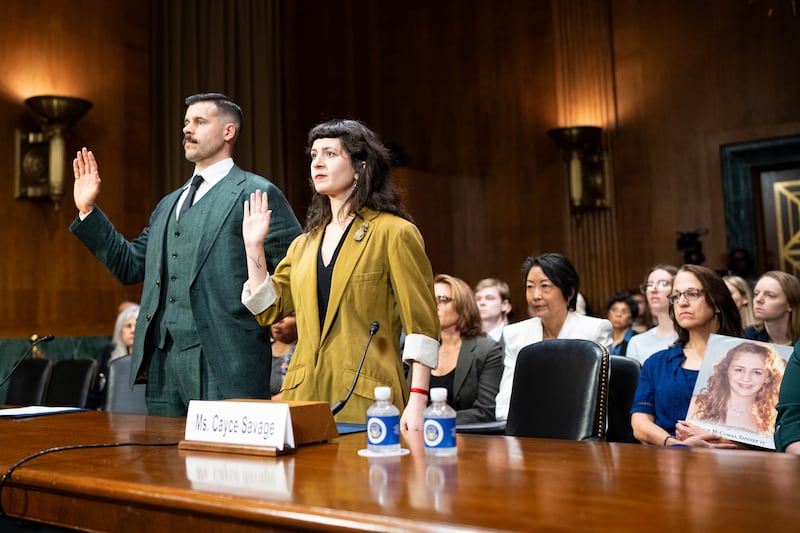
The hearing comes as lawmakers have repeatedly pushed for an update to current law to better protect children engaging in social media and other virtual reality spaces.
“In essence, what they have done, what Meta has done, is to really create a platform and a playground for pedophiles and groomers and people who seek to do harm to these children,” said Sen. Marsha Blackburn, R-Tenn., who introduced the Kids Online Safety Act earlier this year to require online sites to implement policies protecting users under 17 years old.
Drugs, extortion, viral challenges: Parents share grueling details of children’s deaths
Hours before the hearing began on Tuesday, Blackburn and other senators were joined by parents who have long pushed for social media reform after their own kids died due to its negative effects.
Brian Montgomery, who founded the Parents for Safe Online Spaces group, detailed how he and his family never anticipated the death of his 16-year-old child. His son, Walker, was an active kid who loved sports and wasn’t particularly active on social media, Montgomery said.
One night, he went to bed in his room “healthy mentally, physically and socially.”
“We did not get to see him the next morning,” Montgomery said.
That night, Walker was targeted in a sex extortion scheme by an anonymous online predator through Instagram messaging, Montgomery said. Hours later, Walker took his own life.
Maurine Molak, who co-founded Parents SOS as well as David’s Legacy Foundation, shared a similar story of her son, who was also 16 years old when he died by suicide.
Her son, David, had battled with a social media and online gaming addiction, Molak said, and he had “endured months of threatening cyberbullying.”
“Even though we made sure he had the mental health support, it wasn’t enough,” she said.
Both Montgomery and Molak, along with dozens of others, have pressed lawmakers for years to pass legislation implementing new restrictions for online sites, arguing they may not have lost their children if those guardrails were already in place.

“Parents cannot be expected to compete with Big Tech’s rapidly evolving AI-driven products that are designed to trap our kids on screens for hours,” Molak said. “On behalf of David, on behalf of all parent SOS families, I implore Congress to take today’s hearing as an urgent impetus to pass KOSA. Our children’s lives depend on it.”
Meta suppressed research on child safety, report alleges
The public hearing coincided with a report published by The Washington Post on Monday, detailing internal documents and information from company whistleblowers that accuse Meta lawyers of interfering with research that could have exposed serious concerns about the effects of social media on children.
Attorneys allegedly stifled findings that could have uncovered possible safety risks on Meta virtual reality devices and social media platforms, which gave the legal team “plausible deniability” about negative effects of the company’s products, the outlet reported.
“The metaverse is a cesspool filled with pedophiles, exploiters, groomers, traffickers and Meta knows it,” Sen. Richard Blumenthal, D-Conn., who co-introduced KOSA, said on Tuesday. “They know it, and they have stifled and suppressed the research and truth telling that would provide Congress with all of the facts that are needed to support the Kids Online Safety Act and other measures that will protect children.”
Meta has denied any wrongdoing, telling the Deseret News in a statement that any claims it is manipulating research to cover up negative findings is “nonsense.”
“(The claims are) based on selectively leaked internal documents that were picked specifically to craft a false narrative,” a spokesperson for the company said. “The truth is there was never any blanket prohibition on conducting research with young people and, since the start of 2022, Meta approved nearly 180 Reality Labs-related studies on issues including youth safety and well-being.”
The spokesperson cited several company safeguards intended to restrict preteen access in virtual reality games to ensure “only certain, parent-approved experiences.” Users can also report any account they believe is underage, the spokesperson said.
However, lawmakers argue those parental restrictions are oftentimes too hard to understand — especially for those who are unfamiliar with the ever-changing social media landscape.
“There are programs and apps and algorithms being developed to target your children and their attention — ultimately having an effect on their mental health and well-being. Many have committed suicide, and we as parents are still learning what algorithms are,” Moody said. “I would ask, not just as the nation’s newest senator, but as a mother who is right now trying to parent a child who sometimes I have to ask to tell me how to turn on the parental controls.”
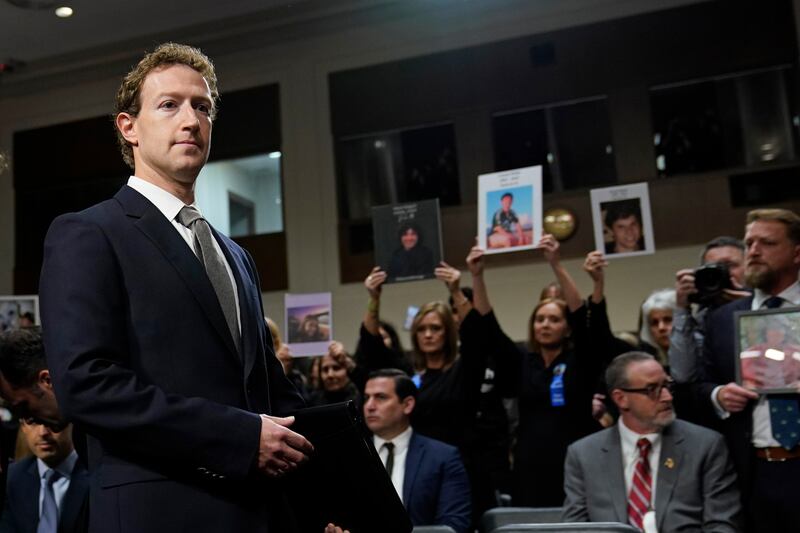
Senators push for updated restrictions on social media
As senators dug into the report and other claims of negligence from Meta during the hearing on Tuesday, the bipartisan group expressed support for a vote on KOSA to update federal law on how social media companies can operate.
KOSA, the bill led by Blackburn and Blumenthal, which currently has 40 other bipartisan co-sponsors, would require platforms to establish safeguards protecting users under the age of 17. While the bill carves out some exceptions, it would apply to video games, online messaging sites, video streaming services and other online platforms.
The bill would “generally require” social media apps to “exercise reasonable care” in its design and features that typically cause teenagers to become addicted to the online sites. It would also require companies to meet certain requirements before implementing algorithms that “select, order, or prioritize information presented to users based on user-specific data.”
Specifically, companies would need to inform users of the algorithm being utilized and give the user an opportunity to switch to different settings that do not utilize user-specific data.
KOSA was initially introduced in 2022 in response to a leaked report showing the negative effect of sites such as Facebook and Instagram on teens’ mental health.
After that, Blackburn and Blumenthal introduced the new legislation, as well as an updated version of the Children’s Online Privacy Protection Act, which is the current child online privacy law in place that hasn’t been updated since it was passed in 2000.
While that bill requires companies to notify parents when collecting information from users under 13 years old and to maintain reasonable procedures to keep that information confidential, there are criticisms it doesn’t do enough to protect children.
Although KOSA passed the Senate in a 91-3 vote last year, it failed to make it to the House for consideration.
Now, senators are pushing for another vote — pleading with their colleagues in both the House and Senate to revise federal guidelines.
“We have worked for years to try to resolve this,” Sen. Amy Klobuchar, D-Minn., said. “We have put in bill after bill after bill.”