

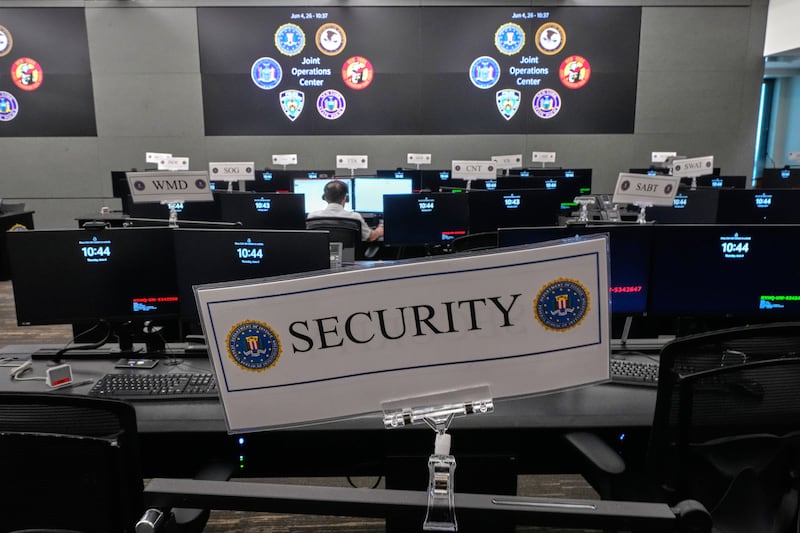

A key government surveillance tool used to track potential terrorist threats is poised to expire after Congress failed to pass a temporary extension — raising concerns among the national intelligence community, especially as the World Cup gets underway in the United States.
The House failed to pass a bill extending Section 702 of the Foreign Intelligence Surveillance Act through July 2, all but ensuring the program will lapse after midnight on Friday. Republican leaders put the extension on the floor under suspension of the rules, meaning it would require a two-thirds majority to advance.
However, the extension failed in a 218-198 vote after 199 Democrats and 19 Republicans opposed the measure, although for different reasons.
“Many of us are focused on making sure the American people are safe from terrorists and terrible events that can happen, of course, with the World Cup happening, of course, the Olympics coming up, and then any number of just regular activities,” Utah Rep. Mike Kennedy, who voted against the three-week extension, told the Deseret News in an interview. “But for those of us that are focused on constitutional principles, we want to make sure that our constitutional rights are protected as well. That balance is what we’re trying to strike with these efforts.”

Although lawmakers were close on a bipartisan deal to reauthorize the program last week, progress stalled on the agreement after President Donald Trump tapped Bill Pulte as the acting director of national intelligence — a pick that was met with skepticism by both Republicans and Democrats. As a result, some Democrats in the House and Senate say they won’t renew the program until Pulte’s nomination is pulled.
Both the House and Senate left Washington on Thursday afternoon without a solution. Meanwhile the World Cup tournament is underway in some of the country’s busiest cities.

“The responsible next step is to have a short-term extension of this legislation, especially as we begin welcoming literally millions of foreigners to this country for the World Cup and for the America 250 celebrations right around the corner,” Sen. Tom Cotton, R-Arkansas, said on Thursday. “If we don’t extend it for at least a few weeks while we continue to work on our differences, the consequences could be severe. The consequences, to be frank, could be fatal.”
Why Democrats oppose a FISA extension

Shortly after Trump tapped Pulte as the acting director of national intelligence, Democrats vowed not to move forward with any FISA extension citing fears that it would be misused by the Trump administration.
“The reason anybody knows who Bill Pulte is is because he’s just a Trump attack dog,” said Sen. Chris Murphy, a vocal Trump opponent. “The president is willing to use any power that he has to destroy his political enemies, including putting somebody in charge of the national intelligence services who is basically promising that his number one, two, and three job will be to use any information he can glean on political opponents of the president to destroy them politically.”
Pulte is set to take over as acting director on June 19, replacing Tulsi Gabbard, who announced her retirement last month. However, Trump announced on Thursday he would nominate Jay Clayton, an attorney and former chairman of the Securities and Exchange Commission, to be the permanent replacement.
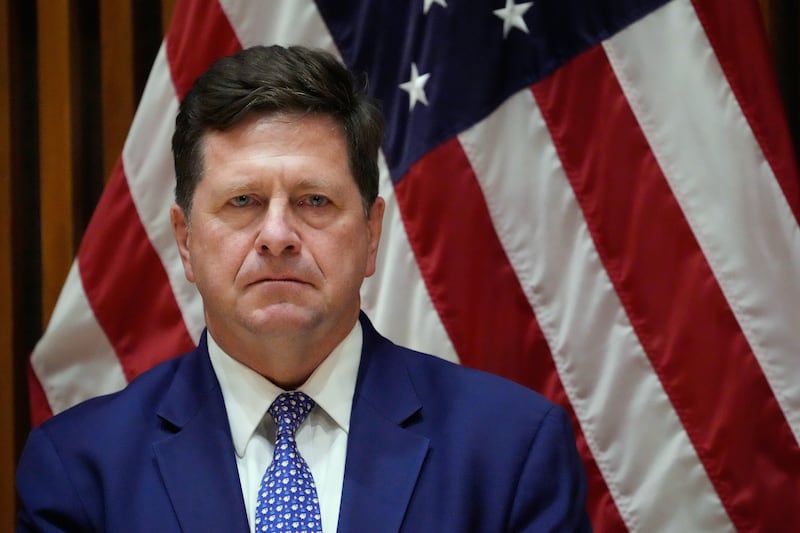
That nomination could be enough to shake Democrats loose, but Trump announced the nomination after the House already adjourned for a one-week recess. But some Senate Democrats say they still want Pulte removed from the interim position before they approve a FISA extension.
“Pulte’s gotta go before anything else should happen,” Senate Minority Leader Chuck Schumer, D-N.Y., said on Thursday.
Why some Republicans voted against a temporary solution
Adding to the math problem, some conservative Republicans also say they won’t support an extension of the surveillance tool until substantial reforms are made.
Section 702 specifically allows intelligence agencies, particularly the National Security Agency, to collect communications of foreign targets located outside the United States without needing a traditional warrant. Although the section only allows the targeting of non-U.S. citizens abroad, it can sometimes sweep up communications from Americans living inside the country.
As a result, some lawmakers have pushed for reforms and language that would require warrants before the FBI can search 702 databases for U.S. citizens’ data, but intelligence officials warn those requirements could slow investigations.
“The warrant requirement is just a really big deal to me,” Kennedy said in an interview. “There were 278,000 non-compliant FISA searches in 2022 — I mean, that’s just such an enormous amount of people. … Just go to a judge and ask for a warrant, and we can gather the data.”
Kennedy also cited concerns with Central Bank Digital Currency, referring to digital cash that is issued by the government and can be tracked digitally. Development of a CBDC in the U.S. has been halted by Trump, and conservatives have been pushing to ban the Federal Reserve from developing such a system.
“The government could tell with every transaction how I’m spending my money. So it’s a tracking method that the Chinese Communist Party is at this point using against their citizens,” Kennedy said. “I don’t want our federal government having any more understanding of how people are spending money than they already do.”