


House Republican leaders canceled votes for the rest of the week, sending lawmakers home for the Fourth of July days early as an internal GOP argument continues to threaten the party’s agenda.
Top Republicans canceled votes previously scheduled for Wednesday and Thursday after a small coalition of conservatives shot down a procedural motion on Tuesday, paralyzing the chamber. The failed procedural vote now means crucial bills such as the annual defense policy bill and State Department appropriations are stalled — dealing a major blow to Republican leaders.
The House is not scheduled to return until July 13.
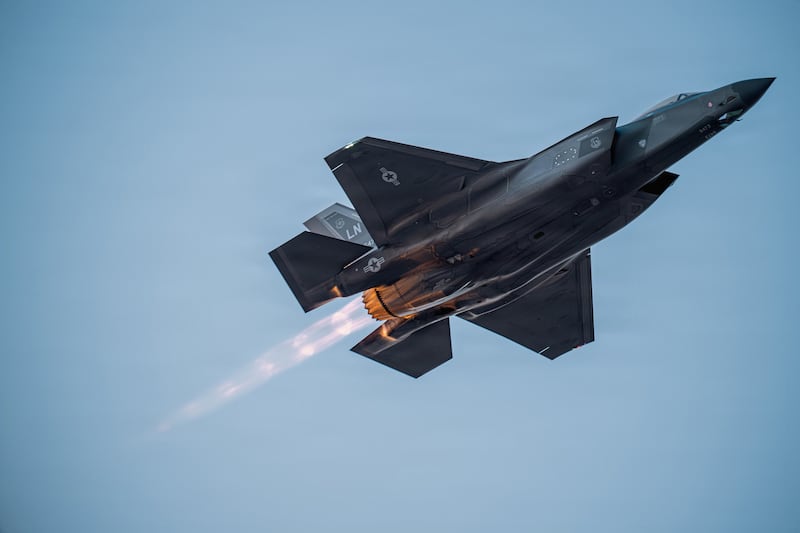
Included on this week’s schedule was the National Defense Authorization Act, which outlines the proposed budget for the Pentagon in the upcoming fiscal year.
However, consideration was delayed after 14 Republicans joined all Democrats to oppose a crucial procedural hurdle in a 198-224 final vote.
The rejected measure, known as the rules package is simply a procedural motion setting the parameters for debate for bills coming to the floor. The rules vote must pass in order for the underlying bills to be brought to the floor for simple majority votes — otherwise the floor is brought to a standstill.
Regardless of what the final legislative package entails, the rules vote is traditionally considered based on party lines. Meaning, even though a majority of Democrats plan to support the NDAA, members of the minority party voted against the rules package — leaving it up to Republicans with their slim majority to advance the legislation.
House Speaker Mike Johnson, R-La., said he and other Republican leaders would be speaking with the 14 dissenting lawmakers over “the next day and a half” and that “we’re going to do it again.”
Hours later, those plans changed.
Republicans halt floor action over election reform bill

The procedural vote was shot down by a handful of Republican lawmakers who have vowed not to support any piece of must-pass legislation unless it contains the SAVE America Act, a sweeping election reform bill seeking to establish proof-of-citizenship and voter ID requirements nationwide.
The election bill, in its varying forms, has passed the U.S. House three times but has since stalled in the Senate due to the filibuster. Now some House Republicans are taking matters into their own hands, threatening to halt floor action until the election bill passes the Senate.
Johnson sought to quash that move by attaching the SAVE America Act to the NDAA — a bid that would likely be shot down by the Senate even if it managed to pass.
But conservative Republicans still opposed Johnson’s workaround, claiming it would do little to ensure the passage of the SAVE America Act.
“(It) would still allow the Senate to strip (it) out,” Rep. Anna Paulina Luna, R-Fla., who is leading the charge to oppose SAVE-less legislation, said in a social media post. “The only way to ensure the Senate passes this is to make sure it’s in the bill text of the NDAA, meaning that my amendment(s) must be made an order.”
Luna had tried to get her amendment attached to the NDAA that would have included the entirety of the SAVE America Act, but it was overruled as being unrelated to the defense spending bill. Still, the Florida Republican refused to advance the package unless it was included.
Johnson chided Luna and the other Republicans who opposed the NDAA following the vote, noting their opposition amounted to a defeat of the very election bill they want to pass.
“A couple of the members, if you ask them why they voted no, they’ll say it was out of frustration from Senate Democrats refusing to do the will the American people and work on election integrity,” Johnson said. “It makes no sense for us to stop our very important progress forward from House Republicans, because some Senate Democrats are refusing to do their job.”
“That’s where we are,” he added. “That’s the reality of it.”
Regardless of how the SAVE America Act would be sent to the Senate, through either Johnson’s method or Luna’s proposal, the measure is unlikely to survive the Senate.
Senators are preparing their own version of the NDAA to later conference with House negotiators, and any language related to the SAVE America Act would be stripped out. Including it as either an amendment or as a dual-bill would not change that outcome.
Election bill threatens to tangle GOP agenda
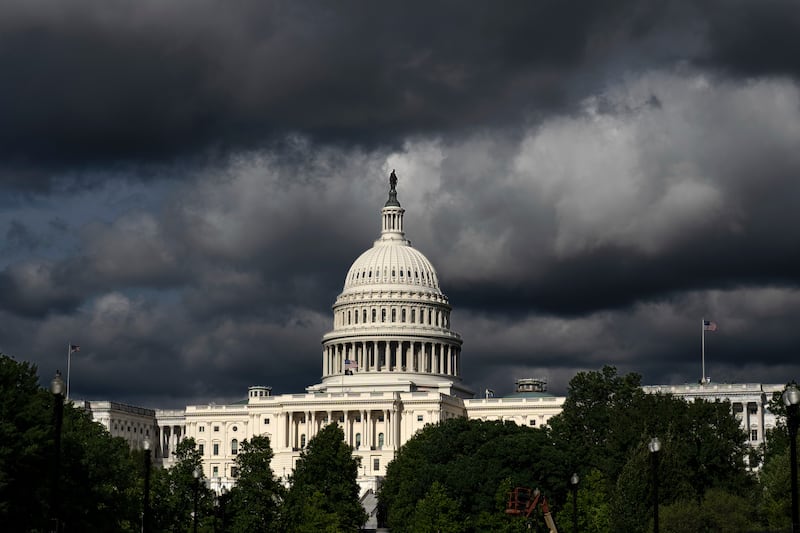
The defeat on Tuesday is the latest in a series of failed votes stemming from Republican unrest. GOP leaders were forced to scrap an entire week of scheduled votes last week over the SAVE America Act.
Meanwhile, Johnson has said the only way for the election bill to pass the Senate is to tuck it into a budget reconciliation bill, which is not beholden to the 60-vote filibuster. However, sponsors of the bill, including Utah Sen. Mike Lee, have argued it would not apply to the strict rules of reconciliation.
“This will not work,” Lee wrote in a post on X.
Lee has instead pushed for a marathon debate session, which he says would eventually wear down enough Democrats to end the filibuster. Senate Republican leaders have said that method won’t work.
Timing is not exactly on Luna’s and Lee’s side. The November election is only four months away, and Congress is scheduled to be in recess for much of that time period.
But as the rebellion continues, other members of the House Republican conference are growing frustrated with their colleagues who they view as halting their own agenda.
“The irony is wild. This is a debate on the Senate filibuster, while filibustering ourselves,” Utah Rep. Blake Moore told the Deseret News. “You’ve got really good policy initiatives we’re trying to enact, and just because of a procedural issue and just a handful of people holding it all hostage, it’s thwarting our ability to drive conservative legislation.”
Republicans vote ‘no’ over immigration bill
There were a handful of other House Republicans who voted against the package for other reasons.
Rep. Chip Roy, R-Texas, for example, vowed to vote against the procedural measure due to a lack of action from leadership on HR2, Republicans’ flagship immigration bill. Roy was promised to get a vote on that legislation before the Fourth of July recess, but it didn’t happen.
Roy voted against advancing the package. A handful of other Republicans said they opposed the rule package for the same reason.
“They came to us, assured us, made a promise. And then we kept our side of the promise ... Then they don’t keep their side of the promise,” Rep. Eric Burlison, R-Mo., said. “At some point, you’ve got to keep people to their word.”