



The U.S. Supreme Court agreed to hear a case that could change how and where individuals gather to pray.
Daniel Grand, a devout Orthodox Jew, wanted to gather about a dozen people in his home outside of Cleveland in 2021. Instead, the minyan — a prayer gathering of at least 10 men — was stopped by city officials in University Heights, Ohio.
Grand was issued a cease-and-desist notice demanding that he obtain a permit that would label his home as a “place of religious assembly.” Police then were ordered to monitor his home and asked neighbors to file complaints about visitors to the house, Alliance Defending Freedom noted.
Grand has spent the last several years in court looking to fight back against what he said took him by surprise.
“I was taken aback, frankly,” he told CNN about the encounter. “I knew I didn’t need a permit to pray.”
Grand initially had the idea of hosting the gathering at his home for convenience, since he doesn’t have a synagogue nearby and doesn’t drive on the Sabbath, which is a day of rest.

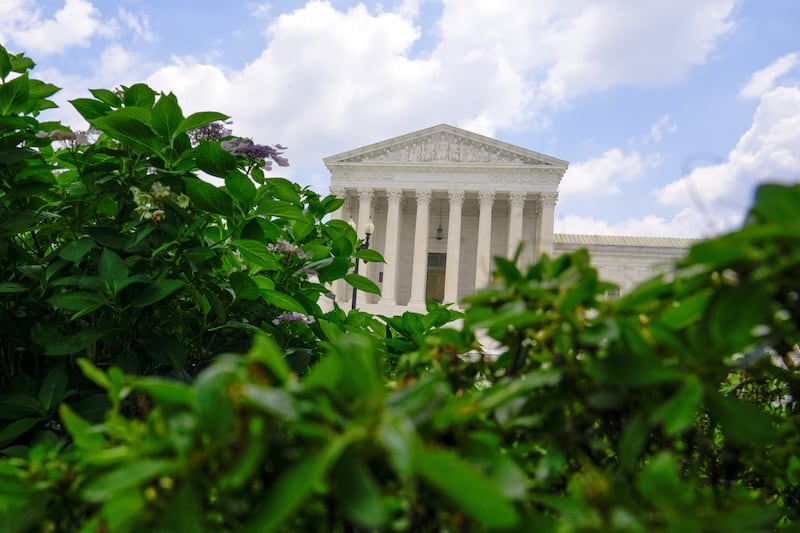
In June, the Supreme Court agreed to hear Grand’s case in the next term.
ADF, a legal organization that protects religious freedom, said in a statement that Grand was never trying to establish his home as a synagogue, but rather “simply hosting a prayer gathering with friends.”
After receiving the cease-and-desist notice and being informed about needing a special-use permit, Grand canceled the gathering and tried to comply with the city’s directive by submitting an application for a permit.
His legal team said that neighbors went on to protest that they “do not want our neighborhood labeled as Jewish” and there was a citywide hearing that was marked with “overt hostility to Jewish religious practice.”
Grand later withdrew his application because he didn’t want to be part of an “inevitably hostile public spectacle.”
ADF and co-counsel Orrick, Herrington and Sutcliffe asked the Supreme Court to hear the case after it was dismissed in federal court. They’re asking the justices to clarify whether Americans have to go through permitting processes and can challenge government threat to individuals’ religious freedom.
They’re also arguing that the city officials were specifically targeting Grand’s religious practice, because a permit wouldn’t be required for a nonfaith-centered event, like a birthday party or Super Bowl party.

“Every American has the right to host a prayer gathering in his home, and he certainly doesn’t need a city permit to do so,” ADF Senior Counsel and Vice President of Appellate Advocacy John Bursch said in a statement. “This city’s actions underscore a troubling trend of weaponizing zoning laws against people of faith while allowing other gatherings of the same size, like book clubs or poker nights, to meet without issue.”
Bursch is no stranger to arguing before the Supreme Court. After serving as Michigan’s solicitor general, he went on to argue cases before the justices, including being one of three attorneys who argued in Obergefell v. Hodges that state bans on same-sex marriage were constitutional.
Supreme Court’s recent history with religious liberty cases
The Supreme Court in recent years has regularly sided with religious interests in faith-based cases. In 2025, the nine justices ruled unanimously on a faith-based tax break case and in April, the court unanimously allowed faith-based “crisis pregnancy centers” to move forward with their challenge to a state subpoena.
Should the case go in Grand’s favor, it could expand the power of churches and synagogues to challenge zoning laws that restrict them from conducting activity in residential areas, CNN noted.
City officials argue that Grand shouldn’t be able to sue the local government because technically, the city didn’t deny him from getting a permit since he withdrew his application before officials considered the request.
One of Grand’s attorneys, E. Joshua Rosenkranz, told CNN that the ramifications of this case are “huge” because if Grand’s argument is unsuccessful, religious exercise can be denied by cities across the country both indefinitely or permanently by not taking action on permit reviews.
While the case itself isn’t focused just on Grand’s religious practice or the city’s zoning practices, the justices will have to decide if Grand can sue the city even though they never technically denied his permit request.
The Supreme Court’s next term begins the first Monday of October. An oral argument date hasn’t been scheduled yet but a decision in the case should be handed down any time before July 2027.