

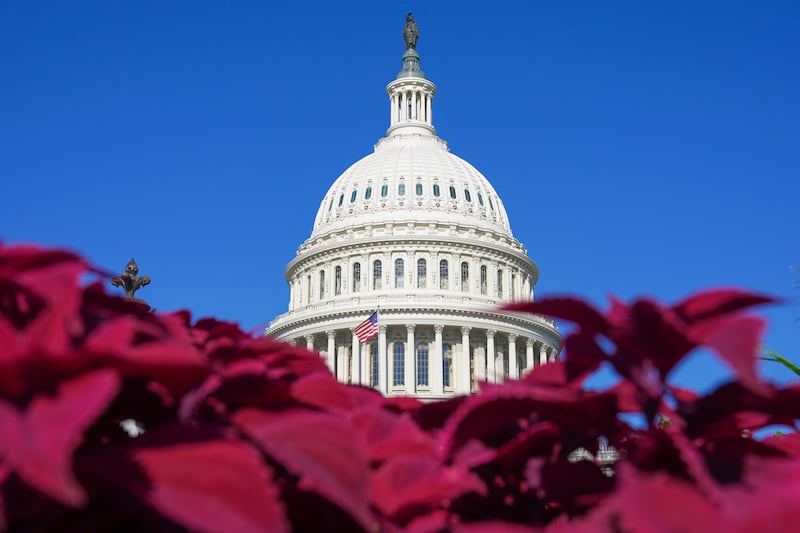

The Senate is crawling toward its scheduled recess period as Republicans push to get a number of bills on the floor — and Democrats use every tool at their disposal to delay progress.
The Senate is scheduled to leave Friday for its August recess, which is set to last until Sept. 14. But the stall of legislative items could bleed into next week, threatening a delay to the recess period and throwing a wrench in campaign plans for those running in tight midterm races.
Due to Senate procedural rules, there are several hurdles to overcome before a vote on final passage. As a result, senators typically work to secure what is known as a time agreement — which allows lawmakers to expedite debate and passage.
Without that agreement, it can take days to advance any one piece of legislation
Democrats are currently flexing that leverage to delay some of Republicans’ top priorities by withholding an agreement. As a result, the legislative schedule has largely been put in limbo.
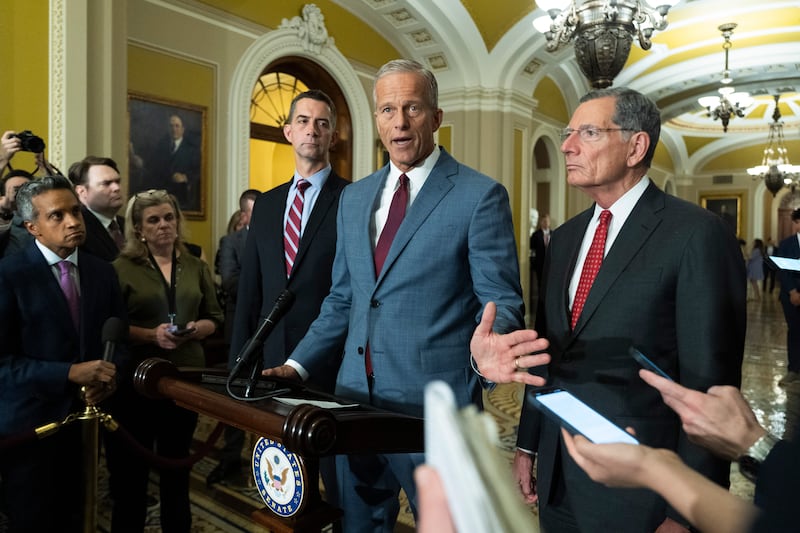
“It’s kind of a train wreck, isn’t it?” Senate Majority Leader John Thune said.
The typically mild-mannered Republican leader later walked back that assessment, calling it “probably a little extreme,” while still highlighting the challenges he faces as he wrangles members of his own party and wrestles with Democrats to leave town before the weekend.
“I just think there’s a lot of stuff that’s kind of piled up, and in the Senate, it’s challenging to get things across the floor because of all the procedural hurdles we have to deal with,” Thune told reporters on Wednesday. “If you have cooperation, obviously that goes a lot faster. And hopefully, as people see the need or the desire to conclude our work here, there’ll be an interest in trying to find ways to get these things voted on and get them concluded one way or the other.”
Democrats don’t have much influence in the minority, but party leaders are looking to use any leverage they have to thwart some of Republicans’ top priorities. Meanwhile, Thune has to convince some Republicans just to get on board.
If no time agreements are made for the pieces of legislation, Senate staff warn the schedule could drag into next week. Thune has not ruled out keeping the Senate in session until all of the bills pass.
Here are the biggest priorities for the week, and where they stand.
Government funding
The Senate is working toward approving a bipartisan resolution to extend current government funding levels past the midterm elections, which appears on track to pass after overcoming a key procedural hurdle earlier this week.
Thune took the procedural step to end debate on Wednesday, teeing up a potential vote as soon as Friday. Democrats are poised to support the bill, which could speed up the process for its passage.
Top appropriators unveiled the continuing resolution over the weekend, punting the deadline until Dec. 11, which would effectively avoid another shutdown scenario before the November elections. The bill would still need to be approved by the House, which doesn’t return until Aug. 31, before it can be sent to President Donald Trump’s desk.
Blanche nomination
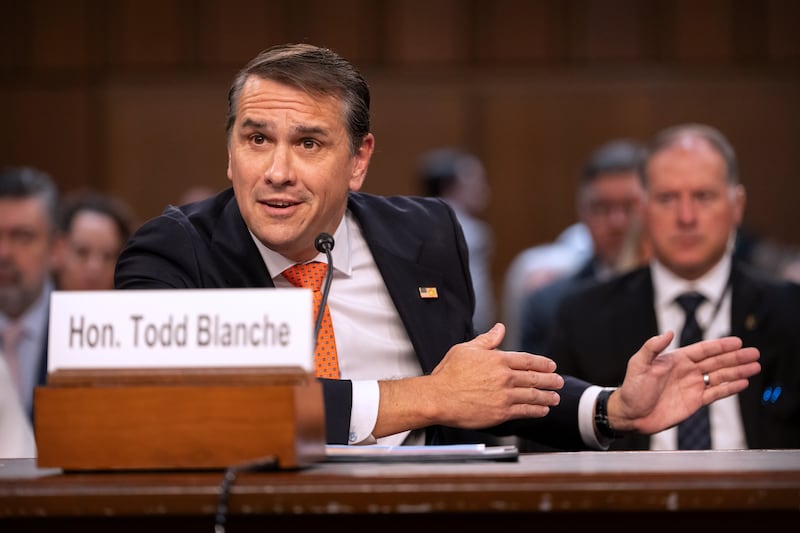
Acting Attorney General Todd Blanche overcame a major roadblock on his path to officially assuming the position, but he still faces an uphill battle.
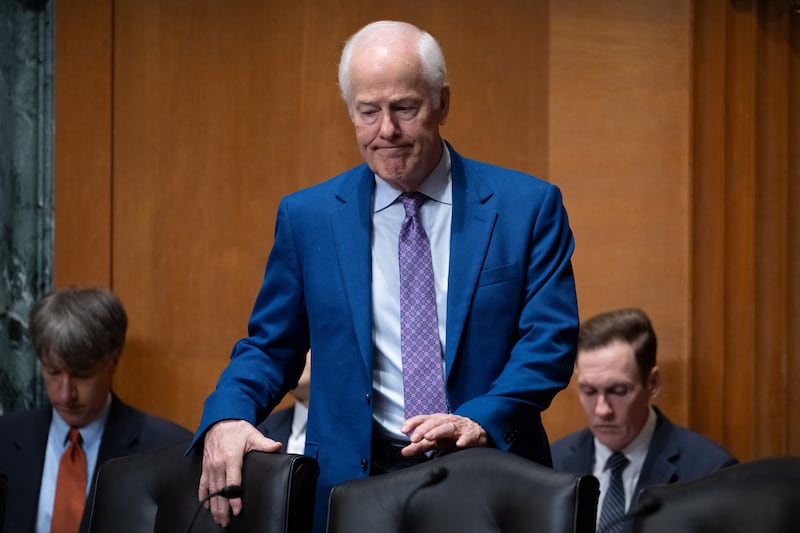
The Senate Judiciary Committee advanced Blanche’s nomination on Tuesday after he struck a deal with Sens. John Cornyn, R-Texas, and Thom Tillis, R-N.C., to nullify a proposed anti-weaponization fund within the Justice Department. But there are still a number of Senate Republicans who are undecided on his confirmation, delaying a full vote in the Senate.
Sen. John Curtis, R-Utah, announced he would support Blanche’s confirmation on Tuesday, clearing up one wild-card senator’s vote. Hours later, Sen. Susan Collins, R-Maine, revealed she would oppose him.
With Sen. Mitch McConnell’s prolonged absence, Blanche can only afford one more GOP defection to defeat Democrats’ opposition — and there are two Senate Republicans who remain undecided: Lisa Murkowski of Alaska and Bill Cassidy of Louisiana.
Both declined to comment when approached by reporters on Wednesday.
Thune said he is confident Blanche will be confirmed to the position, but he stopped short of saying if a vote could come before the scheduled recess.
“We’re having conversations with the small number of people who will be undecided on this, and I’m hopeful we’ll get there,” Thune said. “My intention and hope is to have it before the recess.”
Budget resolution
One of the stickiest legislative priorities is the multibillion-dollar budget resolution that Republicans are pushing to approve before the midterm elections.
The spending framework seeks to allocate roughly $95 billion for military spending, farm aid relief, and voter ID provisions — and it would be exempt from the 60-vote filibuster. The House adopted its budget blueprint last month, but the Senate has yet to release its own version.
Republican senators met behind closed doors twice this week to discuss the proposed budget, but leaders have not landed on a game plan that has enough support to advance. Much of the disagreement has to do with the proposed defense spending, which sits at $67 billion in the House budget framework — a number that defense hawks say isn’t nearly enough.
Also a point of contention: The budget resolution doesn’t include spending cuts, raising concerns among some conservatives that it would raise the deficit without offsetting any costs.
Thune has sought to temper expectations on the budget resolution, warning last week it doesn’t have the 50 votes needed to advance. However, Senate Budget Committee Chairman Ron Johnson, who is leading the reconciliation efforts, said he hopes to hold a vote on the resolution before the recess begins.
Approving the resolution is only the first step in drafting the actual spending framework. The resolution simply establishes instructions for House and Senate committees to write the legislation, which would be subject to final votes later on.
“It’s not clear yet, but it’s getting less cloudy,” Thune said on Wednesday.
Russia sanctions

Senators are also looking to approve the Russia sanctions bill before leaving for recess, but the bipartisan bill hit a roadblock earlier this week when Sen. Raphael Warnock, D-Ga., placed a hold on a time agreement over opposition to its tariff provisions.
The hold does not block the bill from coming to the floor, but it does delay a vote on final passage.
Senate leaders came to an agreement allowing for an amendment vote to strip out the tariff provision, which gives the president authority to impose targeted tariffs on countries that purchase the vast majority of Russian oil or gas.
Those tariffs would only apply to the five largest importers of Russian oil or gas as well as the top five countries that aid Russia in evading sanctions.
Warnock instead wanted to alter the text of the legislation to rein in the tariff power, arguing it gives “this unhinged President new powers to raise the price of everything through tariffs.”
The bill is expected to pass with bipartisan support when it comes to the floor.