

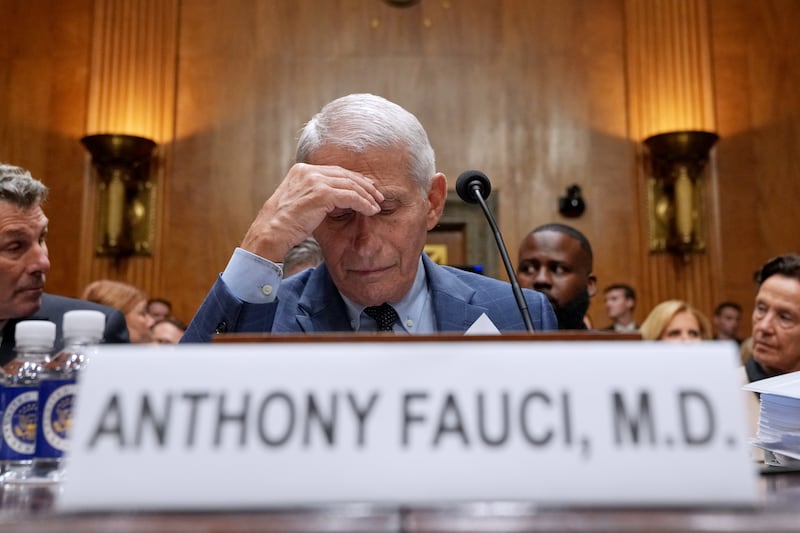

A Senate panel voted along party lines on Thursday to hold Dr. Anthony Fauci in contempt of Congress after he refused to answer questions about his handling of the COVID-19 pandemic in a congressional hearing last week.
The Senate Homeland Security and Governmental Affairs Committee approved the contempt resolution in a 8-7 vote, following through with threats from committee chairman Sen. Rand Paul, R-Ky. The resolution seeks to reprimand Fauci for avoiding questions on his role as the leader of the country’s COVID-19 response and instead invoked the Fifth Amendment more than 110 times during his Senate hearing.
In the resolution, Paul argued the Fifth Amendment did not apply to Fauci because he was pardoned by former President Joe Biden before he left office. That pardon protected Fauci from charges “arising from or in any manner related to his service” in the Biden administration as the chief medical adviser and member of the White House Coronavirus Task Force.
“Dr. Fauci faced no risk of federal prosecution,” Paul said at the committee vote on Thursday. “All he had to do was tell the truth.”
Fauci defended his decision to invoke his Fifth Amendment rights by arguing Paul would spur contentious lines of questioning in order to “get me to say something, anything, that could vindicate his repeated public pledges that I end up, in his words, quote, behind bars, unquote.”

Although Fauci received a “full and unconditional pardon” from Biden, he could still be charged with perjury for his answers at a congressional hearing.
All Democrats on the committee voted against the contempt resolution, and some warned that the action could further weaken the panel’s ability to question federal officials in the future. If those witnesses are faced with a threat of being held in contempt, they could choose not to appear altogether, argued Democratic Sen. Gary Peters, D-Mich., who sits on the committee.
A contempt resolution typically heads to the full Senate for a vote, which would require Democratic support to succeed. To avoid a potential loss, Paul has said he would send the resolution directly to the Justice Department for prosecution.
Paul confirmed after the vote that criminal contempt referral would be delivered to the attorney general and D.C. District Court on Thursday.
“It doesn’t have to go to the House, doesn’t have to be signed by the president, and really doesn’t have to go before the Senate,” he said.
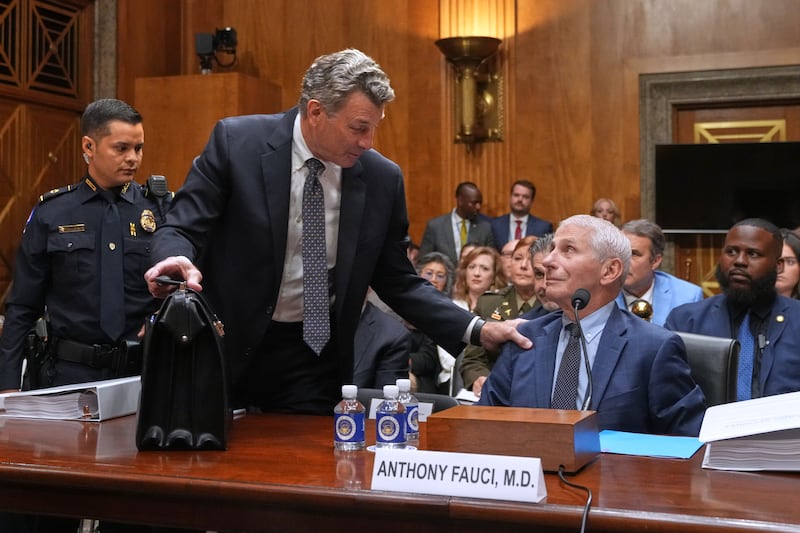
Although Paul will send the resolution directly to the DOJ, the department is not required to take action. The contempt procedure gives the department discretion over whether to indict the individual, which it has rarely done over the last two decades.
Since 2008, the House has voted to hold 10 individuals in criminal contempt of Congress, according to the Congressional Research Service. Of those, only two have been indicted by the Justice Department.