

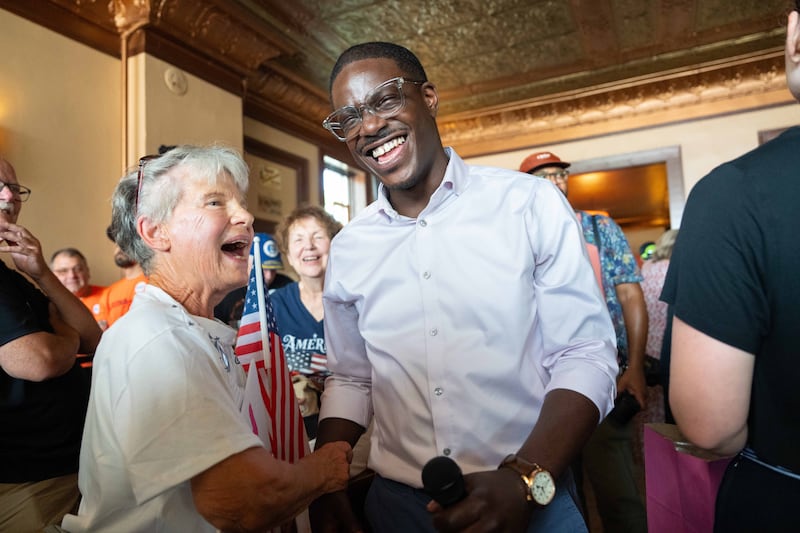

Wisconsin voters rebuffed the national trend of voting for more progressive candidates in the state’s Democratic primary on Tuesday, making way for Milwaukee County executive David Crowley to advance to November’s ballot in the state’s race for governor.
Crowley, if elected, would be the state’s first Black governor in the state. He pitched himself to voters as the candidate best positioned to beat Republican Rep. Tom Tiffany in the general election.
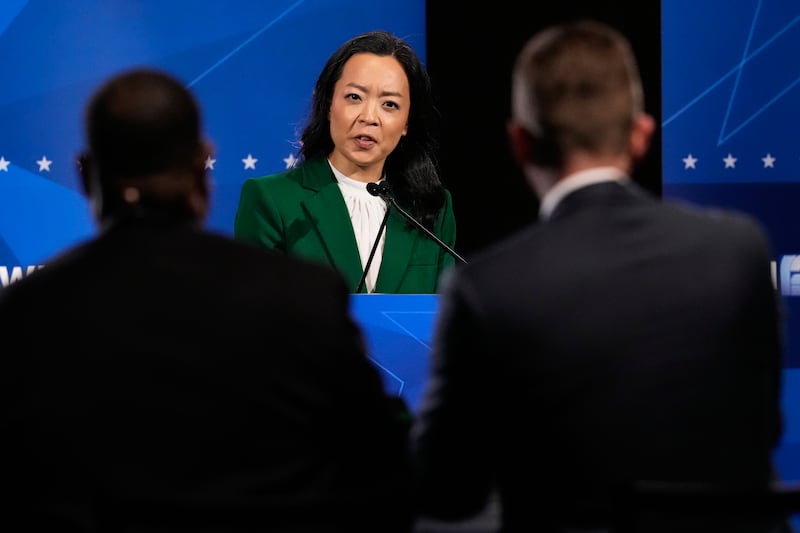
He narrowly defeated democratic socialist Francesca Hong, who was way ahead in pre-primary polling and was considered the favorite in the race. But several of Hong’s earlier statements on social media came back to haunt her campaign.
The margins were close between Crowley and Hong, with just .5% and about 3,700 votes separating them.
In Michigan’s U.S. Senate primary last week, Dr. Abdul El-Sayed beat out moderate Rep. Haley Stevens and was the trend’s first major success in a purple swing state.
Crowley and sitting Gov. Tony Evers, who endorsed him, argued Hong risked losing the gubernatorial race to Tiffany because of her progressive views.
Republicans were also hoping that Hong would win the primary because of polls showing Tiffany would fare better if she advanced instead of Crowley, with pro-Republican PACs spending to boost Hong’s campaign.
The general election in November is expected to be close, too.
For example, during Evers’ most recent gubernatorial race against Republican businessman Tim Michels in 2022, he won by just over 90,000 votes. The race in 2018 was even closer.
While Hong’s loss puts a damper on the movement seen in progressive wins in states like Michigan, New York and Colorado, it doesn’t entirely snuff out the energy, The Associated Press noted.
For example, progressive candidate Lt. Gov. Peggy Flanagan beat out Rep. Angie Craig in the Minnesota Senate primary on Tuesday. Flanagan targeted Craig’s past votes for Immigration and Customs Enforcement, which is a topic voters are passionate about after ICE deportations sparked protests and the deaths of two U.S. citizens in Minneapolis earlier this year.
Hong, addressing supporters on Tuesday night, said they built something that will “change politics forever.”
“The work we have done will be remembered forever,” she said before the race was called. “I know we don’t have the final results right now, but what I do know is we are ready to keep fighting.”
Since the race was so close, Hong technically could have called for a recount, but her campaign would have had to pay for it.
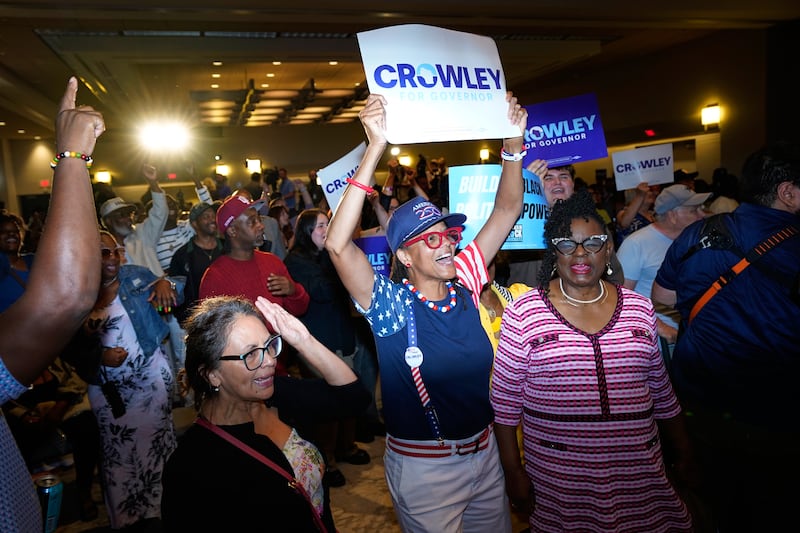
Crowley, at an event early Wednesday, was looking to move on from the Democratic infighting that happened in the primary, pitting moderates against progressives.
“That narrative misses the entire point of what we’re doing,” he said. “Because when I traveled across Wisconsin, I didn’t meet people who introduced themselves that way.”
“Every one of us has something much bigger to unite around,” he said. “And that is keeping MAGA extremism from bringing the chaos we see in Washington into our neighborhoods right here in the state of Wisconsin.”
Crowley and Hong were expected to attend a unity brunch Wednesday, before Crowley and other Democrats, including Sen. Tammy Baldwin, attend a rally later in the day.
His primary victory marks a political comeback after he was seeing low polling numbers and suspended his campaign in early July. He reentered less than a month ago and was helped by Evers’ endorsement.
Politico noted that Hong’s loss provided even some progressives with relief after her controversial statements related to defunding the police and opposing Thanksgiving. She earned some national attention and tried to reverse some of her “hot takes.”
Others also were concerned that she would have faced some racist and sexist remarks if she made it to the general election, since the state has never elected anyone to be governor that isn’t a white man. She also previously made comments about her white ex-husband and biracial son in a 2021 interview that resurfaced during her campaign.