

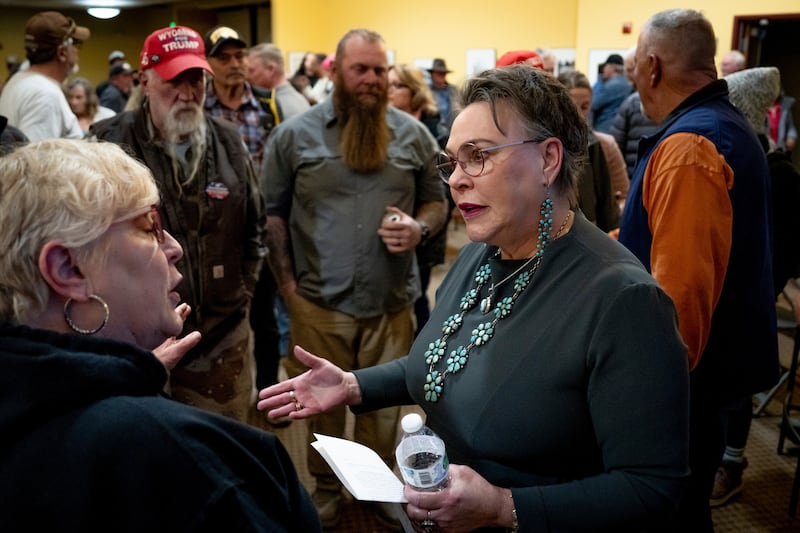

There are multiple Republican candidates hopeful that they will win the primary on Tuesday to become Wyoming’s next member of Congress.
The crowded race to become the state’s lone representative in the House saw millions of dollars in spending and infighting over money, lawsuits, candidate forums and more.
Wyoming Sen. Cynthia Lummis is leaving the upper chamber, and current Rep. Harriet Hageman is running to replace her, and is expected to win the Senate primary.
However, the pick to win the crowded House race is less clear.
Polls close at 7 p.m. MDT on Tuesday.
How do the candidates stand out?
Several of the GOP candidates that spoke with the Deseret News last month acknowledged that they all have similar priorities: they all want to strengthen the country’s borders, they want to ensure elections are secure and honest, and if elected, they want to work for Wyomingites by serving on committees in the House that are important to the state, like energy and agriculture.
But in a crowded primary — there were once 10 candidates, but attorney Frank Chapman dropped out in July, bringing the total competing to nine — how did the candidates try to prove they’re different?
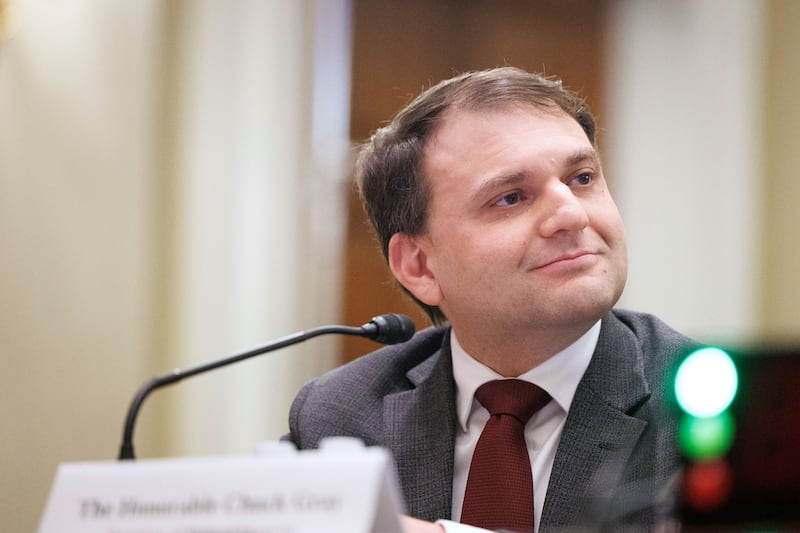
Secretary of State Chuck Gray leaned heavily on his record of getting things done at the state level since 2023 and said he’d continue to do the same in Washington.
“I’ve got a real record — fighting for voter ID, pro-life protections, and securing our elections as Secretary of State,” Gray said in a statement. “I deliver results, not rhetoric.”
Another leading candidate, businessman Reid Rasner, told the Deseret News that his success in the business industry is what sets him apart.
“I’ve built things, taken risks and delivered results in the real world,” he said. “I’m not running because I need a title. I’m running because Wyoming deserves a fighter who can actually get things done.”

According to The New York Times, which tracks poll data ahead of elections, both Gray and Rasner have sponsored surveys, both of which have the respective candidate on top.
Other candidates, who trail behind at least when it comes to campaign funding, say that’s precisely what sets them apart.
The other candidates include state Senate President Bo Biteman, businessman and conservative donor Steve Friess, former Wyoming and Virginia State Superintendent of Public Education Jillian Balow, Army veteran Kevin Christensen, congressional staffer and Army veteran David Giralt, homeless advocate Richard Dodson, and former Democratic state Sen. Keith Goodenough, who is running as a Republican.
Campaign finance paints a picture
Second-quarter campaign finance reports filed with the Federal Election Commission show that three of the candidates from April through June self-funded their campaigns with more than $1 million of their own money.
Friess, who joined the race months after other top candidates, raised more than $2.17 million in total receipts, including a $2 million loan from himself.
Out of Rasner’s $2 million total raised, the reports show he put in more than $1.7 million.
Gray’s disclosures show he has lent his campaign $1.14 million of a total $1.3 million raised.
It’s something other candidates are looking to capitalize on.
Giralt said in an interview last month it’s the self-funders against “the rest of us.” He said he knew he wouldn’t be able to compete financially with the others in the race, but said he feels confident about how he campaigned on the ground.
“None of these guys have emerged as a clear front-runner,” he said. “I think it’s just going to come down to who appeals to the most people.”
Balow shared a similar sentiment. She admitted she’s one of the candidates in the race that “doesn’t have a lot of money.” But she acknowledged that after running two statewide campaigns in Wyoming, she knows that voters care about showing up.
It’s something she’s tried to do while knocking on doors and hosting events across the state.
“If there’s one thing I know, it’s that Wyoming voters can’t be bought,” Balow said.
Lawsuits and campaign contention
Amid campaigning, Rasner has filed five defamation lawsuits against members of his own party, noting that it’s not how he wanted to spend the final weeks of the primary race. He said he felt like he had no choice but to defend himself against people who are “calling me the most terrible thing you can think of.”
Rasner is openly gay and a staunch supporter of President Donald Trump. He said the defamation suits stem from allegations he’s a pedophile.
He said the legal battles have left him feeling unwelcome at certain GOP events in the state and made it harder for him to campaign.
Other organizations disputed Rasner’s claims and said he wasn’t invited to events for other reasons, including not RSVP’ing on time or making choices the group didn’t align with.
Balow, who previously taught middle school, said the party infighting reminds her of students who would “just go at each other.” She noted how the hostility has happened for months and she and others have been “taken aback” watching it unfold.
“I’ve stayed out of it,” she said. “I don’t listen a lot to the back and forth unless it’s kind of in front of me.”