

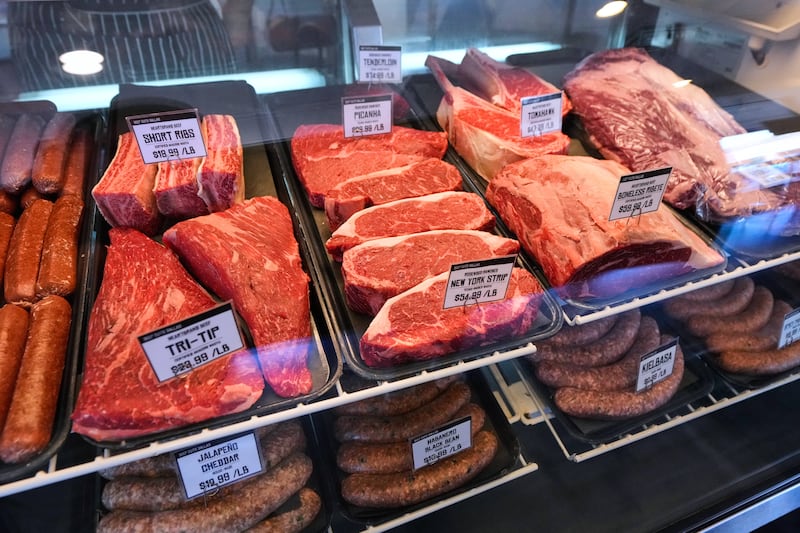

President Donald Trump said he would begin the process of easing regulations for ranchers to process their own meat products, the latest effort from the White House to bring down food prices before the midterm elections.
In a Truth Social post on Friday, Trump announced he would authorize legal documents to allow farmers and ranchers to process their own products in a bid to loosen the reins of the “Big Four” meat processors, referring to the four main companies that dominate about 85% of the market. Trump said he wants the changes to “move quickly.”
“For years I have heard that they have had a tremendous problem with the Big Processors, who many say are a nasty monopoly,” Trump wrote. “In order to break this powerful monopoly, with much of its ownership based outside of the U.S., I am authorizing legal documents to be drawn in order to allow Farmers and Ranchers to be given the right to PROCESS THEIR OWN FOOD.”
The announcement comes one day after an interview with conservative commentator Glenn Beck, who urged the president to break apart the current processing pipeline. Beck, who owns a ranch himself, told the president that current regulations are “just killing us.”
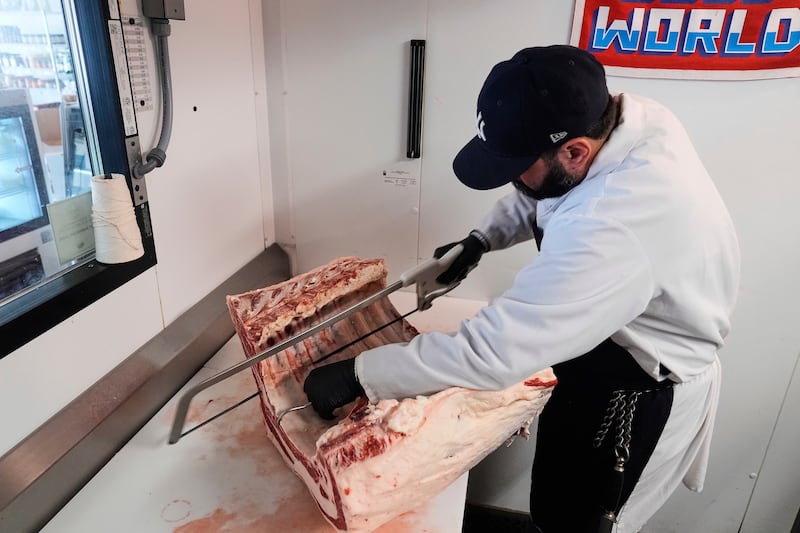
“So you’re saying with less regulation, you think that the ranchers and farmers would do a very good job of processing the beef?” Trump asked.
“Yes,” Beck said.
“Wow,” Trump said. “I’m going to look at that today.”
It’s not yet clear the exact changes Trump would approve. Current regulations require processors to meet strict safety and sanitation requirements and to complete regular inspections with the Department of Agriculture before selling their products to consumers.
Small ranches are already permitted to slaughter and process their own meat, but they can’t sell those products without meeting the same regulatory requirements.
Lawmakers in both parties have sought for years to crack down on the monopolistic practices within the meat industry, but no significant reforms have been made.
There’s a bipartisan bill floating in Congress known as the PRIME Act that would allow local ranches and slaughterhouses to sell meat directly to consumers without completing the USDA inspections. However, opponents say that could lead to the distribution of unsafe products.
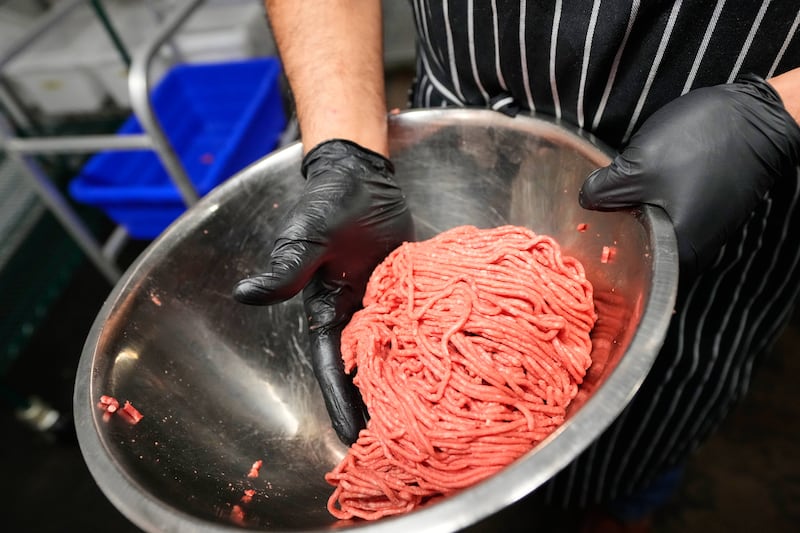
The decision also comes amid Republican backlash after a separate decision earlier this week to temporarily pause tariffs on imported ground beef in an effort to lower costs for consumers. That announcement angered cattle ranchers and rural Republican lawmakers, who warned it would have negative effects for U.S. farms.
“While I appreciate the intent to lower food prices for consumers, importing foreign beef to be sold at artificially depressed prices undercuts Utah’s family-operated cattle ranchers and poses long-term risks to our domestic supply chain stability,” Utah Sen. John Curtis said in a statement. “With herds facing challenges across the country, we should prioritize solutions that ensure a fair marketplace and provide regulatory relief for American producers working to build up inventories.”
High prices are expected to be a major issue heading into the midterm elections, with recent polling showing inflation and the economy as the two top concerns for Utah voters. In response, the White House has sought to ease the cost of everyday products to quell voter backlash.