


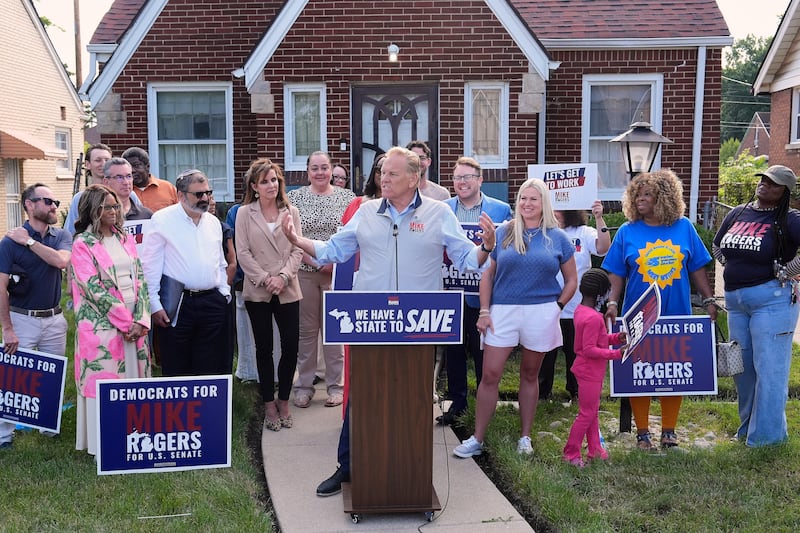
DETROIT — Political signs litter street corners and are propped up on front lawns in neighborhoods across metro Detroit. Many feature the names of the state’s two Senate candidates: Republican Mike Rogers and Democrat Abdul El-Sayed.
Michigan, a perennial battleground state, is in the midst of one of the costliest and most bitterly fought Senate battles in the country — and it shows.
The signs, and ads, and flood of news stories are a constant reminder to voters here about just how close the election in their state is, which is why the two candidates are raking in record-high state-level funding as the final weeks of campaigning carry on.
The race has divided the Jewish community in greater Detroit and there is a lot of intensity from supporters of El-Sayed and Rogers, as well as from the candidates themselves.
In a year when control of the Senate could come down to a single seat, the stakes for the race are high.
Among Democrats, get out the vote efforts and campaign events have included and will feature marquee names like former Vice President Kamala Harris, former President Barack Obama, Vermont Sen. Bernie Sanders and New York Rep. Alexandria Ocasio-Cortez. Plus, President Donald Trump will rally a day after Obama on Sunday in northern Michigan for Rogers in the final few days before Election Day.
What the voters say about the Senate race
Many voters sound fatigued when asked if they want to speak about their preferred candidate, likely reflecting the contentious nature of the race.
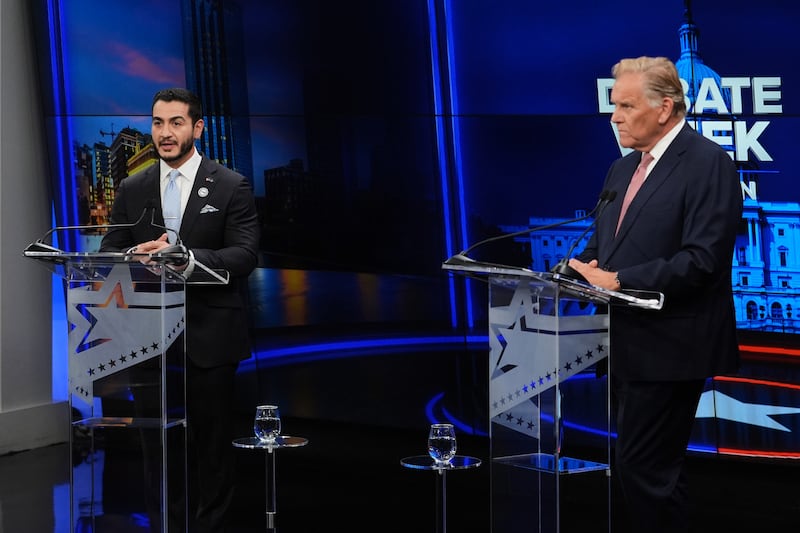
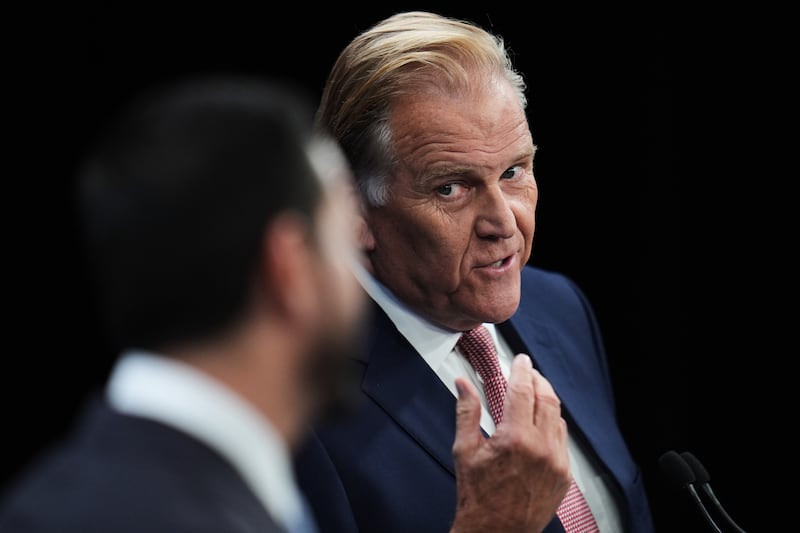
El-Sayed and Rogers participated in a debate earlier this month where the two candidates traded barbs over policy differences and their personal lives in what NBC News described as “mean-spirited sniping.”
Will Brenner, a resident of Ann Arbor who tends to vote for Democratic candidates, said he thinks the race is “the last thing” people want to talk about right now. Brenner said he plans to vote for El-Sayed, but is frustrated that the race is so close.
Recent polling puts the two candidates within the margin of error, with El-Sayed ahead by 2 percentage points over Rogers. But it’s hard to tell if that’s an accurate reflection of the race, especially after primary polls were so off. Michigan is a state that swung toward Trump in the 2024 presidential election, but also elected Democrat Elissa Slotkin to the Senate.
Democratic Sen. Gary Peters announced in early 2025 that he would step down at the end of his term instead of running for reelection. El-Sayed beat Rep. Haley Stevens in the Democratic primary earlier this year, securing a spot on the November ballot against Rogers, who previously served in the House.
“I unfortunately have grown to realize how red Michigan is in a lot of ways,” Brenner said. “I’m not surprised it’s this close. Unfortunately, I think Abdul’s name doesn’t help in any way.”
El-Sayed, if elected, would be Michigan’s first Muslim American to serve in the Senate. The state is home to one of the largest Arab American populations in the country and El-Sayed’s stances on Israel have become a flashpoint in the race.
He’s taken a deeply critical stance on Israel and U.S. assistance to the country. Additionally, he drew criticism from his initial “hurt people hurt people” response to an antisemitic attack earlier this year when a man drove his car with explosives into a children’s care facility inside Temple Israel in West Bloomfield.
Ezra Drifsman, a father of two children, said it was terrifying in the aftermath of the attack when Jewish institutions and schools went into lockdown not knowing if the attack was planned for multiple locations.
When El-Sayed didn’t walk back his controversial statement until five months later, the state of the election changed for Jewish voters in metro Detroit, Drifsman said.
He argued that El-Sayed, in his mind, is a threat to the “larger American fabric” in terms of his progressive views. Rogers, Drifsman said, is the more qualified candidate and his preferred candidate since he’s been voting for Republicans all his life.
“His background in law enforcement as well as foreign policy experience is the perfect blend in a time where there are global and domestic threats,” Drifsman said.
Chelsea Rebeck, a West Bloomfield attorney, describes herself as a “lifelong Democrat” but this year, she’s voting for Rogers. She said she voted for Stevens in the primary and that she didn’t want to cast a ballot for El-Sayed, but felt like it was a “cop out” not to vote at all this November. After getting in touch with the Rogers campaign, she determined that he was a Republican candidate worthy of her vote.
“Mike Rogers, to me, is a very good, moderate Republican candidate. He’s not extreme, he has a very good record as a politician,” she said. “He comes across to me as a very reasonable person that cares about the people in Michigan.”
Rebeck said she couldn’t vote for El-Sayed as a Jewish person after his public stances on Israel but also because she didn’t align with his progressivism.
El-Sayed has drawn criticism from members of his own party for his connections to the Democratic Socialists of America (DSA), and for campaigning with socialist streamer Hasan Piker.
El-Sayed has said he’s a capitalist who believes in taxing billionaires and in Medicare for all and pushed back on the idea that he is associated with DSA. He told The Wall Street Journal he’s “not technically or practically DSA.”
Still, progressives like Ocasio-Cortez and Rep. Rashida Tlaib, D-Mich., have stumped for El-Sayed and progressive leaders and left-leaning groups have donated money to his campaign. El-Sayed’s association with DSA has been a key point the Rogers campaign wants middle-of-the-ground voters to know, arguing that he’s out of touch with Michiganders.
“I know he’s not DSA. He says he’s not DSA, but listen, if you take DSA money and spend all your time with DSA people, it tells me a lot about you and your politics,” Rebeck said. “The party is going too far left. … I don’t recognize it anymore. I don’t want to be a DSA Democrat, like that’s not me. I’m not a socialist.”
“That’s not what I signed up for,” she added. “And I think that the only way to really clue the Democratic Party into the fact that there’s a lot of us out here that don’t want to vote for people like that is to take a stand and hold the line.”
Rebeck said she would sit out the election if she felt like Rogers was far-right but wishes the Democratic Party would “wake up” and give traditional Democrats candidates they feel represented by.
Last week at a town hall, El-Sayed and an attendee got into a heated argument over claims about the candidates’ potential ties to the Muslim Brotherhood, an Islamist political movement. He’s repeatedly faced Republican accusations, including from Trump, that he’s connected to Islamic terrorism.
El-Sayed has pushed back on the accusations he is connected to the group and his challenge to the attendee named Tommy went viral after the two sparred, with El-Sayed rejecting questions that he’s associated with them simply because he is Muslim.
“I’m not running to be a Muslim senator. I’m running for the U.S. Senate and I happen to be Muslim,” El-Sayed said.
Brenner said he watched the viral clip and thinks the attendee asked the question and confronted El-Sayed to scare voters into casting ballots for Rogers. It’s “racist” and “shouldn’t be a part of politics,” he said.
Despite turning off some voters, El-Sayed has generated enthusiasm among members of the party who say they’re ready for change. Brenner said he is not voting for Rogers because he believes he is a “yes man” to Trump.
“I just want to see different people in office, too, because we clearly need a change. I’m tired of old white people running the country,” he said. “We’re a very diverse country and our Congress doesn’t reflect that at all and I think that needs to change.”
Kolby Kukla previously worked on a Democratic House primary in Michigan and has amassed more than 10,000 followers on TikTok, where he talks about the Senate race in support of El-Sayed. He described the primary races across the state as “bitter” and felt the desire to take his message to users online, but also to friends and family in metro Detroit that either were voting for Rogers or not planning to vote. Most of the time, he’s found that conversations about a tough topic can be civil and unlike some of the national narrative that is surrounding the race.
“I think this has gained a lot of national attention, and I think sometimes that national attention can skew what is actually happening among the electorate,” he said of the race.
Michigan Senate race brings in money
The high-stakes race has garnered the attention of voters across the political spectrum in Michigan. In the August primary between El-Sayed and Stevens there was high voter turnout and the general race is the most expensive Senate election in Michigan history. Plus, people will have to choose a new governor, attorney general, secretary of state and vote in 13 U.S. House races.
Voters, however, might be growing tired of the political divisiveness that is election season in a swing state.
“This specific election season, Michigan has been so oversaturated with all of our statewide elections,” Kukla said. “Every time you’re watching a YouTube video or you’re watching something on Hulu, or anything with ads, almost every single ad is a political ad at this point and I think people are really, really exhausted by that.”
Nicole Smith, who lives in Allen Park, said there are things about both El-Sayed and Rogers that she doesn’t like and things about them both that she does like. She said she hasn’t made up her mind about who she will vote for but recognizes the race is “so close.”
Smith also said she didn’t feel totally aligned with either candidate or political party as it currently stands. “I feel like a lot of people fit into that,” she said.
With the countdown to Election Day officially on, Michiganders will have to hold out on the political content for a little while longer as Rogers and El-Sayed battle it out until the race is called. The two debated for the second time Wednesday evening.